


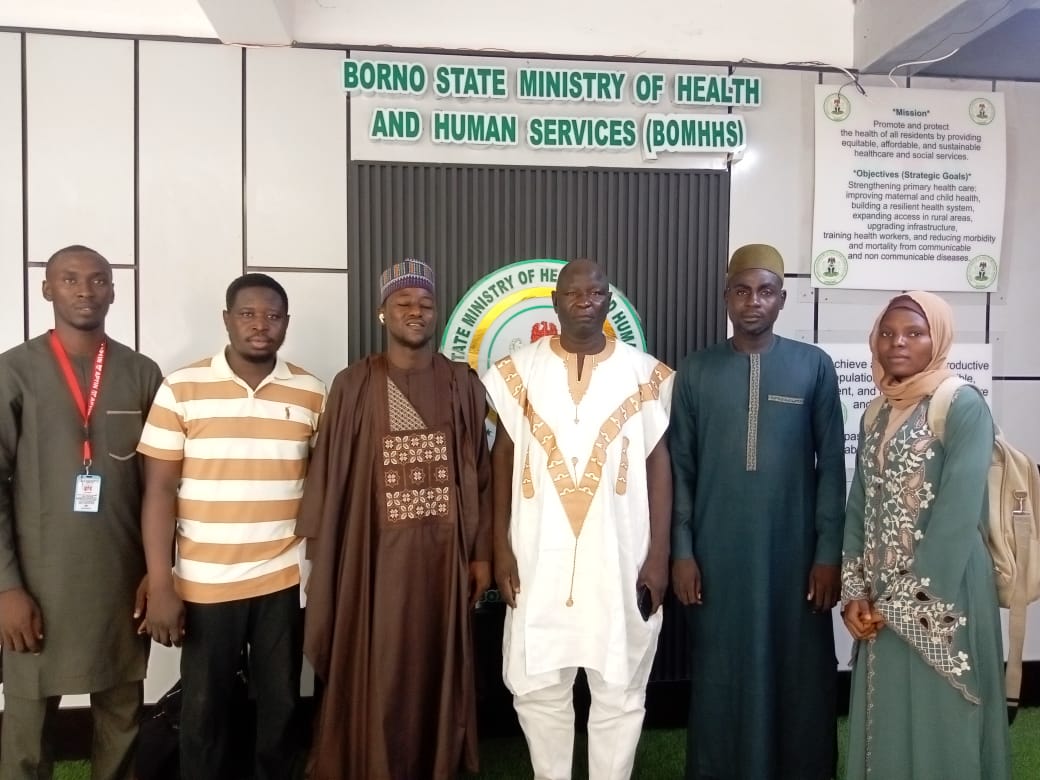
APYIN Borno Engages SASCP On HIV Testing Gaps, Receives Assurance On Commodity Distribution
By Sabiu Inuwa, Maiduguri
The Association of Positive Youths Living with HIV/AIDS in Nigeria (APYIN), Borno State Chapter, has engaged the Borno State AIDS/STI Control Programme (SASCP) to present findings from its latest Community-Led Monitoring (CLM) activities and advocate for strengthened availability of HIV testing commodities across supported health facilities in the state.
The engagement was conducted under the Community and Private-Public-Mix Expansion in TB and HIV Prevention, Diagnostic and Treatment Services (N-THRIP) project, implemented through the Network of People Living with HIV/AIDS in Nigeria (NEPWHAN), with support from the Global Fund to Fight AIDS, Tuberculosis and Malaria through the Institute of Human Virology Nigeria (IHVN).
Using Community Evidence to Strengthen HIV Services
As part of the CLM project, APYIN Borno conducted supportive supervision visits to mapped health facilities to assess the availability, accessibility and quality of HIV, TB and malaria services.
During the Q11 CLM supportive supervision, the team identified gaps in the availability of HIV testing kits in some of the facilities visited. The findings indicated that shortages of HIV testing commodities could affect the continuity and accessibility of HIV testing services.
APYIN Borno documented the findings and presented them to the relevant state stakeholders as part of its commitment to ensuring that community-generated evidence contributes to strengthening health service delivery.
The organization emphasized that Community-Led Monitoring is a constructive accountability and quality-improvement mechanism, providing an avenue for communities and civil society organizations to work with government and health programme stakeholders to identify challenges and support practical solutions.
SASCP Assures APYIN of Ongoing Commodity Distribution
Presenting the findings during the advocacy engagement, APYIN Borno Programme Officer, Halimat Ohiani, highlighted the identified gaps and called for appropriate action to ensure uninterrupted access to HIV testing services.
The SASCP Coordinator, Mr. Solomon Gasi, appreciated APYIN Borno for bringing the findings forward and explained that the distribution of HIV testing kits is currently ongoing through the Logistics Management Coordinating Unit (LMCU).
According to the Coordinator, health facilities and service delivery points experiencing stock-outs are expected to receive the necessary commodities as the ongoing distribution process reaches the respective hubs and spokes.
The assurance represents an important outcome of the CLM advocacy engagement, demonstrating how community-generated evidence can facilitate communication between service users, community organizations and government health programmes.
APYIN Commends SASCP for Continued Support
The APYIN Borno team expressed appreciation to Mr. Solomon Gasi, SASCP Coordinator, for his continued support and constructive engagement throughout the implementation of the Community-Led Monitoring project in Borno State.
APYIN commended the SASCP leadership for maintaining an open channel of communication with community stakeholders and for its willingness to listen to findings generated through community monitoring and support efforts to address identified service delivery challenges.
The Executive Director of APYIN Borno noted that the purpose of CLM is not to expose or criticize health facilities, but to strengthen collaboration and ensure that identified gaps are communicated to the appropriate authorities for timely action.
He further emphasized that continued collaboration between government programmes, implementing partners, networks of people living with HIV and community organizations remains essential to sustaining quality HIV services and ensuring that no community is left behind.
Strengthening Multi-Stakeholder Collaboration
The advocacy engagement brought together representatives from key stakeholders, including the State Malaria Control Programme, NEPWHAN SPO/M&E, APYIN Borno leadership, programme staff and media personnel.
The participation of these stakeholders reflected the importance of coordinated action in addressing health service delivery challenges and strengthening the overall response to HIV, TB and malaria in Borno State.
Through the CLM project, APYIN Borno continues to engage communities and health stakeholders in identifying service delivery gaps, documenting evidence and advocating for practical solutions.
The organization reaffirmed its commitment to constructive engagement with SASCP and other relevant stakeholders to support improved access to quality HIV prevention, testing, treatment and care services across Borno State.
The engagement concluded with a shared commitment to sustaining dialogue, strengthening coordination and supporting timely access to HIV testing commodities for communities across Borno State.


