


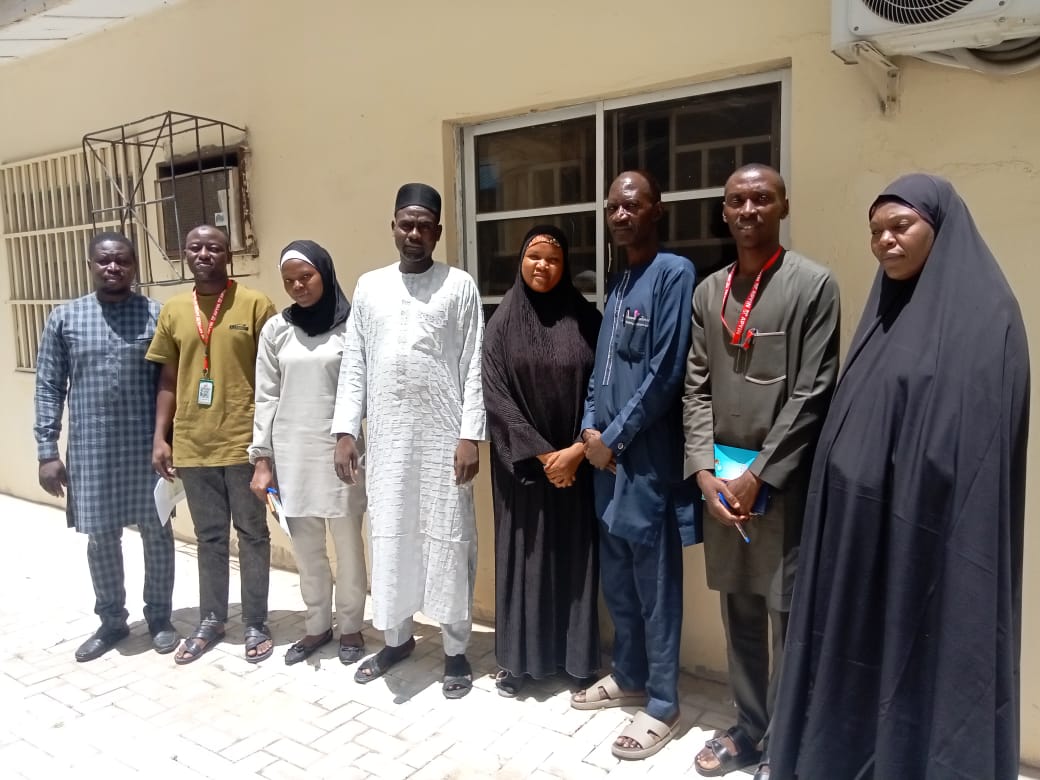
APYIN Deepens Collaboration With Borno State TB, Leprosy Programme
….Evidence from Community Monitors Accelerates Efforts to Improve TB Service Delivery
By Sabiu Inuwa, Maiduguri
The Association of Positive Youths Living with HIV/AIDS in Nigeria (APYIN), Borno State Chapter, has conducted a strategic advocacy visit to the State Tuberculosis and Leprosy Control Programme (STBLCP), Maiduguri, to present key tuberculosis (TB) service delivery gaps identified through Community-Led Monitoring (CLM) activities in selected health facilities across Borno State.
This advocacy engagement was carried out under the coordination of the Network of People Living with HIV and AIDS in Nigeria (NEPWHAN), with support from the Institute of Human Virology Nigeria (IHVN) and funding from the Global Fund. The visit aimed to strengthen accountability, improve service delivery, and ensure that community-generated evidence informs timely programmatic interventions.
The APYIN advocacy team consisted of five members, including the NEPWHAN State Programme/M&E Officer, Muhammad Amadu (Executive Director, APYIN Borno), Manasseh Wilson (M&E Officer, APYIN Borno), a representative of the State Malaria Elimination Programme (SMEP) who also serves as the Malaria Coordinator, and one media representative.
During the meeting, Mr. Manasseh Wilson, M&E Officer of APYIN Borno, presented evidence-based findings generated through Community-Led Monitoring activities, highlighting critical service delivery gaps affecting TB prevention, diagnosis, treatment, and care in monitored facilities. His presentation provided detailed evidence on identified challenges and their implications for clients accessing TB services.
Following the presentation, Muhammad Amadu, Executive Director of APYIN Borno, further emphasized the findings by providing additional context on how these service delivery gaps negatively affect vulnerable populations and hinder access to quality healthcare.
Key Issues Presented
Periodic Stock-Out of TB Medications at Gamboru PHC Due to Poor Logistics
The advocacy team raised concerns over the recurring stock-out of TB medications at Gamboru Primary Health Centre (PHC). This challenge continues to disrupt treatment continuity, increases the risk of poor treatment adherence, and may negatively impact treatment outcomes among TB clients.
The team stressed that uninterrupted access to TB medications is essential for successful treatment, prevention of drug resistance, and improved health outcomes for clients receiving TB care.
In response, the State Tuberculosis and Leprosy Control Programme (STBLCP) advised facility management to promptly notify supervisory authorities whenever stock levels become critically low. The facility TB focal person was also encouraged to maintain regular communication with supervisors to enable timely redistribution of available commodities from nearby facilities and prevent future stock-outs.
Delay in TB Diagnosis Services at Gomari PHC Due to Limited Diagnostic Capacity
APYIN Borno also reported the absence of TB diagnostic services at Gomari PHC, which has resulted in delays in case identification and treatment initiation for presumptive TB clients.
The team highlighted that delayed diagnosis increases the risk of disease progression, poor health outcomes, and continued transmission within communities.
To address this challenge, the State Tuberculosis and Leprosy Control Programme (STBLCP) recommended the immediate referral of all presumptive TB cases from Gomari PHC to the BEN Laboratory for GeneXpert testing, as the BEN Laboratory is geographically closer to Gomari PHC and can provide faster access to diagnostic services.
The programme further explained that this referral pathway would help reduce delays in diagnosis while easing the burden on Umaru Shehu Ultra-Modern Hospital, which currently receives a high volume of TB test referrals from multiple Primary Health Centres across the state. This approach is expected to improve efficiency in TB diagnosis and accelerate timely treatment initiation for affected clients.
Stakeholder Response and Commitments
The APYIN advocacy team was received by Mr. Yohanna Ali, Deputy Programme Manager of the State Tuberculosis and Leprosy Control Programme (STBLCP). After reviewing the findings, Mr. Ali commended APYIN Borno and NEPWHAN for implementing a strong community-driven monitoring system capable of identifying real service delivery gaps at facility level.
He expressed satisfaction with the CLM initiative and acknowledged the importance of community-generated evidence in improving health system responsiveness.
Mr. Yohanna Ali stated that he was pleased to see a programme actively identifying service delivery gaps at health facilities and assured the team that the State Tuberculosis and Leprosy Control Programme is ready to address all TB-related gaps brought to its attention.
He further assured the advocacy team that the issues affecting both Gomari PHC and Gamboru PHC would receive immediate attention.
APYIN Borno’s Commitment to Accountability
Speaking during the advocacy visit, Muhammad Amadu, Executive Director of APYIN Borno, appreciated the prompt response and commitment demonstrated by the State Tuberculosis and Leprosy Control Programme.
He thanked the STBLCP leadership for their willingness to engage constructively and respond swiftly to issues identified through community-led monitoring.
He reaffirmed APYIN Borno’s commitment to strengthening accountability, promoting community participation, and ensuring that vulnerable populations have equitable access to quality healthcare services.
Impact of Community-Led Monitoring
This advocacy engagement further demonstrates that Community-Led Monitoring (CLM) remains a powerful accountability mechanism for improving healthcare service delivery. Through CLM, communities are able to generate real-time evidence, amplify the voices of service users, and promote timely action from policymakers and health system actors.
The successful engagement with the State Tuberculosis and Leprosy Control Programme clearly shows the impact of CLM in influencing decision-making, strengthening accountability, and accelerating corrective interventions within the healthcare system.
APYIN Borno remains committed to advancing people-centered healthcare, strengthening accountability, and improving access to quality TB services across Borno State. The organization will continue to engage key stakeholders and monitor implementation of commitments secured during the advocacy visit to ensure sustainable improvements in TB prevention, diagnosis, treatment, and care.


