


By Sabiu Malam Malam, Maiduguri
In an effort to combat land degradation and promote land management practices, the Borno Agro-Climatic Resilience in Semi-arid Landscapes (ACReSAL) FAO trainers has conducted a 2 – day training session on large scale land restoration in Bama Local government area of Borno state.
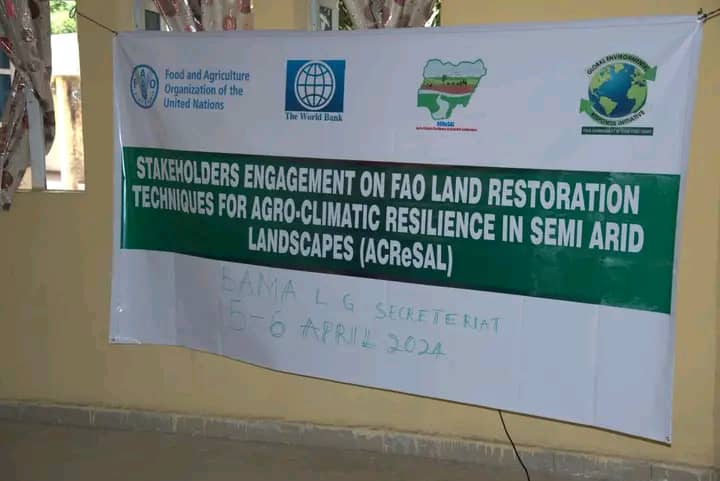

The training, which was part of FAO’s Step Down approach is aimed at equiping local communities with the necessary knowledge and skills to restore degraded lands and improve agricultural productivity.
The FAO Step Down trainers include Lead Fical NGO Dr. Ngare Dogo, GIS Officer Samson Hassan Mshelia, Desk Officer Ministry of Environment Mbursa Dibal as well as Desk Officer AFR100, Mohammed Shettima.
Key messages delivered during the training include the importance of direct seed sowing, social fencing, indigenous seed mobilization, and the formation of a local implementation committee.
Direct seed sowing being a technique that involves planting seeds directly into the soil without prior seedling production, was highlighted as a cost-effective and efficient method of restoring degraded lands. Social fencing involves the use of living barriers to protect farmland from encroachment as against physical fencing.
Indigenous seed mobilization was also promoted as a means of preserving local biodiversity and ensuring the adaptation of trees to the local environment.
Participants were encouraged to collect and use locally adapted seeds for reforestation and agroforestry projects.
In addition, the formation of a local implementation committee was proposed to coordinate and oversee land restoration activities in the community, ensuring that, the initiatives are sustainable and community-driven.
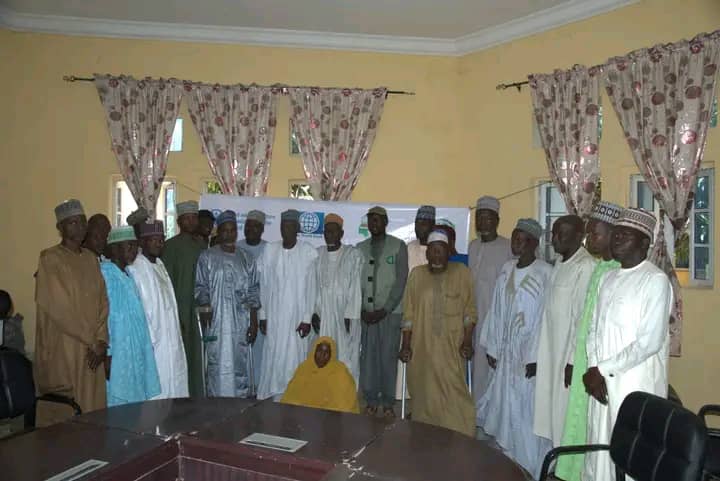
The training session was well attended by a number participants, who expressed enthusiasm and commitment to implementation of the key messages shared by Food and Agriculture Organisation master trainers.
Local farmers and community members welcomed the opportunity to learn new techniques and approaches to land restoration, recognizing the importance of sustainable land management practices for food security and environmental conservation.
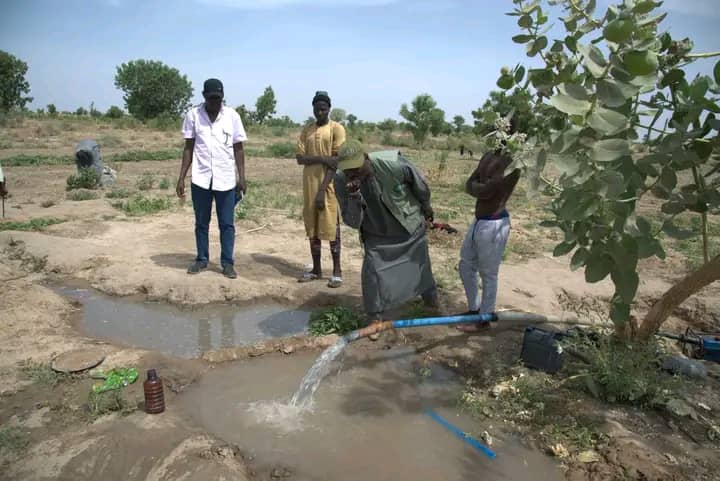
The Team also conducted a site assessment to ascertain the hardness of the soil and water availability and also engaged with irrigation farmers association at site.


