


By Abdulkarim Ibrahim
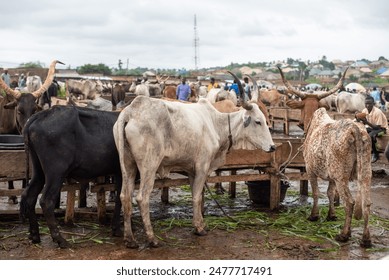
The Lagos State Butchers’ Association is sounding the alarm as cow prices skyrocket to a staggering N2 million, threatening the livelihoods of its members.
The association is urgently seeking the Federal Government’s intervention to prevent the sector from collapsing. With prices soaring from N200,000 to N350,000 to as high as N2 million, depending on the size of the cow, many butchers are struggling to maintain profit margins and stay in business.
The association’s Chairman, Alhaji Taiwo Rasak, disclosed this in an interview with the News Agency of Nigeria (NAN) last week in Lagos.
Rasak warned that the relentless increase in cow prices has brought Lagos butchers to the verge of collapse, with many fighting to stay afloat as their profit margins dwindle.
“At the moment, the cheapest cow you can get is N700,000 against N200,000 to N350,000.
“Some cows are as high as N2,000,000 now depending on the size.
“It is going to be more expensive now that we are in the Ramadan season,” Rasak said.
He said the development had led to reduced profit margins with many butchers battling to survive, while some could shut down their businesses if the situation persists.
“The impact of rising cow prices on Lagos butchers cannot be overstated. Many are struggling to survive and some may be forced to shut down their businesses if the situation doesn’t improve.
“The usually vibrant Oja Awolowo Market here in Mushin has fallen quiet with meat sellers facing a dire shortage that left their stalls nearly bare.
“While I acknowledge the government’s efforts to improve the lives of Lagos butchers, I urge them to swiftly address the mounting challenges in the sector that demand a more rapid and effective response,” he said.
Rasak hailed the government’s funding of meat production as a crucial investment in the livestock sector, stressing that this support will be a lifeline for butchers and farmers, enabling them to stay afloat despite the soaring costs of cows.
“The interventions can help bridge the gap between supply and demand, ultimately benefiting consumers.
“By supporting meat production, the government can contribute to food security, economic growth, and the well-being of its citizens.
“To effectively alleviate the challenges faced by meat sellers, the government must ensure that palliative loans are disbursed efficiently to reach the intended beneficiaries.
“Those who genuinely require financial support to sustain their businesses must be sought after.
“It is crucial that the government establishes a transparent and equitable system for distributing palliative loans, guaranteeing that these funds are directed towards meat sellers who are struggling to cope with the rising costs and need assistance to stay afloat,” he concluded.


