


By Ibrahim Adam
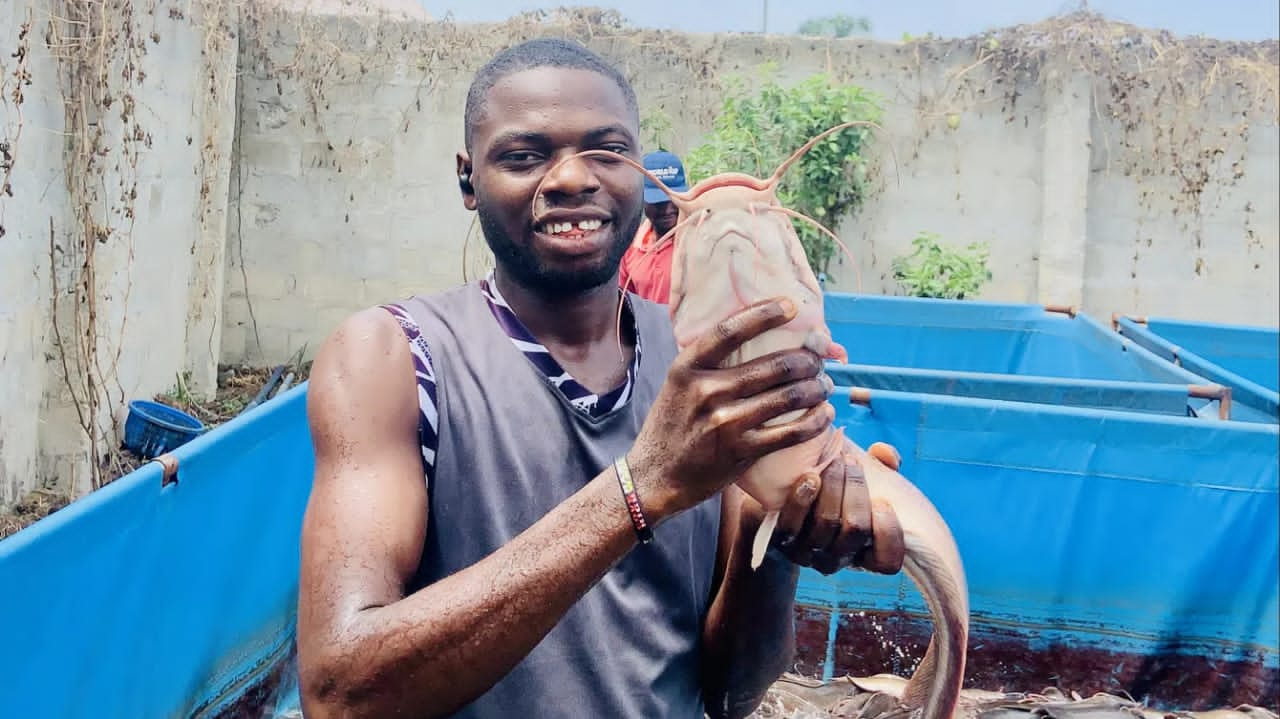
Nigeria’s once-thriving catfish farming industry faces a crisis. Numerous post-COVID-19 challenges have forced many farmers to abandon the business, despite continued demand for catfish in popular dishes.
Farm closures are drying up the supply chain, threatening the future of an industry that employs many women.
Those who remain struggle with longer growth times. Smallholder farmers now take nearly six months to raise fish to market size, compared to just three to four months previously. They blame the deteriorating quality of fish feed, citing both rising prices and reduced protein content.
Catfish farmer, Bassey Offiong Edem in Cross River State highlights the decline. She struggles to find good quality feed and notices a significant difference in protein content compared to the past.
This results in slower growth, extending the production cycle by two months. Meriam Okon, another Cross River farmer, shares similar concerns.
The rising cost of good feed forces many farmers to resort to cheaper, locally sourced alternatives. However, these substitutes often lack essential vitamins and additives, further hindering fish growth.
Mrs. Edem proposes collaboration as a solution. Farmers could work together to acquire their own fish meal or partner with feed producers, ensuring better quality feed and faster growth.
Faced with soaring feed costs and declining profitability, some farmers like Peter Akwashiki from Nasarawa State are planning to leave the business altogether.
The challenges faced by catfish farmers have inevitably impacted consumer prices. Over the past three years, the cost of fish has risen significantly.
Table-size catfish now retails between N2,500 and N3,000 per kilo, with even higher prices reported in some areas.
The price of roasted catfish reflects this trend, with prices ranging from N3,000 to N5,000 per fish in Abuja, depending on the location.
|
|


