


By Abdulkarim Ibrahim
Medical and environmental specialists have once again stressed the urgent need to adopt clean cooking energy as a way to combat household air pollution and safeguard public health. Their call came during a high-level forum that brought together key stakeholders to discuss clean fuel and cookstove solutions.
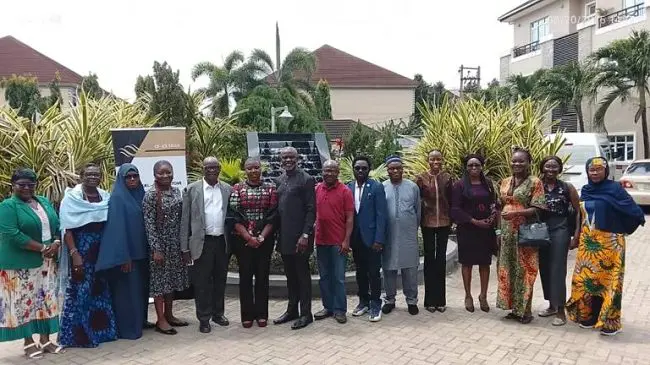
The event, which took place in Lagos on Wednesday, August 20, 2025, served as a platform for experts, policymakers, and health professionals to deliberate on practical strategies to transition Nigerian households to safer energy options.
This initiative is being supported by the U.S. National Institutes of Health (NIH) in collaboration with New York University, the Lagos State University Teaching Hospital (LASUTH), and the Lagos State University College of Medicine (LASUCOM). These institutions are working jointly to address the growing health and environmental burden caused by unsafe cooking practices.
Read Also: Fed. Gov’t Commits N450bn For Renewable Energy, Poverty reduction
The Lagos State Environmental Protection Agency (LASEPA) is also a major partner in the project, providing local expertise and institutional support to ensure that implementation strategies align with environmental safety goals.
In a goodwill message delivered at the event, Lagos State Commissioner for Health, Prof. Akin Abayomi, described clean cooking as not just an environmental issue but also an urgent public health necessity. His remarks highlighted the seriousness of the challenge at hand.
Represented by Dr. Kemi Ogunyemi, the Special Adviser to the Governor on Health, Prof. Abayomi emphasized that the forum was designed to go beyond discussions and focus on practical steps for the adoption of clean energy solutions at the household level.
He pointed out that household air pollution is responsible for millions of premature deaths globally each year. According to him, the burden is heavier on women and children, who are more exposed due to traditional cooking responsibilities in vulnerable communities.
Read Also: NUPRC Calls For Balanced Approach To Decarbonisation, Energy Security, Economic Growth
Abayomi further explained that adopting clean cooking fuels and stoves could drastically reduce maternal health risks, childhood pneumonia, and long-term conditions such as hypertension and dementia. This makes clean cooking an intervention with both immediate and lifelong health benefits.
He also stressed that the benefits of clean cooking extend beyond health. Cleaner fuels help reduce deforestation, lower greenhouse gas emissions, and save families money that would otherwise be spent on buying firewood or charcoal.
To ensure sustainability, Abayomi urged that clean fuels must be both affordable and culturally acceptable. He also called on local industries to play a bigger role in developing and distributing clean cooking technologies in Nigeria.
Speaking at the forum, Prof. Ololade Wright of LASUCOM and LASUTH drew attention to the fact that millions of Nigerian households still rely on dangerous fuels such as firewood, charcoal, sawdust, animal dung, and kerosene.
She warned that the fumes released by these fuels severely damage the respiratory and cardiovascular systems. Over time, prolonged exposure raises the risks of hypertension, strokes, and pneumonia, with women and children being the most vulnerable victims.
Read Also: NSIA, SEforALL, Others Partner To Innovate $500m Distributed Energy Renewable Fund For Nigeria
Prof. Wright concluded her presentation by calling for urgent government action to raise public awareness and improve access to cleaner alternatives. She highlighted bioethanol stoves, liquefied petroleum gas (LPG), and renewable cooking technologies as safer, healthier, and more sustainable options that must be scaled up nationwide.
She said the Clean Fuel, Clean Cookstove Project aims to drive large-scale transition from polluting fuels to sustainable, affordable clean options for households.
“Clean cooking is a pathway to healthier families, cleaner air, and climate resilience, and Nigeria cannot afford delay,” Wright stressed.
Prof. Gbenga Ogedegbe of New York University added that household air pollution is linked not only to respiratory disease but also to hypertension, dementia, and impaired child cognition.
He noted that the health burden is higher in low-resource countries like Nigeria, underscoring the urgency of the project.
Dr Tunde Ajayi, LASEPA’s General Manager, emphasised environmental benefits, stating that clean cooking improves household environments, reduces climate impacts, and enhances Lagos air quality.
He said monitoring shows that cutting emissions from cooking, traffic, and generators directly improves the air people breathe.
Read Also: Kano Gov’t Partners Moroccan Firms, Woos $10bn Energy Investment
Ajayi added that the project supports both cleaner energy and local innovations in air quality monitoring.
The experts urged governments at all levels to expand awareness, ensure fuel accessibility, and strengthen policies for widespread adoption of clean cooking.
The aim remains to reduce household air pollution and its severe health and environmental consequences.


