


By Abdulkarim Ibrahim
Effects Of Climate Change On Humans
Ultimately, the way climate change impacts weather, the environment, animals, and agriculture affects humanity as well. But there’s more. Around the world, our ways of life—from how we get our food to the industries around which our economies are based—have all developed in the context of relatively stable climates. As global warming shakes this foundation, it promises to alter the very fabric of society. At worst, this could lead to widespread famine, disease, war, displacement, injury, and death. For many around the world, (for example Maiduguri in Nigeria) this grim forecast is already their reality. In this way, climate change poses an existential threat to all human life.
Human Health
Climate change worsens air quality. It increases exposure to hazardous wildfire smoke and ozone smog triggered by warmer conditions, both of which harm our health, particularly for those with pre-existing illnesses like asthma or heart disease.
Insect-borne diseases like malaria and Zika become more prevalent in a warming world as their carriers are able to exist in more regions or thrive for longer seasons.
Thousands of people face injury, illness, and death every year from more frequent or more intense extreme weather events. At a 2-degree Celsius rise in global average temperature, an estimated one billion people will face heat stress risk. In the summer of 2022 alone, thousands died in record-shattering heat waves across Europe. Weeks later, dozens were killed by record-breaking urban flooding in the United States and South Korea—and more than 1,500 people perished in the flooding in Pakistan, where resulting stagnant water and unsanitary conditions threaten even more.
The effects of climate change—and the looming threat of what’s yet to come—take a significant toll on mental health too.
One 2021 study on climate anxiety, published in the journal Nature, surveyed 10,000 young people from 10 different countries. Forty-five percent of respondents said that their feelings about climate change, varying from anxiety to powerlessness to anger, impacted their daily lives.
Worsening Inequity
The climate crisis exacerbates existing inequities. Though wealthy nations, such as the United States, have emitted the lion’s share of historical greenhouse gas emissions, it is developing countries that may lack the resources to adapt and will now bear the brunt of the climate crisis. In some cases, low-lying island nations—like many in the Pacific—may cease to exist before developed economies make meaningful reductions to their carbon emissions.
Even within wealthier nations, disparities will continue to grow between those rich enough to shield themselves from the realities of climate change and those who cannot. Those with ample resources will not be displaced from their homes by wars over food or water—at least not right away. They will have homes with cool air during heat waves and be able to easily evacuate when a hurricane is headed their way. They will be able to buy increasingly expensive food and access treatment for respiratory illness caused by wildfire smoke. Billions of others in developing economies can’t—and are paying the highest price for climate pollution they did not produce.
Displacement
Climate change will drive displacement due to impacts like food and water scarcities, sea level rise, and economic instability. It’s already happening. The United Nations Global Compact on Refugees recognizes that “climate, environmental degradation and disasters increasingly interact with the drivers of refugee movements.” Again, communities with the fewest resources—including those facing political instability and poverty—will feel the effects first and most devastatingly.
Economic Impacts
According to the 2018 National Climate Assessment, unless action is taken, climate change will cost the U.S. economy as much as $500 billion per year by the end of the century. And that doesn’t even include its enormous impacts on human health. Entire local industries—from commercial fishing to tourism to husbandry—are at risk of collapsing, along with the economic support they provide.
Recovering from the destruction wrought by extreme weather like hurricanes, flash floods, and wildfires is also getting more expensive every year.
Future effects of climate change
The first wave of impacts can already be felt in our communities and seen on the nightly news. The World Health Organization says that in the near future, between 2030 and 2050, climate change is expected to cause an additional 250,000 deaths per year from things like malnutrition, insect-borne diseases, and heat stress. And the World Bank estimates that climate change could displace more than 140 million people within their home countries in sub-Saharan Africa, South Asia, and Latin America by 2050.
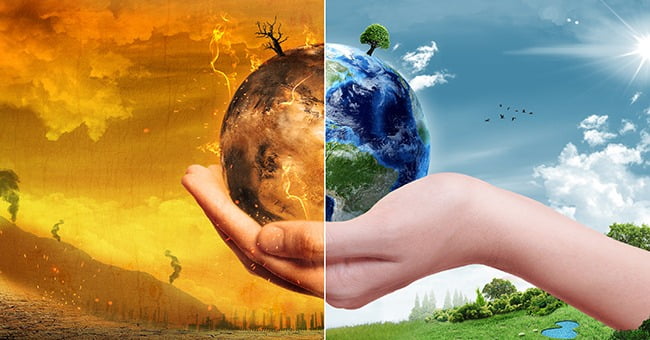
But the degree to which the climate crisis upends our lives depends on whether global leaders decide to chart a different course. If we fail to curb greenhouse gas emissions, scientists predict a catastrophic 4.3 degrees Celsius, (or around 8 degrees Fahrenheit) of warming by the end of the century. What would a world that warm look like? Wars over water. Crowded hospitals to contend with spreading disease. Collapsed fisheries. Dead coral reefs. Even more lethal heat waves. These are just some of the impacts predicted by climate scientists.
Conclusion
Climate mitigation, or our ability to reverse climate change and undo its widespread effects, hinges on the successful enactment of policies that yield deep cuts to carbon pollution, end our dependence on dangerous fossil fuels and the deadly air pollution they generate, and prioritize the people and ecosystems on the front lines. And these actions must be taken quickly in order to ensure a healthier present day and future.
In one of its latest reports, the IPCC presented its most optimistic emissions scenario, in which the world only briefly surpasses 1.5 degrees of warming but sequestration measures cause it to dip back below by 2100. Climate adaptation, a term that refers to coping with climate impacts, is no longer optional; it is necessary, particularly for the world’s most vulnerable populations.
By following the urgent warnings of the IPCC and limiting warming, we may be able to avoid passing some of the critical thresholds that, once crossed, can lead to potentially irreversible, catastrophic impacts for the planet, including more warming. These thresholds are known as climate tipping points and refer to when a natural system “tips” into an entirely different state. One example would be Arctic permafrost, which stores carbon like a freezer: As the permafrost melts from warming temperatures, it releases carbon dioxide into the atmosphere.
Importantly, climate action is not a binary pass-fail test. Every fraction of a degree of warming that we prevent will reduce human suffering and death, and keep more of the planet’s natural systems intact. The good news is that a wide range of solutions exist to sharply reduce emissions, slow the pace of warming and protect communities on the front lines of climate impacts.
Climate leaders the world over are to offer alternative models to system that prioritize polluters over people. Many of these solutions are rooted in ancestral and indigenous understandings of the natural world and have existed for millennia. Some solutions require major investments into clean, renewable energy and sustainable technologies
To be successful, climate solutions must also address intersecting crises like poverty, racism and gender inequality that compound and drive the causes and impact of the climate crisis. A combination of human ingenuity and immense political will can help us get there
Sources:
~Natural Resources Defense Council
~Wind Flow Newspaper Online


