


Human Rights Violations persist In Post-Insurgency Borno — Stakeholders
By Ali Mohammed Zanna, Maiduguri
Stakeholders in Borno State have warned that despite the relative return of peace, human rights violations remain a major challenge in the post-insurgency era, calling for urgent reforms to protect victims and vulnerable populations.
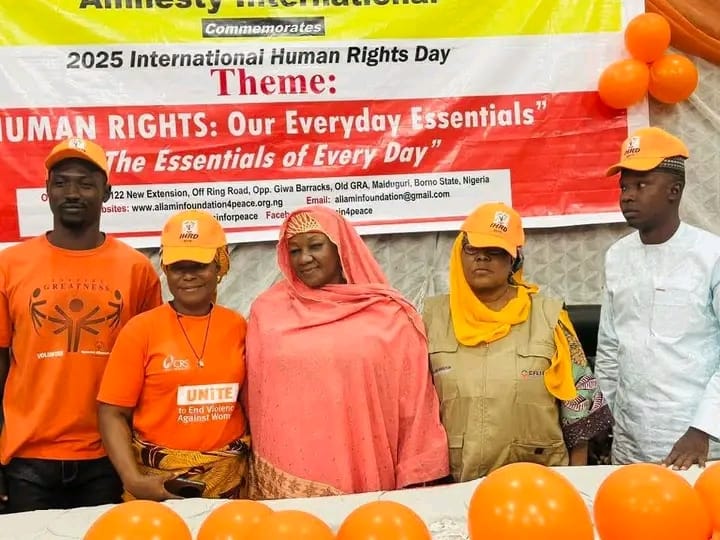
The concern was raised on Tuesday in Maiduguri during the 2025 International Human Rights Day organised by the Allamin Foundation for Peace and Development (ALFOPED) in partnership with other organisations and with the support of Amnesty International.
The event, held on December 10 and themed “Human Rights: Our Daily Essential” and “The Essentials of Everyday,” brought together security personnel, humanitarian agencies, civil society organisations, traditional leaders and survivors of violent conflict.
Participants noted that years of insurgency had left deep social, psychological and institutional scars, stressing that many survivors continue to face injustice, inadequate support and social exclusion.
They emphasised that without deliberate efforts to address past abuses and protect vulnerable groups, the gains recorded in peace and security may not be sustained.
Read Also: Theatre Commander Urges Troops to Sustain Momentum Against Insurgency
According to the stakeholders, victims of human rights violations must be placed at the centre of decision-making processes, with policies shaped by their lived experiences and testimonies to ensure healing and reconciliation.
Calls were also made for stronger accountability mechanisms, with participants urging authorities to investigate abuses thoroughly and ensure that perpetrators are brought to justice, regardless of status or affiliation.
Women, children, internally displaced persons and persons with disabilities were identified as the most affected groups, with speakers calling for stronger legal protections and improved access to social services for them.
The forum further highlighted the importance of strengthening local human rights institutions, stressing that weak capacity and limited independence have hindered effective response to reported cases.
Community sensitisation was also described as essential, with stakeholders calling for sustained public education campaigns to raise awareness of human rights standards and responsibilities at the grassroots.
Addressing the gathering, ALFOPED Executive Director, Hajiya Hamsatu Allamin, said the celebration of Human Rights Day was not merely symbolic but a call to action.
She said the programme aimed to reflect on lessons learnt from over 15 years of conflict in Borno State and to renew commitment to protecting human dignity.
“Human rights have no boundaries. Every human being, regardless of background or circumstance, deserves to be treated with dignity and fairness,” she said.
A panel session involving security officials and humanitarian actors stressed that survivors of conflict must not be stigmatised, but rather supported through justice, care and empowerment.
The panelists called for increased advocacy, improved coordination among stakeholders and deliberate empowerment of women and girls to restore livelihoods and social stability.
They also urged governments at all levels to domesticate and fully implement human rights policies, noting that peace and development cannot thrive in an atmosphere of injustice and discrimination.
The event ended with a renewed commitment by participants to continue working collectively to ensure that human rights protection remains central to peacebuilding and recovery efforts in Borno State.


