


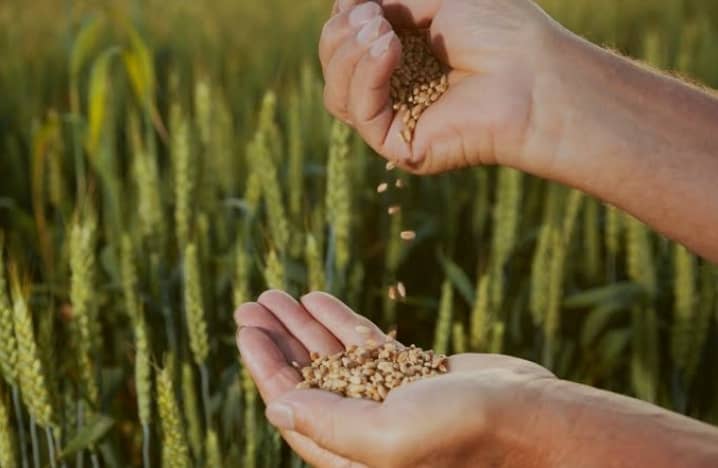
Inspired by Nature’s Signals: How Soil Health is Shaping West Africa’s Climate Future
When conversations turn to climate change, attention often shifts skyward, to rising temperatures, melting glaciers, violent storms, and worsening floods. Yet one of nature’s most powerful climate solutions lies not in the atmosphere, but beneath our feet.
On World Environment Day 2026, the global theme, “Inspired by Nature. For Climate. For Our Future,” serves as a timely reminder that the environment is constantly communicating with humanity. Nature is sending unmistakable signals through prolonged droughts, devastating floods, shrinking forests, declining biodiversity, and increasingly unpredictable weather patterns. The real question is whether the world is prepared to listen—and act.
Across West Africa and the Sahel, one of those signals comes from an often-overlooked resource: the soil.
For generations, fertile soils have sustained communities, powered economies, and fed millions of people. Agriculture remains the backbone of livelihoods across much of the region, employing the majority of rural populations and contributing significantly to national economies. But beneath the surface, the foundation of that prosperity is steadily weakening.
The statistics are sobering. Nearly 65 percent of Africa’s productive land is estimated to be degraded, while almost half of the continent’s landmass is affected by desertification. Years of nutrient depletion, unsustainable farming practices, erratic rainfall, erosion, and prolonged drought have steadily reduced soil fertility, leaving millions of farmers struggling with declining harvests and increasing vulnerability to climate shocks.
The challenge is further complicated by limited fertilizer use. Across Sub-Saharan Africa, farmers apply an average of just 22 kilograms of fertilizer per hectare—far below the global average of 146 kilograms. Even where fertilizers are available, they are often applied without adequate soil testing or technical guidance, reducing their effectiveness and limiting long-term gains in productivity.
These realities extend far beyond agriculture. Poor soil health affects food security, rural incomes, biodiversity, ecosystem stability, and ultimately the region’s ability to withstand climate change.
This is where the conversation about climate action takes a different direction.
Rather than viewing agriculture solely as a contributor to climate challenges, experts increasingly recognize it as part of the solution. At the centre of this transformation is Climate-Smart Agriculture (CSA), an approach championed by the Food and Agriculture Organization (FAO) that seeks to increase agricultural productivity, strengthen resilience to climate change, and reduce greenhouse gas emissions where possible.
Climate-Smart Agriculture is not a single farming technique but an integrated system that combines balanced fertilizer application, organic soil amendments, crop rotation, agroforestry, water conservation, and efficient soil moisture management. The goal is simple: work with nature instead of against it.
Healthy soils are fundamental to achieving that goal.
Beyond supporting plant growth, soil performs one of nature’s most remarkable climate functions. It acts as one of the world’s largest carbon reservoirs. Through photosynthesis, plants absorb carbon dioxide from the atmosphere and transfer much of it into the soil through their roots and organic matter. When soils are properly managed, this carbon remains locked underground, helping reduce greenhouse gases while simultaneously improving soil fertility.
This natural process—known as carbon sequestrationi s increasingly recognised as one of the most effective nature-based solutions to climate change. It delivers multiple benefits at once by improving soil structure, increasing water retention during droughts, reducing erosion during heavy rainfall, enhancing biodiversity, and supporting higher and more stable crop yields.
For West Africa and the Sahel, where climate variability continues to threaten food systems, investing in healthy soils is no longer simply an agricultural priority; it is a climate imperative.
Recognising this reality, the Regional Hub for Fertilizer and Soil Health was established under the Economic Community of West African States (ECOWAS) to strengthen soil fertility management and promote sustainable agricultural systems across the region.
As the Hub marks its second anniversary, it represents far more than an institutional milestone. It reflects a growing regional commitment to science-driven solutions capable of transforming agriculture while strengthening climate resilience.
Hosted by the International Institute of Tropical Agriculture (IITA), the Hub works alongside leading international organisations, research institutions, and private-sector partners to improve soil monitoring, fertilizer efficiency, evidence-based policymaking, and climate-smart farming across West Africa and the Sahel.
One of its important responsibilities is advising governments and stakeholders on soil carbon accumulation and sequestration potential across different agroecological zones, helping countries integrate soil health into broader climate mitigation strategies.
Its long-term ambitions are equally significant. By 2033, the Hub aims to support the restoration of at least 1.5 million hectares of degraded land through improved soil health while helping 1.5 million farmers adapt to climate-related risks. The initiative seeks to increase soil organic carbon, restore essential nutrients, reduce soil acidity and erosion, improve fertilizer efficiency, and strengthen agricultural resilience across the region.
Over the past two years, the Hub has focused on promoting Integrated Soil Fertility Management, encouraging the internationally recognised 4Rs of Nutrient Stewardship, using the right fertilizer source, at the right rate, at the right time, and in the right place, while supporting evidence-based policies that connect scientific research with practical solutions for farmers.
These interventions underscore a broader truth: sustainable agriculture begins with healthy soils.
As climate change continues to reshape weather patterns and agricultural landscapes, the ground beneath our feet is emerging as one of humanity’s strongest allies. Healthy soils capture carbon, conserve water, sustain biodiversity, and secure food production, making them every bit as important as forests, wetlands, and oceans in the global climate response.
World Environment Day 2026 therefore carries a message that resonates far beyond a single day of observance. Climate action is not only about reducing emissions or investing in renewable energy. It is also about restoring the natural systems that sustain life itself.
Among those systems, soil remains one of the most powerful, and too often overlooked.
If nature is speaking through the changing climate, the message is unmistakable. The future of food security, environmental sustainability, and climate resilience begins from the ground up.
By restoring the soil, West Africa is not merely improving agriculture; it is investing in its climate future, protecting rural livelihoods, and building resilience for generations to come.
In many ways, the soil beneath our feet may well be nature’s oldest—and most effective—climate solution.


