


By Anwar Usman
The Lagos State Government has issued an early warning to residents that the state will experience unusual rainfall amounts in the first peak of the 2025 rainy season, with a delayed ending extending into December.
This was disclosed by the Hon. Commissioner for Environment and Water Resources Mr. Tokunbo Wahab, while speaking at the Seasonal Climate Prediction (SCP) press briefing in Alausa, saying that, the forecast indicates a “longer-than-usual rainy season, beginning in late March and ending in early December.”
He stated that, “The rainy season is expected to start as early as the last week of March, while the end of the season is expected in the first week of December.
“The average annual rainfall amount predicted is 1,936mm, which is greater than the long-term 1991–2020 average”.
According to his explanations, the forecast is based on the neutral phase of the El Niño Southern Oscillation (ENSO), which will persist for the first six to eight months of the year.
He further explained that “Lagos State, together with the neighbouring stateof Ogun, will see an increase in downpour, with Ikeja, Badagry, Ikorodu, Lagos Island, and Epe all experiencing above-normal precipitation levels.
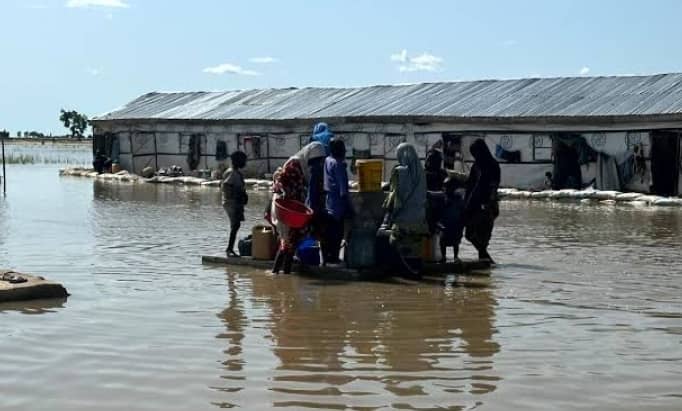
The commissioner warned of possible flash floods, especially in low-lying areas, and strong winds at the beginning and end of the rainy season, which could pose risks to lives, properties, and economic activities.
“We anticipate that the high amounts of rainfall may lead to flash flooding events in some parts of the state..
“Strong winds are expected during the onset and end of the season, which could disrupt commercial activities, cause flight delays, and lead to revenue losses,” he cautioned.
The commissioner assured residents that the state government is taking flood control measures to mitigate the impact of the predicted rainfall.
He reiterated that collaboration with NiMet remains a key strategy for early warning and climate adaptation efforts.
The commissioner noted that “The ministry is collaborating with NiMet in the annual Seasonal Climate Prediction, which has been a vital tool for farmers, planners, decision-makers, and businesses that could be affected by the rainy season”.


