


By Uzair Adam
Nigeria and Brazil have officially commenced the commercial phase of the $1.1 billion Green Imperative Project (GIP), a major agricultural initiative aimed at improving food production and attracting private-sector investment to enhance food security.
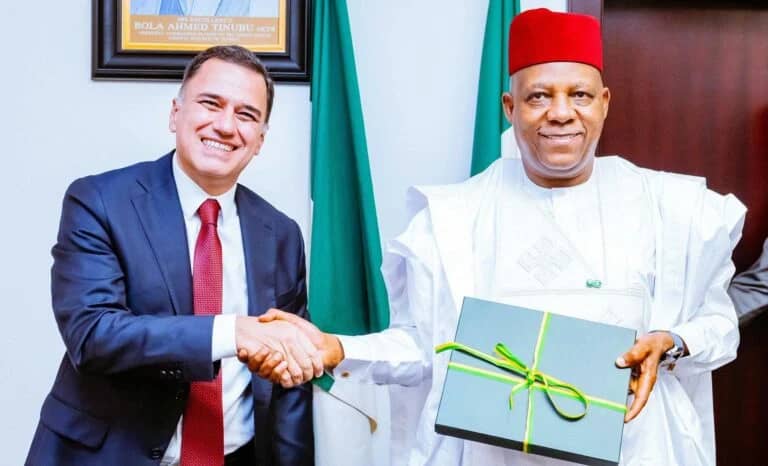
Our reporters gathered that the agreement was signed on Monday at the Presidential Villa in Abuja, according to a statement by Stanley Nkwocha, Senior Special Assistant to the Vice President on Media and Communications.
Nkwocha noted that the project aligns with President Bola Tinubu’s administration’s broader strategy to tackle food insecurity and modernize the agricultural sector.
Described as Africa’s largest agricultural project focusing on sustainable and low-carbon farming, the GIP is expected to create structural conditions that will drive efficient and competitive food production across Nigeria.
Vice President Kashim Shettima, speaking at the signing ceremony, highlighted the initiative’s role in advancing the government’s eight-point agenda. 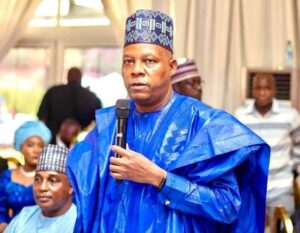

“As this administration works to address food security and implements President Bola Ahmed Tinubu’s eight-point agenda, it is crucial to integrate initiatives like the GIP for policy continuity and economic growth,” Shettima said.
“This project is a strategic, private-sector-driven initiative that empowers small-scale farmers and links them to agricultural value chains.”
Shettima also commended key government officials, including the ministers of agriculture, finance, and foreign affairs, as well as the attorney general, for their contributions to making the project a reality.
Carlos Garcete, the Brazilian ambassador to Nigeria, reiterated his country’s dedication to the GIP.
He noted that the project would support the local assembly of agricultural equipment, including tractors and spare parts, to strengthen Nigeria’s mechanized farming sector.
“For the past seven years, negotiations have been ongoing with the Nigerian government to secure funding from private and regional development banks for this ambitious project,” Garcete said.
“With the necessary structures in place, repairs for tractors and other equipment will be conducted locally by trained personnel under the GIP initiative.”
Governors from key agricultural states also welcomed the agreement. Jigawa State Governor Umar Namadi described the initiative as a significant milestone for Nigeria’s agricultural sector, particularly for states reliant on farming.
Similarly, Benue State Governor Hyacinth Alia praised the project, stating that it reinforces Benue’s role as Nigeria’s food basket.
Minister of Foreign Affairs Yusuf Tuggar also lauded the agreement, viewing it as a model for South-South cooperation between Nigeria and Brazil.


