


Risk, Survival And The Forest: How Displaced Women And Illegal Logging Deepen Borno’s Climate Crisis
By Sabiu Inuwa, Maiduguri
Every morning, displaced women and girls around Maiduguri walk into nearby forests in search of firewood, exposing themselves to threats of abduction and violence. What drives them is not choice but survival, as soaring energy costs, weak enforcement of anti-logging laws and unchecked deforestation intersect—deepening Borno State’s climate crisis and stripping vulnerable communities of both safety and environmental protection.
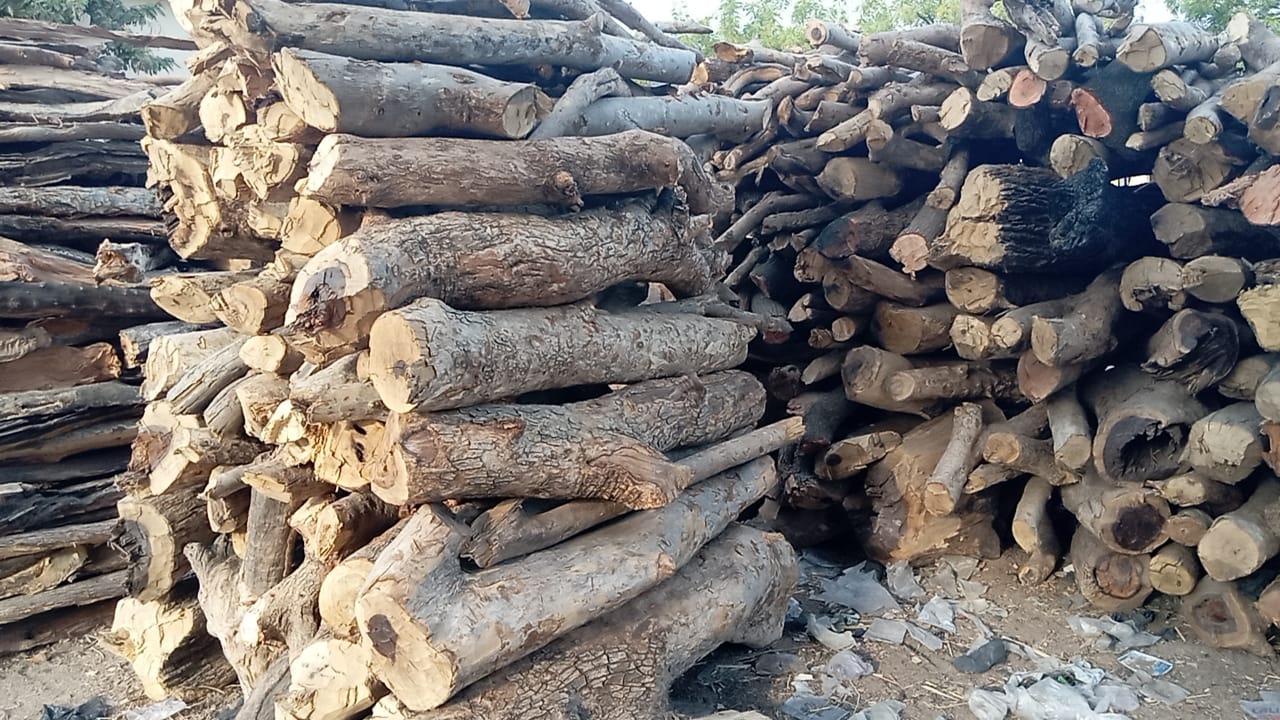
Across Borno State, reliance on firewood has intensified as cooking gas, kerosene and other cleaner energy sources become increasingly unaffordable. This growing dependence has fuelled indiscriminate tree felling in forests, farmlands and residential areas, accelerating deforestation in a region already battling desertification and climate stress.
While many households cut trees for domestic energy use, others burn wood to produce charcoal for sale. Some individuals have turned logging into a commercial activity, travelling deep into forests with vehicles to harvest trees and transport them to urban markets. In other cases, residents fell trees within their homes or business premises, citing safety concerns.
The environmental cost is matched by a growing human toll. Women and girls displaced by years of conflict are among the most affected, often trekking long distances into forests to collect firewood either for cooking or to sell at Maiduguri’s wood markets in order to earn money for food and basic necessities.
Also Read: Askira Uba LG Chairman Takes Bold Steps Against Deforestation, Illegal Mining
A Maiduguri resident, Alhaji Audu, said the surge in illegal logging is closely linked to rising energy prices.
“The high cost of gas and kerosene has made people cut down more trees. Many families have no other option,” he said.
Some firewood collectors insist they operate within the law. Comrade Muhammed, who described himself as a professional wood collector, said his group avoids cutting live trees.
“We don’t cut green trees. Anyone caught cutting living trees will face serious problems with forest officials,” he said, adding that collectors often encounter harassment and danger in the forest.
Despite these claims, the trade continues daily. Maidugu Ali, chairman of the Borno State Firewood Sellers Association, said women—many of them internally displaced—bring firewood to the market every day despite the risks involved.
“There was a time when bandits kidnapped some of them while they were in the forest, but they were later released,” he said.
Environmental experts warn that the long-term consequences of illegal logging extend beyond immediate livelihoods. Ambassador Usman Aliyu, Director-General of the Borno State Agency for the Great Green Wall (BOAGGWA), said deforestation is worsening climate-related challenges in the state.
“Trees are critical to human survival. They help prevent desertification, reduce soil erosion, and protect the environment,” he said.
Aliyu noted that unsustainable agricultural practices and uncontrolled tree cutting are accelerating land degradation across Borno. He urged residents to adopt environmentally friendly practices and exercise caution in cutting down trees, stressing that climate change impacts are already evident in the state.
In response to the growing environmental threat, the Borno State House of Assembly has passed a bill banning illegal logging. The law requires individuals seeking to cut down trees to formally notify the Ministry of Environment, which must review and approve the request before permission is granted.
However, experts say legislation alone is insufficient. Without affordable energy alternatives, stronger enforcement and targeted support for displaced women, illegal logging will likely persist, placing both vulnerable communities and Borno’s fragile environment at even greater risk in the face of climate change.


