


By Abdulkarim Ibrahim
According to IMF report, in 2024, Africa’s GDP stands at $2.8 trillion, generated by a population of 1.4 billion people in 53 countries. However, this wealth is far from being evenly distributed.
Africa’s economy is vast but highly concentrated, with just five countries, South Africa, Egypt, Algeria, Nigeria, and Ethiopia, collectively account for half of the continent’s total economic output of $1.4 trillion in 2024.
While these five nations generate nearly half of Africa’s wealth, the remaining 48 countries combined produce the other $1.4 trillion in GDP, highlighting the continent’s economic imbalance
The big five countries collectively produced $1.4 trillion in GDP, performed low comparable to Florida’s $1.6 trillion economy.
Florida’s economy, the fourth-largest economy in the United States grows at a faster rate of 3% higher than the national growth of 1.4%.
Florida’s tourism industry is a key driver of the state’s economy supported by infrastructure development and healthcare.
Despite their notable collective performance in Africa’s GDP growth, the giant five African countries are greatly distinct in their economic structures and growth drivers.
South Africa, Africa’s largest economy, boasts a diverse economic base, with finance, manufacturing, and mining playing critical roles. According to the IMF, the country’s GDP stands at $373.23 billion in 2024.

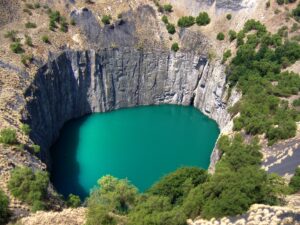
Despite economic challenges such as high unemployment and energy shortages, it remains the continent’s most industrialized economy.
With a GDP of $347.59 billion, Egypt plays a crucial role in global trade, thanks to its control over the Suez Canal, a key passage for ships traveling between Europe and Asia.
This strategic waterway generates billions of dollars in annual revenue, serving as a major source of foreign exchange for the country.


In addition, Egypt’s tourism sector remains a vital economic driver, attracting millions of visitors each year with its rich historical and cultural heritage.
Algeria, with a GDP of $267.81 billion is heavily reliant on its vast oil and natural gas reserves. As the world’s 10th-largest natural gas producer and a key supplier to Europe, hydrocarbons account for more than 90% of Algeria’s export earnings and 60% of government revenue.


Nigeria, a one time Africa’s largest economy by GDP, derives 90% of its export earnings from oil but struggles with challenges such as fluctuating crude prices, inflation, currency instability and corruption.

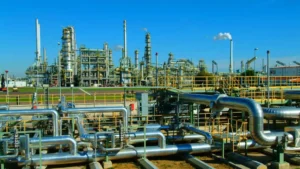
According to the IMF, Nigeria’s GDP stands at $252.74 billion in 2024, now making it the fourth-largest economy on the continent.

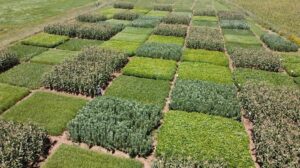
With a GDP of $156.08 billion, Ethiopia is one of Africa’s fastest-growing economies, driven primarily by agriculture, manufacturing, and infrastructure development.
The country is the largest coffee producer in Africa, with coffee exports generated over $1.3 billion in 2023.
However, Ethiopia has been working to diversify its economy by investing in industrial parks, textile manufacturing, and renewable energy.
While these five nations generate nearly half of Africa’s wealth, the remaining 48 countries combined together produce the other $1.4 trillion in GDP, highlighting the continent’s economic imbalance and poor performance.


