


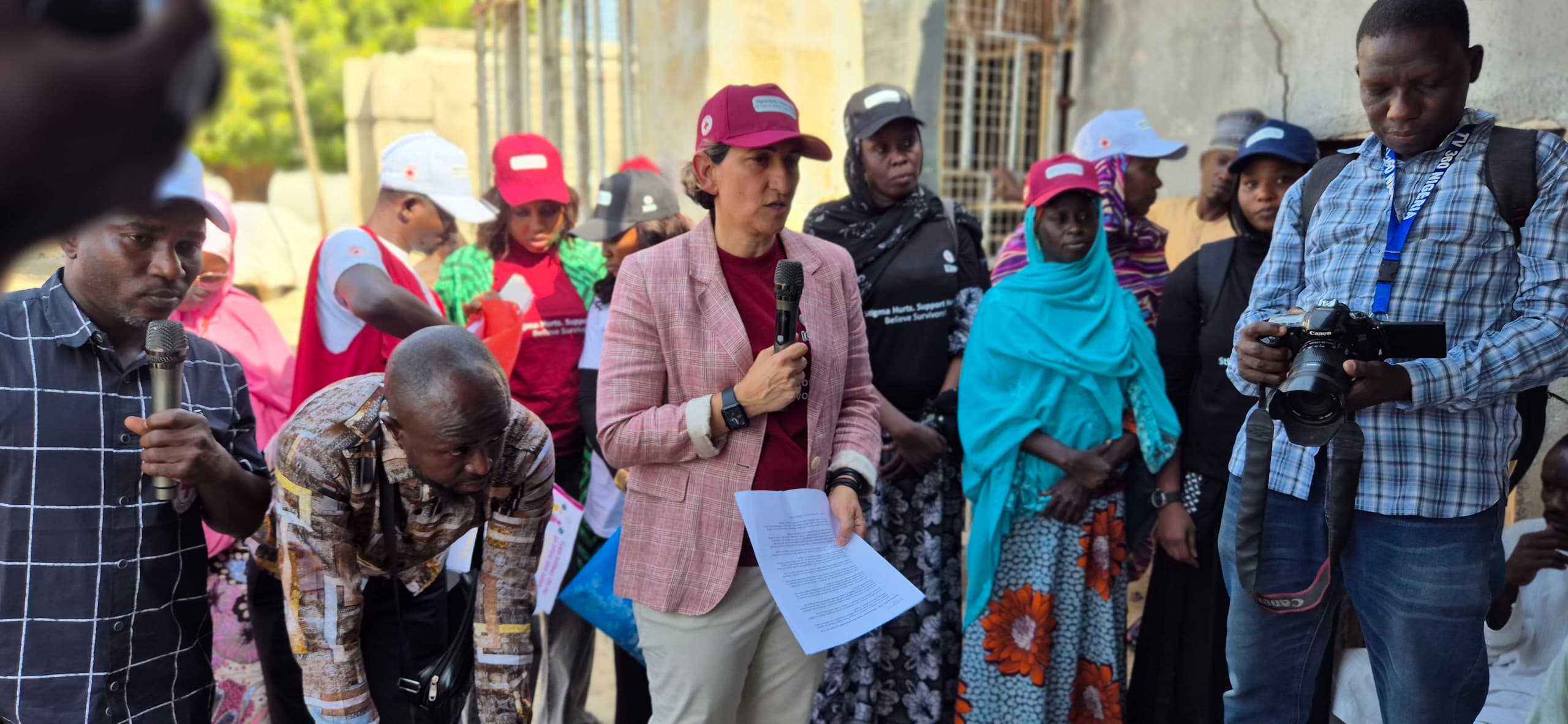
SGBV: ICRC Calls For Community Support To Reduce Stigma During 16-Day Of Activism
By Ali Mohammed Zanna, Maiduguri
The International Committee of the Red Cross (ICRC) has urged communities across the northeast to intensify efforts in supporting survivors of Sexual and Gender-Based Violence (SGBV), stressing that stigma remains one of the biggest barriers preventing affected persons from accessing lifesaving care.
Speaking during a sensitization session in Abbagaranam community as part of the global 16 Days of Action Against Sexual and Gender-Based Violence, Head of Delegation for the ICRC in Nigeria, Doris El Doueihy, said SGBV remains a critical humanitarian concern in Nigeria, particularly in regions affected by armed conflict.
She noted that more than 2.3 million people remain displaced in the northeast due to ongoing conflict, a situation that heightens exposure to sexual violence in camps and host communities. “Many survivors struggle to access adequate medical, psychological and psychosocial services,” she explained.
See Also: Thousands Still Searching For Loved Ones: ICRC Highlights Lingering Crisis In Northeast Nigeria
El Doueihy warned that prolonged displacement and limited access to basic resources have forced some women and children into survival sex. She described the consequences as severe, affecting health, livelihoods and family structures.
Under international humanitarian law, she said, all forms of sexual violence are strictly prohibited, and parties to armed conflict are legally obligated to prevent violations and ensure survivors receive timely care. She emphasized that stigma, not survivors, fuels silence, shame and reluctance to seek help.
“Stigma originates from society—from beliefs and norms that can be changed,” she said. “Families, religious leaders, women’s associations, youth groups and community influencers all have critical roles in creating environments built on empathy, protection and dignity.”
She added that the ICRC is conducting a series of activities across Borno, Adamawa, Yobe and Abuja—including community sensitizations, radio programmes and survivor consultations—to highlight the humanitarian consequences of SGBV and encourage prevention.
“What communities choose to do makes a difference,” she said. “Believing survivors without judgement, supporting early access to care, protecting confidentiality and rejecting victim-blaming are essential steps. Together, we can move from stigma to support.”
Also speaking, Bulama Bukar of Abbagaranam community urged residents to strengthen awareness and openly condemn all forms of sexual abuse and harassment. He said community enlightenment is vital to protecting women, girls and vulnerable persons.
“We must talk to our youths, families and neighbours about the dangers of sexual violence,” Bukar said. “Ignorance and silence allow these abuses to continue. By exposing wrongdoing and promoting accountability, our community can ensure safety and dignity for everyone.”
He called on parents, traditional leaders and community groups to take proactive steps in reporting cases, supporting survivors and discouraging harmful behaviours.
The event is part of efforts to promote safer communities and enhance local understanding of SGBV prevention, response and survivor-centered support.


