


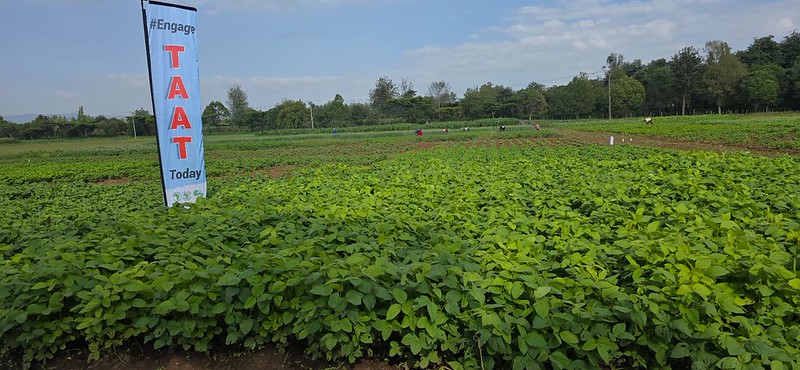
TAAT Model Gains Prominence As Africa Charts New Path For Food Systems Transformation
The Technologies for African Agricultural Transformation (TAAT) programme is taking centre stage at the African Food Systems Forum (AFSF) 2026 in Kigali, Rwanda, as African governments and development partners explore new approaches to strengthening food security, building resilience and scaling proven agricultural technologies across the continent.
TAAT will feature prominently in two high-level events at the forum, with discussions focusing on lessons from Africa’s recent food security emergency and the need to establish sustainable financing mechanisms capable of taking proven agricultural innovations from research laboratories to farmers and national investment programmes.
The first session, scheduled for September 2 at the Kigali Conference Centre, will examine how Africa can transform the experience of the African Development Bank’s USD1.5 billion African Emergency Food Production Facility (AEFPF) into a long-term model for food systems resilience.
Titled “From Emergency Responses to Food Systems Resilience: Lessons Learned from the AEFPF for Africa’s Next Generation of Agricultural Investments,” the high-level side event brings together agriculture ministries, national research institutions, development partners, CGIAR centres, private-sector actors, financial institutions, farmers and youth organisations.
The AEFPF was launched by the African Development Bank in response to the disruption of global food and fertiliser supplies following the Russia-Ukraine conflict, which cut off approximately 30 million metric tonnes of cereal supplies from the Black Sea region.
Across 35 African countries, the facility supported improved seed systems, expanded access to fertiliser, accelerated the deployment of agricultural technologies, promoted policy reforms and strengthened partnerships, with TAAT technologies providing a critical foundation for the emergency response.
The intervention has reportedly contributed to the production of more than 45 million metric tonnes of food, while over 406,000 metric tonnes of certified seed and 2.9 million metric tonnes of fertiliser were distributed to farmers. Nearly 15 million farmers were reached, with women accounting for 38.8 per cent of beneficiaries.
The Kigali discussions are expected to focus on how the approaches that delivered results during the emergency can be incorporated into national agricultural investment programmes, rather than being activated only when another crisis occurs.
Participants will examine strategies for scaling successful technologies, strengthening partnerships that facilitate rapid deployment and improving monitoring and evaluation systems to ensure that technology-driven interventions remain effective beyond emergency periods.
The second high-level conversation, scheduled for September 3, will shift attention from emergency response to the financing of long-term agricultural transformation.
Under the theme “CGIAR Scaling in Food Systems: Capital, Science, Partners,” representatives of international financial institutions, governments and development partners will explore practical ways of connecting proven agricultural research and innovations with large-scale development finance.
The African Development Bank-CGIAR partnership underpinning TAAT is expected to feature as a major case study, alongside the Islamic Development Bank-CGIAR partnership, demonstrating how sustained collaboration between scientific institutions and development financiers can accelerate the adoption of agricultural innovations.
The session will also highlight mechanisms such as the AfDB-CGIAR Clearinghouse Facility, through which CGIAR can help identify, validate and package proven innovations, strengthen investment designs and support implementation.
The prominence of TAAT at the two sessions underscores a growing shift in Africa’s agricultural development agenda, from responding to food crises to investing systematically in technologies, partnerships and financing models capable of delivering resilient food systems.
For Africa, the emerging message from Kigali is clear: the continent does not merely need to produce more food during emergencies; it must build agricultural systems capable of anticipating shocks, absorbing disruptions and sustaining food production through changing economic and climatic conditions.


