


Tinubu Secures Fresh IFC Interest As Global Investors Eye Nigeria’s Livestock, Energy, Housing Sectors
President Bola Ahmed Tinubu has secured a major investment boost for Nigeria after the International Finance Corporation (IFC) announced plans to dispatch a high-powered mission to the country to explore large-scale investments in livestock, energy and housing.
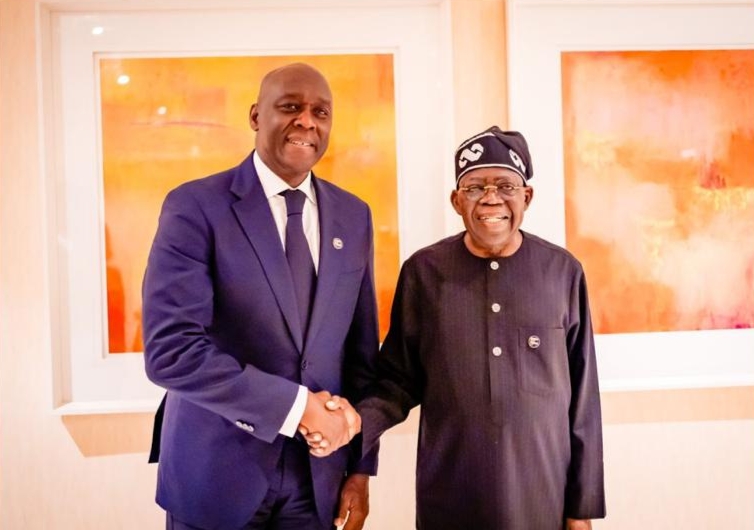
The breakthrough emerged during a strategic meeting between President Tinubu and top officials of the International Finance Corporation on the sidelines of the 13th Africa CEO Summit in Kigali, Rwanda, where global investors openly praised Nigeria’s controversial economic reforms.
Leading the IFC delegation, Managing Director Makhtar Diop revealed that the corporation was ready to immediately begin discussions on investment structures capable of unlocking massive private capital for key sectors of Nigeria’s economy.
Diop commended Tinubu’s administration for what he described as “courageous and transformative” reforms, particularly the removal of fuel subsidy and the harmonisation of Nigeria’s exchange rate system — policies that have sparked heated debate at home but are increasingly drawing attention from international financial institutions.
“President Tinubu took the bull by the horns,” Diop declared, applauding the administration’s willingness to take difficult economic decisions despite mounting public pressure over rising living costs.
Read Also: FG, AfDB Move To Unlock Billions For Livestock Revolution In Nigeria
The IFC boss said Nigeria’s reform agenda had sent a strong signal to global investors that the country was serious about rebuilding confidence and creating a more stable environment for long-term investments.
During the talks, President Tinubu reiterated Nigeria’s readiness to deepen partnerships with private investors, insisting that Africa must begin mobilising its own institutional capital to fund infrastructure, energy transition and industrial growth across the continent.
The President stressed that African pension funds should evolve beyond passive savings institutions into strategic development finance tools capable of supporting transformative projects in infrastructure, housing and productive industries.
Tinubu also pushed for greater regional integration through energy decentralisation, improved transmission infrastructure and cross-border financing systems, arguing that Africa cannot industrialise without solving its energy and connectivity crisis.
“If you want Africa to leapfrog, then energy transmission and decentralisation are important. The funding gap is there, and we must work together,” the President said.
The meeting further explored innovative financing mechanisms, including local currency funding models, institutional investor participation and regional banking partnerships aimed at strengthening trade and interstate financial integration across Africa.
The IFC delegation included Ethiopis Tafara and Dahlia Khalifa, while discussions also highlighted the potential role of Nigerian financial institutions such as Access Bank in driving continental investment expansion.
Observers say the development could mark another major test for Tinubu’s reform-driven economic strategy as the administration battles inflation, public frustration and pressure over the short-term impact of its policies while seeking long-term investor confidence.


