


UN Climate Talks End With Calls For Greater Cooperation, Faster Action Ahead Of COP31
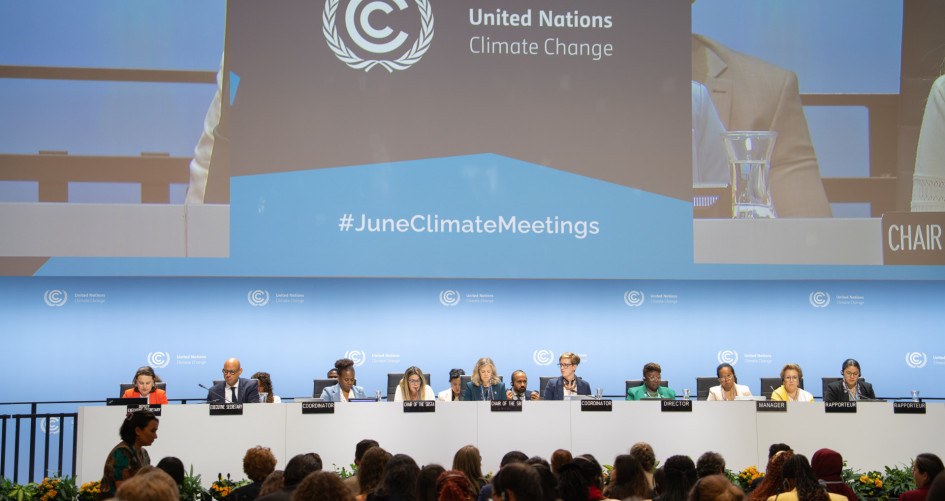
The United Nations Framework Convention on Climate Change (UNFCCC) has concluded its June Climate Meetings in Bonn, Germany, with a renewed call for stronger international cooperation and accelerated climate action, despite persistent divisions among negotiating parties.
In her closing remarks at the end of the ten-day conference, UNFCCC Executive Secretary Simon Stiell acknowledged that while significant challenges remain, delegates demonstrated seriousness and determination in addressing key climate issues. She noted that progress is often achieved through painstaking negotiations conducted away from public attention rather than through dramatic moments.
According to the Executive Secretary, negotiators recorded meaningful advances on the issue of just transition, taking important steps toward transforming the proposed just transition mechanism into a practical reality. The meetings also paved the way for a review of the just transition work programme, a development she described as beneficial for communities and workers worldwide.
She further highlighted progress under the Action for Climate Empowerment agenda, saying participants laid critical groundwork for broadening public engagement in climate action and supporting a fair transition to low-carbon economies. Several other thematic areas also witnessed substantive discussions and incremental achievements.
However, the UN climate chief expressed disappointment over the lack of significant breakthroughs on adaptation and mitigation efforts. While parties widely acknowledged the urgent need to deepen and accelerate climate action, she said the Bonn meetings failed to deliver the level of progress required in these crucial areas.
The conference also featured announcements from the incoming COP31 Presidency regarding new targets under the Action Agenda, focusing on electrification, urban resilience, energy efficiency, and waste management. The Executive Secretary emphasized that both formal negotiations and the Action Agenda remain complementary tracks that must advance simultaneously to produce meaningful outcomes at COP31.
Despite areas of progress, she warned against attempts by some parties to delay negotiations or revisit previously agreed commitments. Geopolitical tensions, she observed, continued to influence discussions, threatening to slow momentum at a time when decisive action is urgently needed.
Reaffirming the importance of existing international agreements, she urged all parties to uphold commitments under the Paris Agreement and the outcomes of the first Global Stocktake. These include pledges related to limiting global warming to 1.5 degrees Celsius, financing for loss and damage, mobilizing $300 billion annually, scaling up climate finance toward $1.3 trillion, and tripling adaptation funding.
The Executive Secretary also criticized what she described as a recurring tendency toward “you-first-ism,” where countries hesitate to advance commitments unless others move first. She warned that such an approach could lead to policy gridlock and undermine efforts to implement agreed climate goals before the second Global Stocktake at COP33.
Looking ahead, she stressed the importance of sustained political engagement in the months before COP31, urging governments to involve ministers early in resolving contentious issues. She expressed confidence that the leadership of Türkiye and Australia, alongside continued support from Azerbaijan, Brazil, and Ethiopia, would be instrumental in advancing negotiations. Concluding her remarks, she thanked delegates, observers, and UNFCCC staff for their commitment and reminded participants that addressing the climate crisis requires cooperation rather than competition, stressing that the protection of eight billion people depends on collective global action.


