

By Ali Mohammed Zanna, Maiduguri
As the security situation gradually improves in parts of Nigeria’s Northeast, families across the region are still living in agony—searching for loved ones who vanished during the height of the conflict.
According to the International Committee of the Red Cross (ICRC), nearly 24,000 people have been reported missing in Nigeria since 2014, with the majority of the cases emerging from the epicenter of insurgency in Borno State.
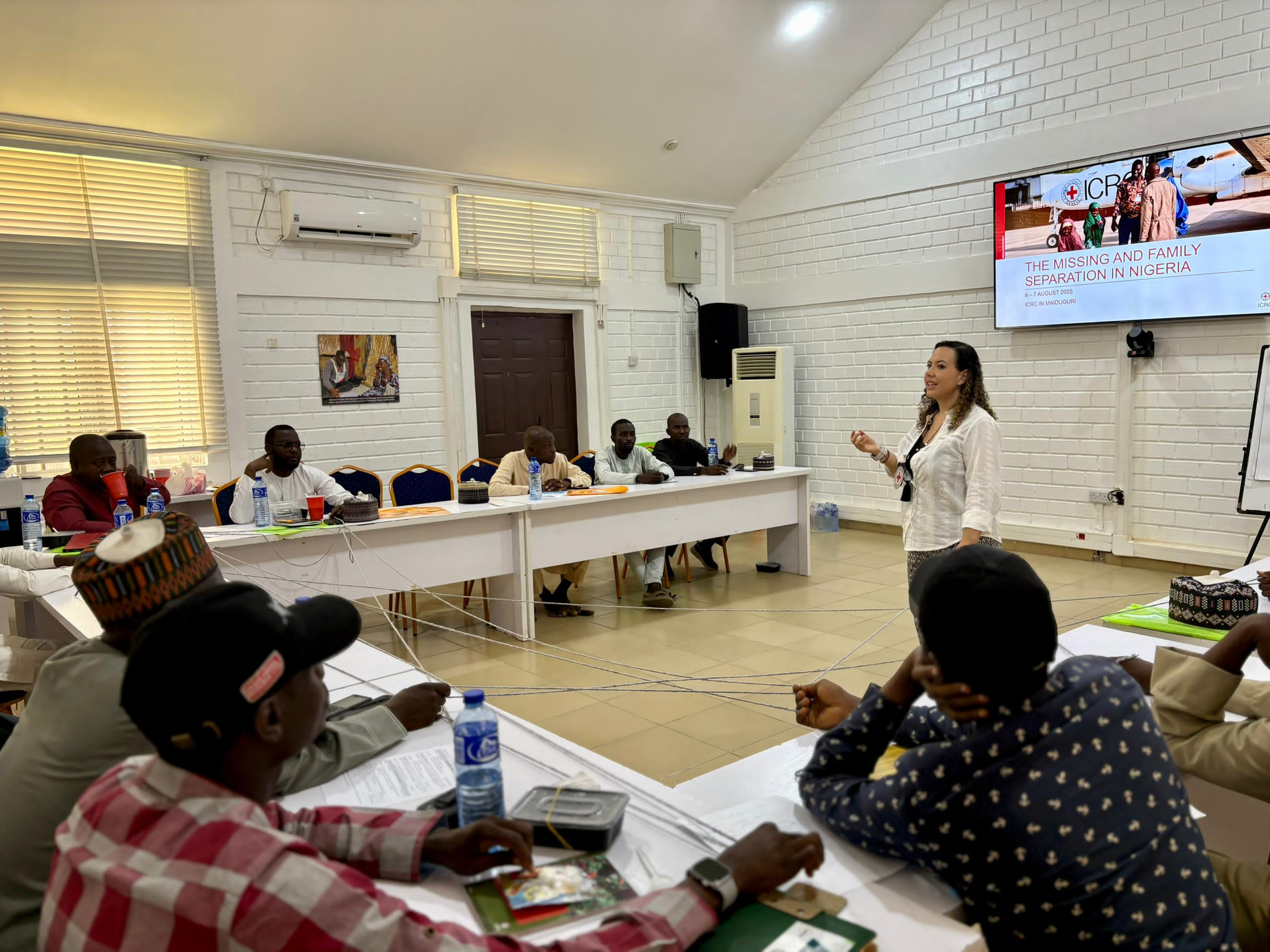
The revelation came during a media workshop held on Wednesday, where ICRC officials shed light on what they described as a “silent and unresolved humanitarian tragedy” often overshadowed by broader headlines of the over a decade and half armed conflict and displacement.
Addressing the participants during her opening remark, Head of ICRC sub-delegation in Maiduguri, Diana Japaridze, described the prevalence of missing persons and families who are yet to be reunited after suffering displacement caused by the armed conflict, disaster and violence in Nigeria
“Some people spend years searching for loved ones, often with no result. Families have a right to know their fate”
“In the chaos of armed conflict, situations of violence and disasters, families can become separated in a matter of minutes, creating anguish and vulnerability and sometimes leading to long years of uncertainty about the fate of children, spouses or parents”, she added.
According to Japaridze, through the workshop, the INGO hopes to elaborate on the different aspects and provide participants with the needed knowledge to navigate important topics relating to missing persons and family separation
She urged media practitioners to contribute to awareness creation and draw the public’s attention to the needs of missing persons.
“While States should raise public awareness of the problem of missing persons as a fundamental concern of international humanitarian law and human rights law, the mass media must draw the public’s attention to this problem and the needs of families of missing persons.
On her part, María Angélica Mirabal Toscano, Team Lead for the ICRC’s Protection of Family Links, said that over 9,000 of the missing cases come from Borno State alone—with the town of Bama accounting for a staggering 5,000 missing persons.
“Most of the disappearances—about 71 percent—were recorded during 2014 and 2015, which were among the most violent years of the armed fighting ” she stated, adding that limited access to some communities and the displacement of entire families continue to make tracing efforts difficult.
Perhaps most troubling is the vulnerability of the missing. According to the ICRC, more than half of those unaccounted for—56 percent—were children at the time they disappeared, highlighting the brutal toll the conflict has taken on the youngest and most defenseless
The ICRC noted that in many cases, families are not only enduring the trauma of loss but are also facing legal, social, and economic uncertainty in the absence of closure. Some have registered relatives as missing from outside Nigeria, reflecting the cross-border nature of displacement in the Lake Chad region. At least 2,000 cases were filed by families abroad, searching for missing loved ones believed to be in Nigeria.
The organisation reiterated its commitment to continuing its tracing efforts, reconnecting families, and advocating for accountability in resolving cases of disappearance—urging authorities and communities to keep the memory of the missing alive and support those left behind.
As the guns go quiet in many parts of the Northeast, the ICRC’s findings remind us that for thousands of Nigerian families, peace will remain incomplete until they know the fate of those who never came home.