

By Abdulkarim Ibrahim
– 48 Million Nigerians Lack Toilets as Waterborne Diseases Claim Over 100,000 Children Annually
– Only 9% of Households Nationwide Access Basic Sanitation Facilities
– North-Central Tops Open Defecation Chart; South-West Close Behind
– UNICEF Warns: Poor Sanitation Threatens Gains in Child Health and Nutrition
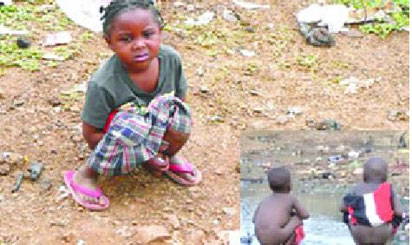
The Federal Government’s commitment to ending open defecation by 2025 is faltering, as nearly 48 million Nigerians still engage in the practice.
The widespread lack of access to safe sanitation continues to expose communities—particularly vulnerable groups to life-threatening illnesses such as cholera and diarrhoea, contributing to the deaths of over 100,000 children each year.
Experts warn that the crisis costs Nigeria an estimated N455 billion annually in lost productivity and healthcare expenses. Women, children, and the poor are the most affected. Without urgent and coordinated investments, stronger enforcement mechanisms, and effective partnerships, the revised 2030 sanitation target may also become unachievable.
Data from the National Bureau of Statistics (NBS) reveals that many households, especially in rural areas, continue to practise open defecation due to the absence of improved toilet facilities. Even where toilets exist, poor maintenance and limited public awareness reduce usage, worsening the sanitation gap.
Read Also: Governor Abba Kabir Yusuf, Leads on Open Defecation Free Campaign
Despite a marginal increase in access to basic sanitation over the years, the number of Nigerians practising open defecation has barely declined. In fact, the figure has increased slightly—from 46 million in 2019 to 48 million in 2021—highlighting the slow pace of progress.
UNICEF’s Representative in Nigeria, Cristian Munduate, has raised concerns about the ongoing sanitation crisis, calling for urgent investment and political commitment to scale up access to hygiene and sanitation services nationwide.
She described open defecation as a serious public health threat that undermines Nigeria’s progress in nutrition, environmental sustainability, and overall economic development.
In response to the growing crisis, the Nigerian government previously declared a state of emergency in the Water, Sanitation and Hygiene (WASH) sector and launched the Clean Nigeria: Use the Toilet campaign in partnership with NGOs. However, implementation has been patchy, and many policy declarations have yet to translate into real action.
Read Also: Governor Abba Kabir Yusuf, Leads On Open Defecation Free Campaigns
Year after year, state governments make promises especially during World Environment Day events to build public toilets and promote sanitation. But in states like Lagos, Enugu, Rivers, Benue, Niger, and Borno, these commitments often fall through. Jigawa remains the only state declared open defecation-free.
Studies have shown that the practice of open defecation, including in bushes and near waterways, is a major source of contamination and disease outbreaks. Faecal matter left in the open spreads pathogens, putting entire communities at risk.
The 2021 WASH National Outcome Routine Mapping (WASHNORM) report confirmed that Nigeria is far from achieving its sanitation goals. The report noted that the 2025 target is now largely unrealistic without drastic action, and that the losses due to poor sanitation of N455 billion annually, equate to roughly 1.3% of national GDP.
According to WASHNORM, only nine percent of Nigerian households have access to basic water, sanitation, and hygiene services. It also revealed regional disparities, with the North-Central region recording the highest open defecation rates, followed by the South-West.
Overall, only 44 percent of households use basic sanitation services, meaning more than half the population remains exposed to unsafe practices. Both rural and urban areas are affected, although informal settlements in urban slums show even more severe deficits.
The persistence of open defecation in both settings has led to recurring outbreaks of waterborne diseases and worsening health indicators. Experts say Nigeria cannot afford to ignore sanitation any longer, especially given its impact on education, economic growth, and public health.
Health professionals are urging the government to prioritise sanitation in budget planning and to collaborate with civil society to construct more public toilets, especially in high-risk areas. They also advocate for large-scale awareness campaigns to change behaviour.
Read Also: Open Defecation Remains A Challenge In Nigeria: 18% Of Citizens Affected
Health, Safety and Environment expert, Omowumi Olatunji, has warned of the environmental consequences of open defecation, including the pollution of water sources and the spread of deadly illnesses like cholera and diarrhoea.
She stressed that inadequate sanitation infrastructure disproportionately affects low-income groups and those living in slums, who often have no choice but to resort to open defecation. Ending the practice, she said, will require a deliberate, sustained national effort.
She said, “Open defecation has an impact on social life. The safety and dignity of a woman who engages in open defecation are questioned, and they are exposed to risks.
“The healthcare system is burdened due to open defecation. So, the best course of action is to continue awareness on the consequences of open defecation, and the government should also collaborate with NGOs to build public toilets that can be evacuated intermittently. Government agencies should apprehend more offenders.
“Ending open defecation needs collaboration, and the government must prioritise sanitation, increase budget allocation for the Ministry of Environment, and ensure that community leaders are aware of the dangers.”
Public health expert Olaide Balogun cautioned that open defecation poses a serious threat to children’s health, noting that their underdeveloped immune systems make them particularly vulnerable to infections and waterborne diseases associated with poor sanitation.
“Open defecation is still an issue even in Lagos State. Many of the people engaged in open defecation do not have access to a toilet. Faeces pollute the environment, and you notice a change in the atmosphere immediately when you get to these places.
“Children under five are mostly affected because of their low immune systems. The government is trying its best to tackle open defecation, but there is a need to take the issue of sanitation more seriously. Awareness campaigns must increase, and amenities should be provided.
“In some cases, enforcing regulations and penalties for open defecation may be necessary to deter the practice. But offenders often return to it after being released, due to the lack of facilities.”
The absence of adequate sanitation facilities not only endangers public health but also erodes human dignity, exposing individuals—especially women and girls—to embarrassment and social stigma. Many are forced to wait until nightfall to relieve themselves, increasing their risk of harassment, assault, and other safety threats in the process.
Beyond the personal toll, poor sanitation places a heavy burden on the economy through reduced workforce productivity and rising healthcare expenses. In highly populated states like Delta, Ogun, Lagos, and Oyo, the steady influx of people—often without access to proper housing or sanitation—has worsened the open defecation crisis, highlighting the urgent need for integrated urban planning and infrastructure development.