

Nigeria has taken a major step towards ending its heavy dependence on wheat imports with the successful cultivation of rainfed wheat in Plateau State, a move the Federal Government says will transform food security and economic growth.
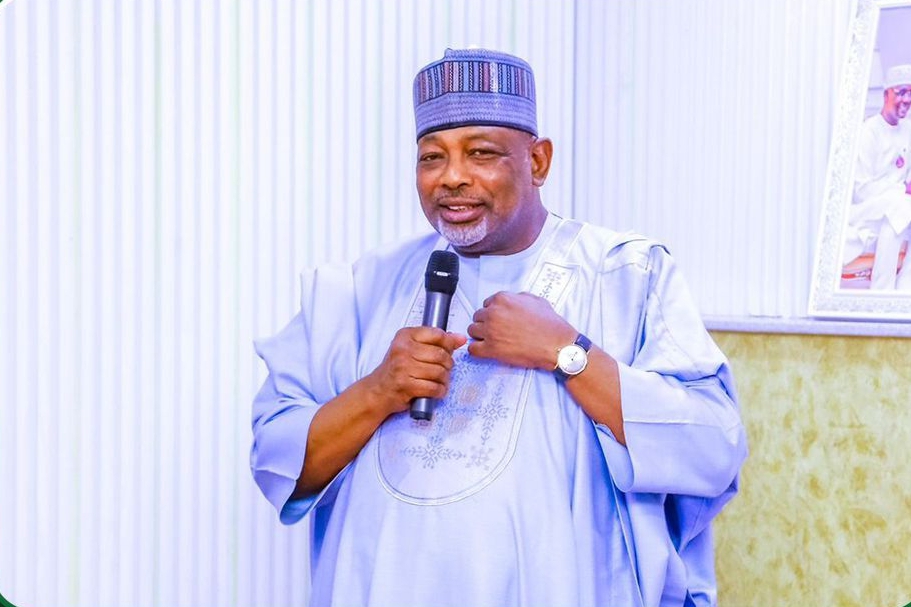
Speaking at the Second National Rainfed Wheat Farmers’ Field Day in Kuru, Jos, the Honourable Minister of Agriculture and Food Security, Senator Abubakar Kyari, CON, described the breakthrough as “nothing short of transformative,” noting that wheat production will no longer be limited to irrigated areas.
See Also: FG Distributes Subsidised Farming Inputs To 6,000 Kano Wheat Farmers
“With rainfed wheat, farmers in Jos, Mambila, and Obudu highlands can now grow wheat during the rainy season naturally, sustainably, and profitably. This innovation opens the door to a future where Nigeria’s wheat demand can be met by our own farmers,” the Minister said.
Kyari commended the Lake Chad Research Institute (LCRI) for developing the new varieties, calling it a “true testament to Nigerian ingenuity and scientific excellence.” He lamented that Nigeria imported wheat worth N970.22 billion between October 2022 and September 2023, describing the trend as “worrisome, unacceptable, and unsustainable.”
Under President Bola Ahmed Tinubu GCFR’s Renewed Hope Agenda, agriculture has been elevated to a presidential priority, with the government rolling out key interventions including:
• Deployment of over 2,000 tractors and combined harvesters nationwide in the first phase of the Renewed Hope Mechanisation Initiative.
• Recapitalisation of the Bank of Agriculture (BoA) and operationalisation of the National Agricultural Development Fund (NADF) to expand credit access and investment in agribusiness.
• A Post-Harvest Management Initiative to reduce losses, upgrade grain silos, and strengthen national food reserves.
See Also: Jigawa Wheat Farmers Lament Losses, Seek Gov’t Support
The Minister urged farmers, researchers, and private-sector partners to join forces in scaling up rainfed wheat cultivation to hundreds of thousands of hectares nationwide, stressing that the government is committed to ensuring access to certified seeds, mechanisation services, and reliable markets.
“Every grain of Nigerian wheat planted is a step toward national dignity, a signal that we can feed our people, grow our economy, and stand tall among nations,” Kyari declared.