

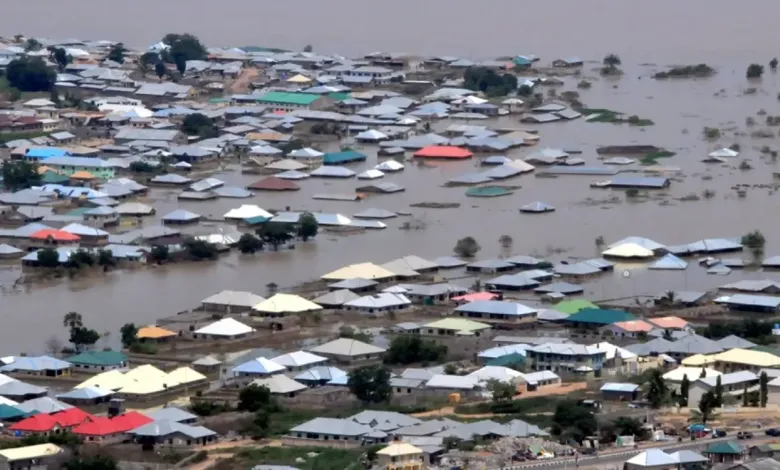
Floods Hammer MSMEs, Manufacturers as Stakeholders Demand Long-Term Resilience Measures
The devastating floods ravaging parts of Nigeria are inflicting severe economic losses on micro, small and medium-sized enterprises (MSMEs), manufacturers and warehouse operators, prompting renewed calls for coordinated government action to strengthen flood resilience and protect businesses from recurring disasters.
Leadership reports that, Stakeholders and operators in the organised private sector (OPS) have urged the federal and state governments, as well as relevant ministries, departments and agencies (MDAs), to implement sustainable flood management measures. They advocated increased investment in drainage infrastructure, regular desilting of waterways, strict enforcement against illegal developments on flood channels and wider access to affordable insurance for businesses.
The latest flooding comes at a particularly difficult time for businesses already grappling with soaring energy costs, inflation, exchange rate volatility and high borrowing costs. Industry players warn that the recurring destruction caused by floods is eroding business confidence, threatening jobs and slowing Nigeria’s fragile economic recovery.
Manufacturers say the floods have disrupted production activities through damaged equipment, destroyed raw materials and finished goods, submerged warehouses and blocked transport routes. These disruptions, they noted, are affecting supply chains and could lead to shortages of essential products and higher consumer prices.
Director-General of the Manufacturers Association of Nigeria (MAN), Segun Ajayi-Kadir, described flooding as a growing operational risk, especially for industries located in flood-prone industrial clusters. He said recurring floods interrupt production schedules, increase maintenance costs and delay deliveries, resulting in significant revenue losses for manufacturers.
According to him, manufacturing depends heavily on efficient logistics and reliable infrastructure, both of which are severely affected whenever access roads become impassable or factory premises are inundated. He stressed that businesses often pass the resulting costs to consumers through higher prices.
Ajayi-Kadir called for greater investment in flood-control infrastructure around industrial estates, improved drainage systems and stricter enforcement of physical planning regulations to reduce future losses.
The National Vice President of the Nigerian Association of Small and Medium Enterprises (NASME), Dr. Abdulrashid Yerima, said small businesses remain the worst hit because many operate without insurance or financial buffers to recover from disasters. He noted that a single flood incident can wipe out years of investment for many entrepreneurs.
Yerima observed that retailers, food processors, fashion businesses and small-scale manufacturers have recorded significant losses as floodwaters damaged inventory and equipment. He urged financial institutions to develop climate-risk financing and emergency intervention facilities to support affected businesses.
Warehouse operators also expressed concern over growing inventory losses. Chief Executive Officer of a Lagos-based logistics and warehousing company, Simon Ndudi, said businesses have increased spending on preventive measures such as elevated storage facilities, water pumps and reinforced drainage systems. However, he noted that once floodwaters enter warehouses, valuable goods—including food products, pharmaceuticals, electronics and packaging materials—often become unsellable.
He added that flooded roads continue to disrupt transportation and increase distribution costs, placing additional pressure on already strained supply chains.
Chief Executive Officer of the Centre for the Promotion of Private Enterprise (CPPE), Dr. Muda Yusuf, said the impact of flooding extends beyond environmental concerns to the broader economy. According to him, disruptions to production, distribution and market access reduce the supply of goods and increase operating costs, contributing to inflationary pressures.
Yusuf stressed the need for stronger investment in resilient infrastructure, improved urban planning and effective disaster preparedness to minimise future economic losses.
Industry experts also warned that many industrial facilities established decades ago are increasingly exposed to extreme weather events due to changing climate conditions. They advised businesses to incorporate climate-risk assessments into investment decisions to safeguard operations and sustain industrial growth.
Meanwhile, National President of the Association of Small Business Owners of Nigeria (ASBON), Dr. Femi Egbesola, called on insurance firms and pension fund managers to expand microinsurance coverage for MSMEs. He lamented that more than 98 percent of small businesses remain uninsured because of high premiums, delayed claims and low confidence in insurance services, warning that many affected enterprises could be forced to shut down if adequate financial protection is not provided.