

By Uzair Adam
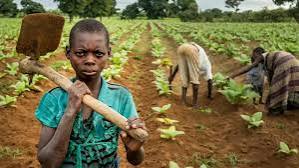
The Federal Government has expressed concern over the persistent issue of child labour in the agricultural sector, describing it as a significant challenge in West Africa.
The Minister of State for Labour and Employment, Nkeiruka Onyejeocha, highlighted this on Wednesday during the inaugural of Economic Community of West African States (ECOWAS) Child Labour Experts Annual Review Meeting in Abuja.
Onyejeocha noted that many children in the region endure long working hours in hazardous conditions, depriving them of access to education, healthcare, and a childhood free from exploitation.
“Agriculture accounts for a substantial share of child labour globally, and our region is no exception,” she said.
The event organised by ECOWAS in collaboration with the International Labour Organisation (ILO), aimed to assess the progress in tackling child labour and strengthen regional strategies to combat the issue.
Onyejeocha commended the efforts of ECOWAS, the ILO, and other partners involved in the Action Against Child Labour in Agriculture in West Africa (ACLAWA) project.
She emphasized the importance of a coordinated approach to address the root causes, including poverty, limited access to quality education, and weak enforcement of labour laws.
The minister also expressed concern over the issue of forced labour, which often traps vulnerable individuals in exploitative conditions, perpetuating poverty and hindering national development.
In her remarks, the Director of the ILO Country Office for Nigeria, Ghana, Liberia, Sierra Leone, and ECOWAS, Vanessa Phala, disclosed that 160 million children worldwide are still engaged in child labour.
“Sub-Saharan Africa, including West Africa, bears a disproportionate share of this crisis,” Phala said, stressing the need for stronger grassroots efforts like the Community Child Labour Monitoring Committees established under the ACLAWA project.
Similarly, Dr. Alieu Touray, representing the President of the ECOWAS Commission, revealed that an estimated 30 percent of children in West and Central Africa are involved in child labour, working an average of 18 hours per week.
Touray urged member states to implement the newly adopted ECOWAS Regional Action Plan on the Elimination of Child Labour and Forced Labour (2022-2030) to reverse the alarming trend.
The Federal Government, through the Ministry of Labour and Employment, has ratified key ILO conventions and established structures to address child and forced labour.
However, stakeholders agree that more effort is needed to eliminate child labour and ensure that children in the region can access education and opportunities for a better future.