

By Uzair Adam
The Federal Government has reaffirmed its dedication to improving rice production through climate-smart agricultural practices.
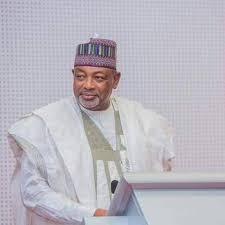
Speaking during a training session for 20 extension agents on the System of Rice Intensification (SRI) in Kano, the Minister of Agriculture, Alhaji Abubakar Kyari, underscored the importance of sustainable farming methods in addressing the challenges posed by climate change.
The event, organized by the SRI-2030 initiative in collaboration with the Federal Ministry of Agriculture and Food Security, highlighted the role of innovative practices in boosting rice yields and reducing environmental impacts.
Representing the minister, Iyabola Lawal Mustapah, Technical Officer for the Environment and Climate Change Unit, emphasized the significance of the partnership in advancing Nigeria’s climate action goals.
“Rice cultivation is a notable contributor to greenhouse gas emissions. This collaboration with SRI-2030 aims to implement innovative techniques that align with our climate goals, improve productivity, and equip smallholder farmers with advanced skills,” Mustapah stated.
James Dahlgreen, Program Director of SRI-2030, represented by agricultural specialist Abdulrahman Danbaba, explained that the training targeted extension agents from Kano, Jigawa, Kebbi, Bauchi, and Adamawa states.
The participants are expected to train 2,000 farmers in their respective states, ensuring widespread adoption of eco-friendly rice farming practices.
“This training is a vital step in promoting sustainable rice cultivation. By enhancing efficiency and reducing environmental impact, we aim to support farmers in achieving higher yields while mitigating climate change,” Danbaba said.
Established in 2020 by The Downforce Trust, SRI-2030 focuses on eco-friendly rice production techniques that reduce greenhouse gas emissions, enhance carbon sequestration, and support global food security.
The initiative plans to expand its adoption to 50 million hectares by 2030, potentially reducing emissions by 8.5 billion tonnes of CO₂ equivalent by 2050.
It is also projected to produce an additional one billion tonnes of rice and generate $1.6 trillion in income for farmers.
Kano State Governor Abba Kabir Yusuf, represented by Dr. Farouk Kurawa, Managing Director of the Kano Agricultural and Rural Development Authority (KNARDA), reiterated the state’s readiness to support the initiative.
He assured participants of the government’s commitment to improving agricultural practices through capacity building.
Participants expressed their gratitude for the initiative, with Idris Musa Rano from Kano and Yahuza Garba from Kebbi pledging to use the knowledge gained to transform rice farming in their communities.
The training represents a significant stride towards sustainable agriculture in Nigeria, balancing increased productivity with environmental conservation.