

By Abdulkarim Ibrahim
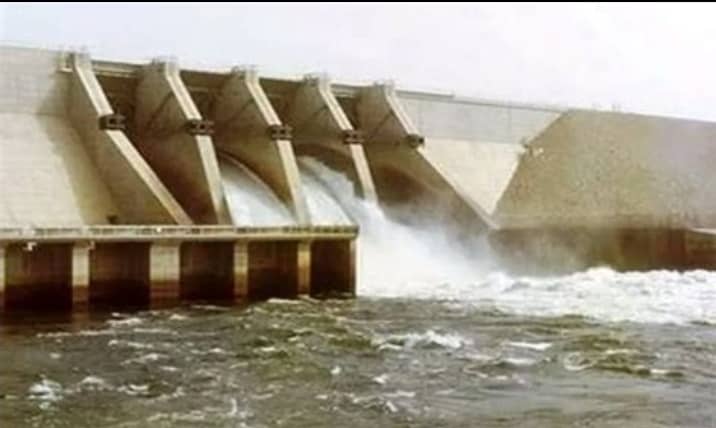
Katsina State Governor, Dikko Umaru Radda, has reaffirmed his administration’s commitment to backing the Federal Government’s efforts to revive the Sabke Dam irrigation project.
The initiative aims to enable year-round farming activities in the state, boosting agricultural productivity and food security.
Governor Radda made this pledge while hosting a Federal Government delegation, led by Dr. Tanimu Yakubu Kurfi, Director-General of Budget, during an inspection tour of the project in Maiadua.

The dam, which was handed to the Sokoto Rima River Basin Development Authority in 2018, has the storage capacity of 30.6 million cubic meters and dispensing capacity of 495 cubic meters per hour.
According to a statement by the governor’s Chief Press Secretary, Ibrahim Kaula Mohammed, Radda said the Sabke Dam, when resuscitated, will serve as a catalyst for modern irrigation farming, reduce dependency on rain-fed agriculture and promote agribusiness development.
The statement further said the visit was to see the dam’s potential for enhancing agricultural productivity and water resources management.
“The choice of Sabke, Jibia, and Zobe Dams for full utilization under the Renewed Hope Infrastructure Development Fund is a welcome development, and I thank President Bola Ahmed Tinubu for his determination to ensure every Nigerian has food to eat and at affordable prices.
“Northern Nigeria has vast land and adequate water resources, more than what is required for whole year-round farming activities. This initiative would engage our teeming youths and also reduce insecurity disturbing the north,” he added.
Earlier, Kurfi explained that the Sabke Dam irrigation project was part of the Federal Government’s measures to address food security in the country.
He said: “The delegation led by the state governor has inspected the dam, irrigation site, as well as other supporting facilities, which is the newest project across the country.
“On account of its newness, the Federal Government in collaboration with the state government would spend less to start organizing farmers into growers, commercial farmers and other stakeholders, financiers, wheat and rice millers all together to maximize utilization of the water body established about eight years now”.