

By Abdulkarim Ibrahim
The Federal Government has reaffirmed its dedication to protecting public health and the country’s livestock sector by implementing stringent controls on animal imports.
“Any animal that is not certified as healthy before entering Nigeria will be detained,” the Minister of Livestock Development, Idi Maiha, stated.
The Minister made the significant announcement on Tuesday in Abuja, while hosting a delegation from the Nigerian Agricultural Quarantine Service (NAQS), a regulatory agency under the Federal Ministry of Agriculture and Rural Development.
Maiha further expressed concerns over the rapid decline in the donkey population, warning that no donkey skin should be exported without legal authorisation.
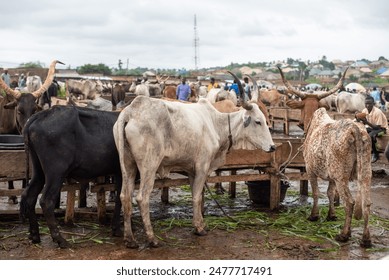
He further disclosed that 60 per cent of the cattle entering Nigeria come from neighbouring countries and often cross the borders unchecked.
To tackle this problem, the Federal Government plans to establish control posts at strategic border points to regulate the movement of livestock.
“I have personally seen over 10,000 animals crossing into Nigeria in a single week. The first cases of anthrax in Nigeria originated from outside the country due to the lack of border control.
“This situation must be addressed, and we are committed to taking inventory, building, and manning control posts to prevent further risks.
“Once these control posts are established, your (NAQS) presence there will be essential. All enforcement stakeholders, including veterinary doctors, security agents, and NAQS officials, will be deployed to strengthen border monitoring,” he said.
Addressing the rising cost of meat in Nigeria, Maiha attributed the issue to illegal fees imposed on truck drivers transporting livestock.
He revealed that a government survey identified over 700 checkpoints along major livestock transportation routes, where drivers are subjected to extortion.
The excessive levies imposed on truck drivers directly impact the price of meat
“From Mubi (Adamawa State) to Jigawa, Calabar, Bayelsa, and Lagos, the excessive levies imposed on truck drivers directly impact the price of meat and other livestock products.
“We are working on data collection and policy interventions to eliminate these illegal roadblocks and reduce the cost of meat,” the Minister stated.
While speaking, the Comptroller General of the Nigeria Agricultural Quarantine Service (NAQS), Dr. Vincent Isegbe, reaffirmed the agency’s dedication to preventing the spread of animal diseases and ensuring the safe importation of agricultural products.
To achieve this, NAQS has established operational offices across all six geopolitical zones in Nigeria, allowing for more effective monitoring and regulation.
Additionally, NAQS is actively engaging in international agreements with countries like Mexico and China to strengthen regulatory oversight and ensure compliance with global standards.
This collaborative approach enables NAQS to stay updated on best practices and address potential risks associated with agricultural imports. By doing so, NAQS aims to safeguard Nigeria’s agricultural sector and protect public health.
“Our mandate is to prevent the spread of animal diseases and ensure compliance with agricultural safety standards. We have been intercepting illegal agricultural imports and conducting sensitization programs for farmers to discourage the use of harmful chemicals in livestock feed and crop preservation,” Isegbe explained.
He called for stronger collaboration with the Ministry of Livestock Development to enhance regulatory measures and ensure Nigeria’s agricultural sector remains protected from harmful imports.