


Borno Conflict Survivors Need More Mental Health Support — ICRC
By Ali Mohammed Zanna, Maiduguri
The International Committee of the Red Cross (ICRC) has called for increased mental health and psychosocial support for survivors of the Boko Haram insurgency in Borno State, amid concerns over the destruction of health facilities and the growing psychological burden of prolonged conflict.
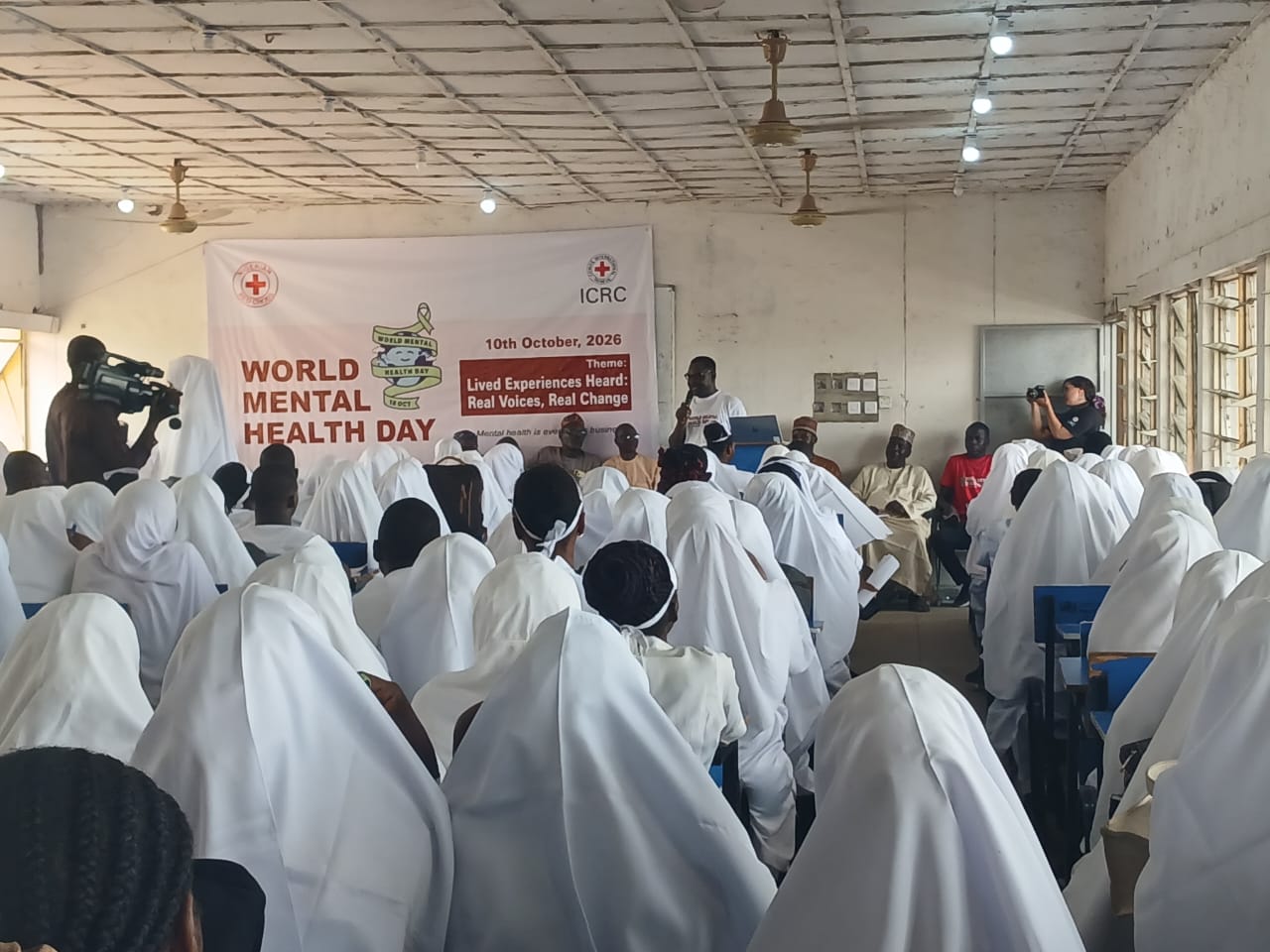
The organisation raised the concern during a mental health lecture and awareness session organised for student nurses, midwives and lecturers at the College of Nursing and Midwifery, Maiduguri, to mark the 2026 World Mental Health Day.
Statistics presented during the lecture indicated that more than 65 per cent of health facilities in Borno State had been destroyed as a result of the ongoing conflict, highlighting the challenges facing access to healthcare in communities affected by the insurgency.
An ICRC psychologist, Dr Bitrus Maina, said the prolonged crisis had taken a significant psychological toll on residents, with more than 60 per cent of the population reportedly experiencing mental health challenges.
Maina explained that mental health went beyond the absence of mental disorders, encompassing the ability to cope with everyday challenges, manage emotions and function effectively within one’s community.
He said the scale and duration of the insurgency had increased the need for accessible mental health services and psychosocial support, particularly for people who had experienced displacement, loss of loved ones and other consequences of the conflict.
The psychologist also highlighted the wider mental health burden in Nigeria, citing an estimate that about 40 million Nigerians were living with mental health challenges.
He expressed concern over the shortage of qualified mental health professionals, including psychiatrists, clinical psychologists and psychiatric nurses, warning that the gap could further limit access to essential care.
Maina urged student nurses to consider specialising in mental health care to help address the shortage of trained personnel and improve access to treatment, counselling and psychosocial support.
Also speaking, an ICRC staff member, Comfort Ashelo Dauda, identified stigma and discrimination as major barriers preventing people from seeking mental health services.
She said fear of being judged or discriminated against often discouraged affected individuals from discussing their experiences or seeking professional assistance.
Dauda explained that the ICRC provided mental health and psychosocial support to people affected by the insurgency in Borno, including families of missing persons and communities struggling with the consequences of prolonged conflict.
According to her, the organisation’s interventions were aimed at addressing psychological needs, encouraging healthy coping mechanisms and helping prevent further emotional distress.
She added that the awareness session would equip participants with knowledge to recognise mental health challenges and identify individuals who might require professional support.
Maina Kachallah Muhammad, who represented the college’s Provost, Dr Hadiza Yahaya, commended the ICRC for organising the lecture, describing it as an important opportunity to strengthen students’ understanding of mental health care.
The Students’ Union Government President, Bashir Goni Sansari, also welcomed the initiative, stressing the importance of mental health awareness among future health professionals.
World Mental Health Day is observed annually on October 10 to raise awareness of mental health conditions, promote access to appropriate services and address the stigma and discrimination associated with mental illness.


