


BUK Gets N40m Agricultural Machinery To Advance Student Agripreneurship Under WOFAN-CDA SIBLING Project
Bayero University, Kano (BUK), has received agricultural mechanisation equipment valued at over N40 million from the Women Farmers Advancement Network (WOFAN) to enhance practical agricultural training and equip students with hands-on skills in modern agribusiness.
The donation, facilitated through the university’s Centre for Dryland Agriculture (CDA) and the Faculty of Agriculture, forms part of the SIBLING Initiative (Skills Improvement to Boost Livelihood and Nurture Growth), a collaborative programme aimed at transforming agriculture students from learners of subsistence farming concepts into commercially driven agripreneurs capable of creating jobs and contributing to national food security.
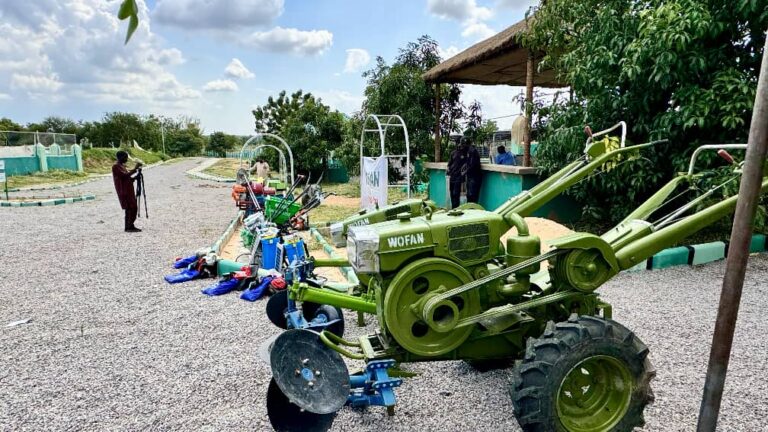
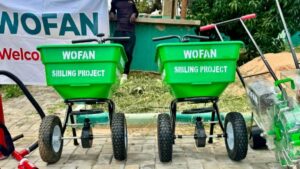
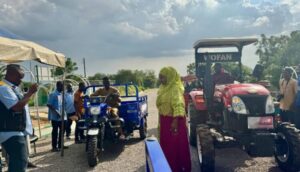
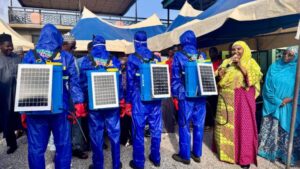
The equipment, presented during a ceremony attended by university management, faculty members, students and farmer groups on Saturday, includes a 40-horsepower tractor valued at N30.5 million with complete implements for ploughing, harrowing and ridging, power tillers and fertiliser applicators, two tricycle carriers for transporting farm inputs and produce, solar-powered knapsack sprayers with protective clothing kits, as well as rice and maize shellers and rice cutters.

Presenting the equipment, WOFAN Group Executive Board Chair, Dr. Salamatu Garba, said the intervention was designed to bridge the gap between classroom learning and real-world agricultural practice.
“We are sending this with love and respect to all of you so that you will use it to improve your practical knowledge and prepare yourselves to become dignified agripreneurs and employers of labour,” she said.
She added that exposure to modern farm technologies while still in school would give students a competitive advantage after graduation.
“When you go out into the world to become real businessmen and women, these technologies will no longer be new to you,” she stated.

Dr. Garba further explained that beyond improving productivity and reducing labour, the equipment would provide students with an opportunity to generate income by offering mechanisation services to neighbouring farmers during their free periods.
The donation follows an earlier intervention by WOFAN, which provided agricultural inputs worth N28 million to support the commencement of the 2026 wet-season farming activities for the pioneer beneficiaries of the SIBLING project.
Representing the Vice-Chancellor of Bayero University, the Deputy Vice-Chancellor (Research and Academic), Prof. Amina Mustapha, expressed appreciation to WOFAN for its sustained support, describing the intervention as one that aligns with the university’s vision of producing graduates who are not only job seekers but also successful entrepreneurs and employers of labour.
She assured the organisation that the equipment would be properly maintained and effectively utilised for the benefit of students and the institution.
Also speaking, Chairman of WOFAN’s Technical Board of Advisers, Prof. Sani Miko, urged the students to maximise the opportunity by demonstrating commitment and dedication to the programme.
“All these things we are doing are for your own good. You must show your passion, commitment and dedication to ensure that this project transforms your career path and the agricultural future of this country,” he said.
Speaking on behalf of the students, President of the Nigerian Association of Agricultural Students (NAAS), BUK Chapter, Umar Kabir Bello, commended Dr. Salamatu Garba, WOFAN, the Centre for Dryland Agriculture, the Faculty of Agriculture, the university management and other partners for the intervention.
He said the equipment would significantly enhance practical learning by exposing students to modern agricultural technologies and pledged that the students would make responsible use of the facilities while remaining committed to the success of the SIBLING Initiative.
The SIBLING Initiative has continued to emerge as a model for effective collaboration between academia and development partners, bridging the gap between theoretical instruction and industry-driven agricultural practice while preparing the next generation of agripreneurs to drive sustainable food production and economic growth.


