


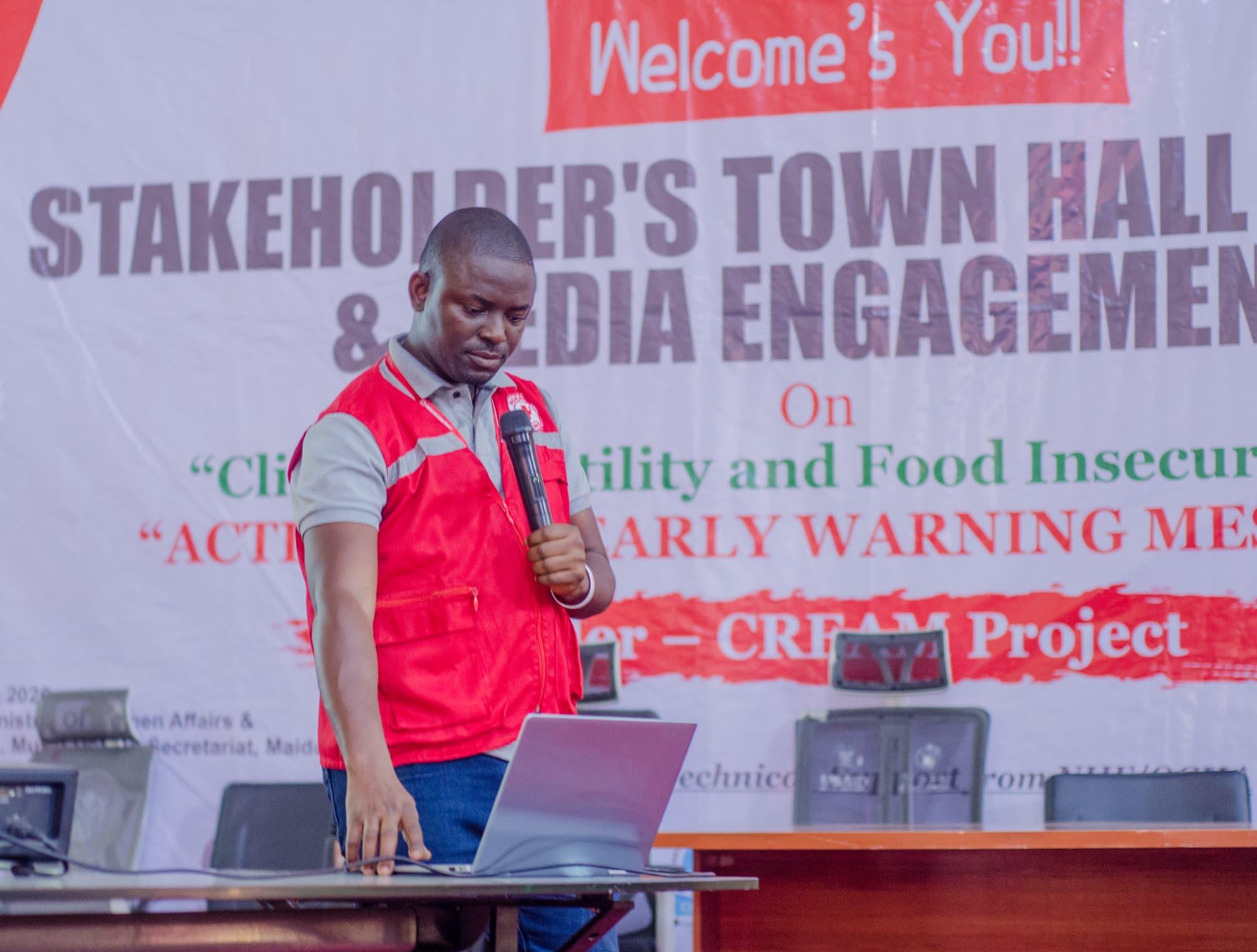
Red Cross Reaches 250,000 Households Amid Food Insecurity Concerns in Borno
By Ali Mohammed Zanna, Maiduguri
The Nigerian Red Cross Society (NRCS) has reached more than 250,000 households in Maiduguri Metropolitan Council (MMC) and Jere Local Government Area of Borno State with early warning messages and sensitisation campaigns aimed at mitigating the impact of anticipated food insecurity and climate-related risks.
The intervention is being implemented under the Community Resilience through Early Action Messaging (CREAM) Project, a climate adaptation and disaster preparedness initiative designed to strengthen community resilience through awareness and early action.
Speaking during a stakeholders’ town hall meeting on Climate Volatility and Food Insecurity held at the Musa Usman Secretariat in Maiduguri, the Branch Secretary of the Nigerian Red Cross Society, Borno State Branch, Mohammed Zanna Barma, said the organisation commenced the awareness campaign following forecasts indicating possible food insecurity in parts of the state between June and August.
Barma said the Red Cross had deployed volunteers across target communities to sensitise residents on preparedness measures, including food preservation, livelihood diversification and other coping strategies aimed at reducing vulnerability to potential shocks.
He noted that food insecurity remains a major humanitarian concern and stressed the importance of proactive measures to protect livelihoods and strengthen household resilience before crises occur.
The Branch Secretary also underscored the role of the media in supporting humanitarian efforts through public education and awareness creation. According to him, collaboration with journalists and media organisations is critical to ensuring that early warning messages reach vulnerable communities in a timely manner.
“The media remains an important partner in disseminating information that can help communities prepare for and respond to emerging challenges associated with climate variability and food insecurity,” he said.
The meeting brought together representatives of government ministries and agencies, humanitarian organisations, community leaders, security agencies, media practitioners and development partners to discuss strategies for strengthening preparedness and resilience.
Also speaking, Ibrahim Amuda, Disaster Risk Reduction Officer, Nigerian Red Cross Society National Headquarters (NHQ), Abuja, described the CREAM Project as an anticipatory action initiative aimed at helping communities prepare for risks before they escalate into humanitarian emergencies.
He said the eight-month project, running from February to October 2026, targets more than 250,000 people in MMC and Jere, identified as areas vulnerable to climate-related food insecurity.
According to Amuda, the project is being implemented through radio programmes, community dialogues, house-to-house sensitisation campaigns and the distribution of Information, Education and Communication (IEC) materials.
He disclosed that 60 trained Red Cross volunteers are currently engaged in community outreach activities, while feedback mechanisms have been established to ensure accountability and community participation.
Amuda added that the project places particular emphasis on the inclusion of women, children and persons with disabilities to ensure that vulnerable groups are not left behind in disaster preparedness efforts.
Participants at the meeting called for stronger collaboration among government institutions, humanitarian agencies, community leaders and the media to address the growing challenges posed by climate variability and food insecurity in Borno State.
The stakeholders’ engagement featured presentations and discussions on early warning systems, disaster preparedness and community-based approaches to building resilience against climate-related risks.


