


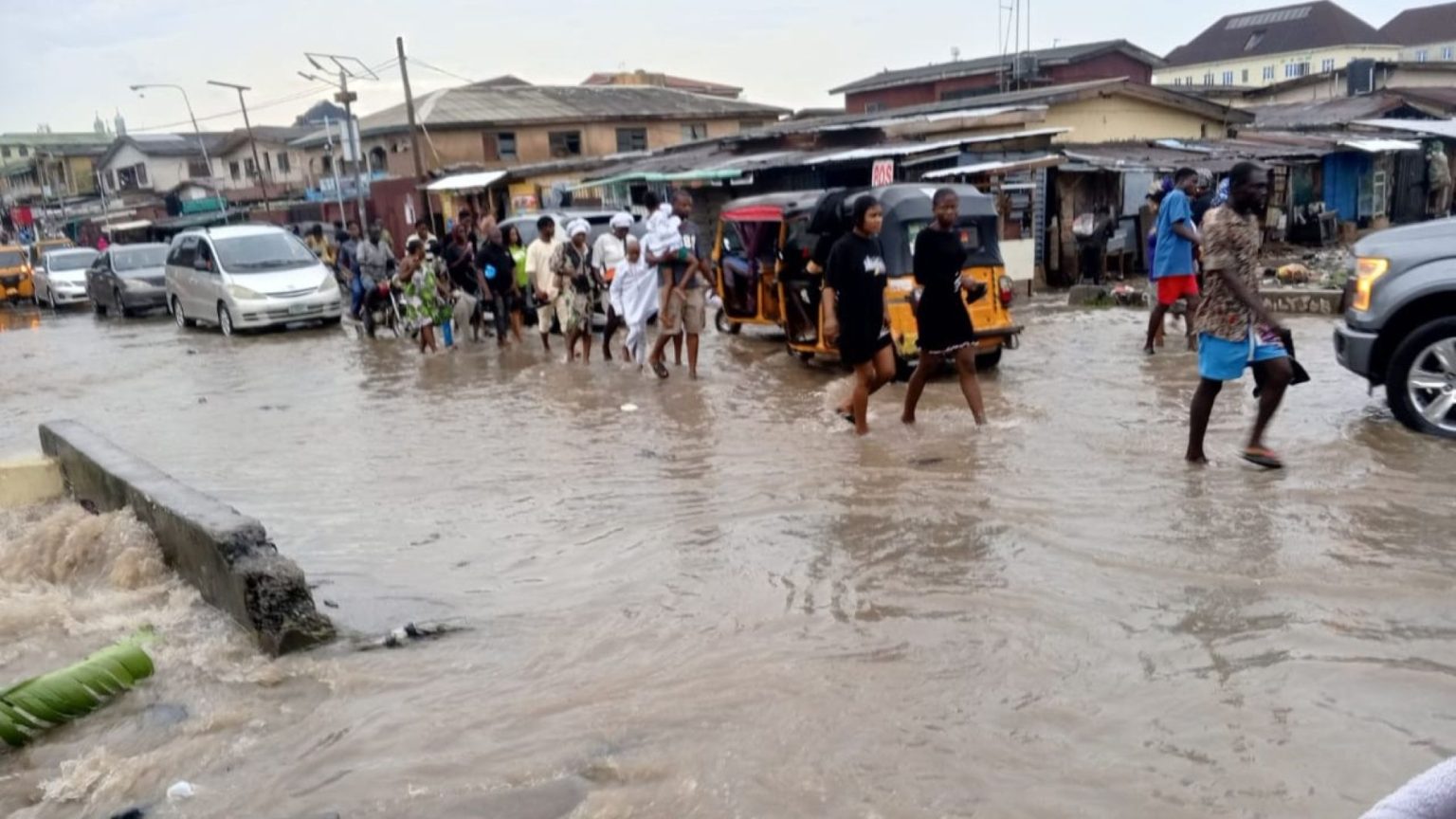
Coastal States On Alert As Floods Cripple Lagos, Raise Health, Economic Concerns
Persistent heavy rainfall across Lagos has triggered widespread flooding, disrupting transportation, businesses and daily activities while heightening fears of disease outbreaks and further economic losses. The situation has prompted renewed concerns over the state’s flood-control infrastructure, despite significant government investment in drainage projects.
Health experts warned that contaminated floodwaters and stagnant pools could fuel outbreaks of cholera, typhoid, malaria and other waterborne diseases. They urged residents to avoid contaminated food and water, maintain proper hygiene, and take preventive measures against mosquito breeding.
The Nigerian Meteorological Agency (NiMet) also forecast continued heavy rainfall and flash floods across Lagos and other coastal states, advising motorists and residents to avoid floodwaters and remain vigilant during thunderstorms.
Economic analysts estimated that the flooding could cost Lagos between N50 billion and N100 billion in daily economic losses, with the overall impact potentially approaching N500 billion when damage to infrastructure, businesses, agriculture and property is considered.
The flooding has also renewed scrutiny of Lagos’ flood management strategy, even though the state spent over N106.6 billion on drainage construction, dredging and rehabilitation between 2025 and the first quarter of 2026.
In response, Governor Babajide Sanwo-Olu approved the dredging of 28 additional primary drainage channels, while the state government assured residents that emergency response teams were actively monitoring affected communities.
Political leaders, including Atiku Abubakar and Funso Doherty, expressed sympathy with victims, with Doherty calling for compensation for affected residents and an independent investigation into possible environmental failures linked to major infrastructure projects. Similar flooding also affected parts of Ghana, Togo and Côte d’Ivoire, underscoring the growing regional impact of extreme weather.


