


Mustapha Muhammad
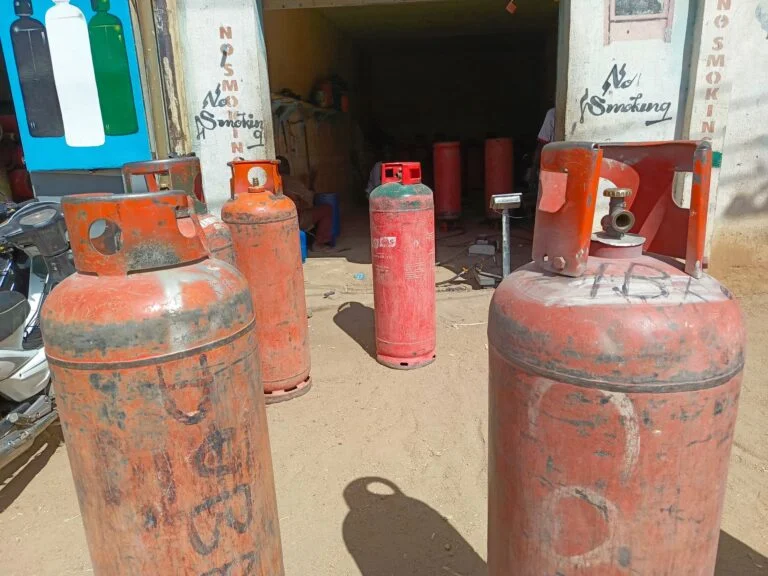
For years, the price of cooking gas in Nigeria is rising unabated, especially with the recent removal of fuel subsidy that triggered record high inflation in the country
With this, the Nigerian residents are grappling with the alternatives sources of energy to cook, including the use of charcoal and firewood.

Using charcoal and firewood precipitates from excessive deforestation thereby emboldening hazards of desert encroachment and heating the atmosphere which affect the climate.
Using charcoal as alternative to cooking gas has significantly contributed to the growing charcoal business which seem to be one of the fastest growing informal economic sector that employed large chunk of of the Nigerian citizens.
Invariably, as the sector contributes to the economy, it is doing more harm than good in distorting the biodiversity thereby creating imbalance in the ecosystem which results in environmental degradation, rising temperatures, flood and drought.
Malam Isa Gambo, who owns a joint for “tea and coffee” said the energy alternative for him in cooking is charcoal which is cheap and gives more flames and cooking quickly, though he used gas before the high prices made him change his mind.
“At the time we started sales for Indomie we bought the gas per kilo at 200 naira but now the prices went up to 1,500 per kilo. Malam Isa Gambo added that “I had to go back to charcoal; it is easy to handle and very cheap.”
Isam Gambo keeps changing the source of energy, from gas to firewood and to charcoal; selecting the cheapest for him to earn more money in his business.
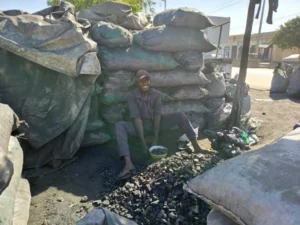
The Charcoal seller, Mallam Salahu is making a lot of money compared to those days the gas prices were moderate, now that the prices are high and not stable
People tend to move for charcoal as an alternative.
The Climate Change campaigners are always discouraging using firewood and charcoal as a source of energy for cooking.
Now that Nigerians are struggling to put food on the table due to high prices of foodstuff and commodities; they might have gone for cheaper sources of energy for domestic use.
The gas sellers are finding it not too easy these days; as the number of customers keeps dwindling.
“The prices of gas have indeed gone up and our sales have reduced drastically, before these days we make sales of like 20 cylinders or more but now we make sales of 2 or 3 cylinders,” Alhaji Bashir Abdullahi, gas seller in Kano told Windflow News.
“When the gas was sold at 300 naira per kilo, everywhere here was packed with customers and we are busy working for refilling, but now you can see very few people do come to patronize us.” Bashir Abdullahi is deeply worried as now the price of 1 kilo of gas is 1, 500 naira.
Another resident Aminu Malam Alhaji, who spoke to Windlflow News, said he used gas as a source of energy in his house but now that the price is exorbitant he used charcoal.
“When I am using gas, the 10kg cylinder is 3, 500 naira but now I have to spend more than 15, 000 naira, this means the little I earn will go to cooking gas, that’s why I have no option but to go for an alternative which is charcoal.” Aminu Malam Alhaji averred.
Women prefer cooking gas to firewood and charcoal, making the environment clean and easy to catch flame and cook, but charcoal, especially during the wet season, is hard to ignite.
“We are using the charcoal and wood due to economic reasons but we prefer cooking gas though the price of the gas is high; but we cannot afford it,” Baba Talatu a firewood and charcoal user stated in an interview recently.
The residents are stuck in the middle either use cooking gas at high prices amid financial difficulties or continue the use of firewood or charcoal; risks the climate change effects which continue to cause devastation of livelihoods.
The common man, especially salary earner is left with no option than to use charcoal as source of energy due to high cost of cooking gas.
According to National Bureau of Statistics (NBC), there is tree cover loss 1.47 million hectares or 6.1% between 2000 and 2020, Nigeria. Also, between 1990 and 2010, Nigeria lost 47.5% of its forest cover, or about 8,193,000 hectares due to deforestation and other natural factors.
In 2023, Nigeria lost 81.2 hectares of natural forest, which is equivalent to 54.6 million tons of carbon dioxide emissions.
This forest lost is triggered by 120 million Nigerians demand for firewood and charcoal for cooking, which is a major contributor to deforestation.
The Government of the day has to do something urgently to ensure low cost of cooking gas so as not to jeopardize global warming
It is really sad, we always have to adapt to the changes no matter how hard things get. Who knows later on, the charcoal too might become out of reach.


