


By Abdulkarim Ibrahim
The Federal Government has attributed the recent devastating flood in Mokwa, Niger State, to poor railway infrastructure. This assertion was made by Aliyu Abdulhameed, Managing Director of NIRSAL, during an interactive session with the House of Representatives Committee on Hydrological Services and HYPPADEC.
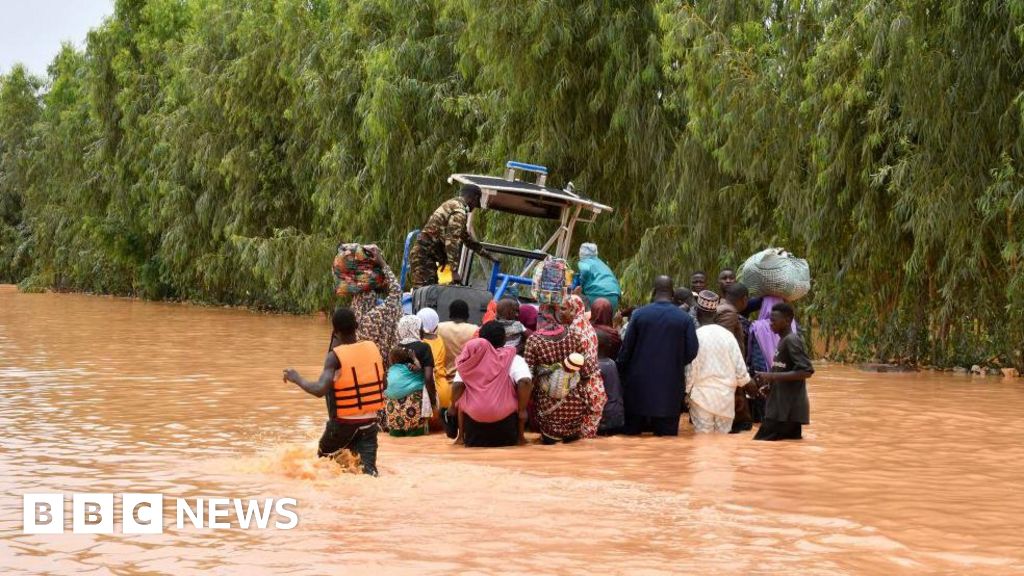
The flood disaster resulted in loss of lives, destruction of farmland, and displacement of residents, causing widespread devastation. Abdulhameed made this revelation during a meeting focused on flood disaster management in Nigeria, with particular emphasis on the Mokwa case.
Contrary to popular speculation, Abdulhameed clarified that the flood was not caused by the release of water from the Kainji or Jebba dams. Instead, he emphasized that poor railway infrastructure was the primary culprit behind the disaster.
The interactive session aimed to explore measures and solutions to mitigate flood disasters in Nigeria. The meeting brought together relevant agencies to discuss strategies for managing flood risks and preventing future catastrophes.
Abdulhameed said: “What happened in Mokwa, in particular, was caused majorly by the railway in the area. That was the only reason that made it happen. There is a railway embankment, up to about four meters high, that was actually stopping the water from draining into the River Niger. That was the major reason. It had nothing to do with Kainji Dam, it had nothing to do with Jebba Dam. Both are downstream.”
According to him, the railway line, believed to have been renovated between 2018 and 2019, initially had drainage systems running through it to allow water to flow freely into the river.
He said after the reconstruction, those drainage outlets were completely blocked.
“What happened was, after the inauguration, they blocked completely those drainage systems that are supposed to allow the water to drain into River Niger. So the water piled up over the years.
“Since 2023, based on my visitations—because I was there—most of the people in the Mokwa settlement have lost their farms due to the accumulation of water upstream, trapped behind the railway embankment,” he said.
Abdulhameed explained that the embankment itself lacked the necessary engineering integrity to withstand the mounting pressure, being constructed entirely of soil without any structural framework to reinforce it.
He also pointed to human activity as a compounding factor, saying that over time, people began to settle along the dry river in Dingin, mistaking it for permanently reclaimed land since no water had flowed through it in years.
“It has been eating up that embankment because it is purely soil,” he said. “It started losing its strength to hold back the water. Then that fearful night, it gave way. The water punctured it, and that was why it came with huge cost and swept through the settlement on that river.
“Certainly, there are a lot of anthropogenic activities where people have settled on that same river. Why? Because over the years, after the embankment was built and water stopped flowing, people found it convenient to just settle there. That was a major cause of that particular flood,” he added.
To prevent a recurrence of such disasters, the NIRSAL boss revealed that he had held high-level discussions with the Managing Director of the Nigerian Railway Corporation (NRC), adding that both agencies had resolved to launch a nationwide investigation into railway constructions and their impact on natural waterways.
“I had a long meeting with the MD of the Nigerian Railway Corporation, and we are putting up a team to probe all railway lines. Because I noticed a lot of other places apart from Mokwa where the same practice is being repeated.
“So to avoid future occurrences, we are probing all the railway lines, including all the federal highways I have been to, to ensure that waterways are maintained,” he said.
The Committee summoned the Managing Director of the Nigerian Railway Corporation (NRC) and the Minister of Transportation to appear before it over their alleged role in the devastating flood that ravaged Mokwa, Niger State.
Chairman of the Committee, Paschal Agbodike, said that the NRC’s role through its railway construction had raised serious questions that demanded answers, especially since the incident had resulted in the loss of lives, property, and farmlands.
“For natural disasters, it seems we are always waiting for them to happen before we start talking about remediation. We cannot let that continue any longer.
“This Committee is hereby inviting the Managing Director of the Nigerian Railway Corporation and the Honourable Minister of Transportation to appear before us. They must come and explain why they undertook a project that directly led to loss of lives and property.
“We will not tolerate any loss of life as a result of flood again in this country. Any ministry or agency that is responsible will be seriously dealt with,” he said.
Agbodike called for a coordinated national response to the growing threat of flood disasters in Nigeria, with a special focus on vulnerable communities near Mokwa, Kainji, and Jebba dams in Niger State, as well as Ihiala and Ogbaru in Anambra, among other flood-prone areas across the country.
Agbodike noted that the issue has reached a critical point, worsened by climate change, rapid urbanisation, and deteriorating infrastructure.
“Flooding has become a recurrent problem in Nigeria. Our goal today is to explore effective measures to mitigate the risks, improve preparedness, and strengthen disaster response systems nationwide,” he said.
The Chairman emphasised that better water management and disaster readiness are long overdue.
“The Mokwa, Kainji, and Jebba Dams are key to our national water and energy systems, but when mismanaged or left unattended, they pose enormous danger,” he warned.


