


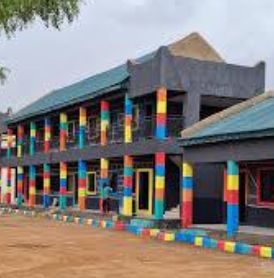
Kadawa School Renovation Controversy: My Fear Is Not The Colors, But The Failure Of Oversight
By Tijjani Sarki
I have followed the controversy surrounding the renovated school at Kadawa with deep concern, not because I fear colors, but because I fear the growing absence of institutional caution in a society as emotionally sensitive as Kano.
What should have been a moment of celebration over the renovation of a neglected public school suddenly transformed into arguments, suspicion, and public outrage over color combinations many residents perceived to resemble the rainbow symbolism associated globally with the LGBT movement.
To some people outside Kano, such concerns may sound exaggerated. But I honestly believe outsiders often fail to understand the emotional and religious psychology of Kano society. This is a state where religion and culture are not mere slogans, they are part of people’s identity, conscience, and daily existence. In such an environment, even symbols, colors, or artistic expressions can quickly become matters of public tension if not carefully handled.
Historically, the rainbow flag connected with the LGBT movement was designed in 1978 by Gilbert Baker and has since become one of the most recognizable symbols associated with LGBT identity worldwide. Whether intentionally or coincidentally, when public institutions, especially schools, display color patterns that resemble such symbolism, reactions from conservative communities should not come as a surprise.
I am not among those rushing to conclude that Dan Bello intended to promote LGBT ideology through the renovation. I have seen no evidence supporting such accusations. In fact, I believe the project emerged from concern over the terrible condition of public schools abandoned for years by those officially entrusted with their management.
And that is exactly where my real concern lies.
For me, the bigger question is this: Where was the Kano State Universal Basic Education Board throughout this entire process?
I find it difficult to believe that a renovation project of such public visibility could happen without the knowledge, supervision, or approval of the authorities responsible for basic education in Kano State. If SUBEB approved the project, did it thoroughly review all aspects of the renovation, including the visual presentation and social implications within the local context? If it did not, then that reflects institutional negligence. If it did and still allowed the controversy to emerge, then that raises even deeper concerns about sensitivity and oversight.
Frankly, I remain sceptical.
Too often in Kano, government agencies wake up only after controversy explodes in public. Preventive supervision has gradually been replaced with reactive damage control. Institutions that should quietly protect public confidence now wait for outrage before speaking. That culture is dangerous, especially in a fragile society where rumors and emotional interpretations spread faster than facts.
While I commend Dan Bello for his patriotism, courage, and willingness to intervene where government systems appeared weak, I also believe charitable intentions alone are not enough when dealing with public institutions and emotionally sensitive communities like ours. Public projects must be approached not only with good intentions, but also with cultural intelligence and institutional guidance.
Still, I cannot ignore one painful irony.
Many people remained silent while that decay continued. Yet today, society has suddenly become alert because of paint colors.
That contradiction should worry all of us.
It tells me that Kano people are emotionally exhausted. The public no longer trusts institutions to protect their values, their schools, or even their children. As a result, suspicion now fills every vacuum left by weak governance.
I strongly believe the Kano State Government must treat this controversy as a lesson, not merely a social media argument. Clear guidelines should be introduced for all future renovation projects in public schools. Community leaders, education experts, architects, and relevant authorities should collectively review public-facing designs before implementation, particularly in sensitive environments involving children.
Because I do not want Kano to become a society permanently trapped between fear and suspicion.
I want a Kano where schools are modern without losing cultural identity. A Kano where philanthropists are encouraged, not attacked. A Kano where government agencies act before crises emerge, not after public outrage explodes.
Most importantly, I want a Kano where the emotional energy currently spent debating paint colors is redirected toward confronting the real enemies threatening our future, illiteracy, poverty, decaying schools, drug abuse, and institutional negligence.
Those are the real dangers confronting our children, far more than any color painted on a classroom wall.
Tijjani Sarki is a good governance advocate and public policy Analyst
responsivecitizensinitiative@gmail.com


