


Namadi to Extension Trainers: Don’t Just Teach Farmers, Help Them Make More Money
Jigawa State Governor Umar A. Namadi has challenged agricultural extension workers to move beyond simply teaching farmers how to plant crops and become trusted advisers who can help them make better business decisions, access finance and earn more from farming.
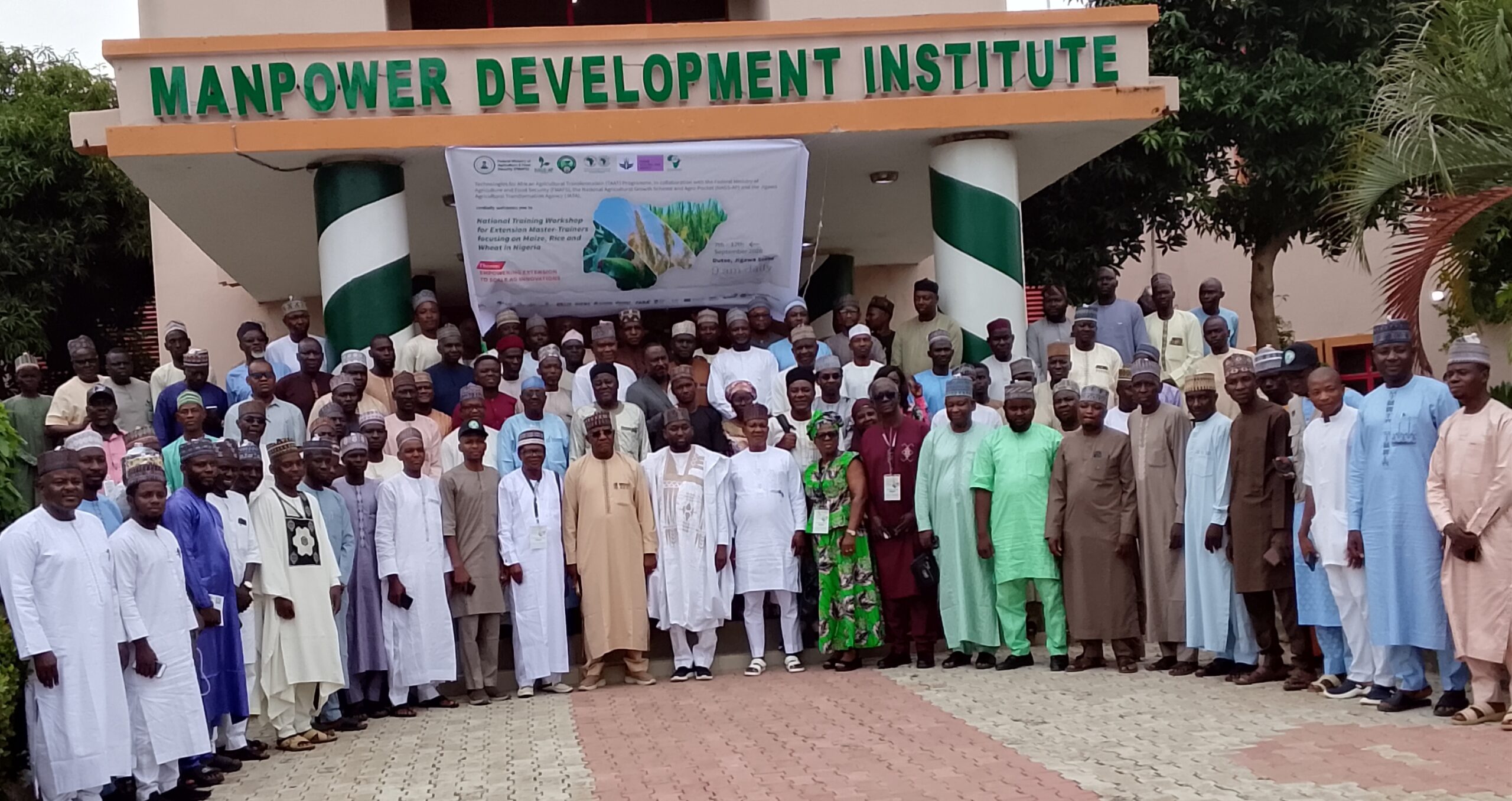
The Governor gave the charge on Monday while addressing 100 agricultural extension master-trainers from seven North-West states attending a national training workshop on maize, rice and wheat in Dutse.
Represented by the Director-General of the Jigawa Agricultural Transformation Agency, Dr Saifullahi Umar, Namadi said Nigeria’s agricultural transformation would remain incomplete if farmers increased production without corresponding improvements in income, markets and livelihoods.
He said the traditional image of an extension agent as someone who merely carries production messages to farmers was no longer adequate for modern agriculture.
“The extension agent of the future” must facilitate innovation, interpret climate and market information, coach farmers in farm-business management, connect them to inputs, finance and off-takers, promote safe production practices and relay farmers’ challenges back to researchers and policymakers, the Governor said.
Namadi said Jigawa was already repositioning its agricultural extension system to reflect this new reality, with 1,700 extension personnel recruited and trained and provided with motorcycles to improve their mobility and regular contact with farmers.
He said the state was complementing the investment with Agricultural Development and Farm Service Centres designed as one-stop platforms where farmers could obtain extension advice, inputs, mechanisation services, aggregation support, market connections and referrals to finance.
The Governor also pointed to the state’s mechanisation and irrigation investments, including 400 tractors and other farm machinery, alongside 6,000 solar-powered irrigation systems, as efforts to reduce production bottlenecks and open greater opportunities for commercial farming.
He said the state’s Rice Millionaires initiative was similarly designed to demonstrate that agriculture could become a serious business and a pathway to wealth creation, particularly for young people and commercially oriented farmers.
Namadi urged the master-trainers to ensure that the knowledge acquired during the workshop remained practical and farmer-friendly, asking them to constantly consider three questions: Can an extension worker demonstrate it? Can a smallholder farmer afford and adopt it profitably? And can the result be verified?
He said the planned cascade training should eventually reach at least 500,000 farmers, but warned that expanding numbers must not come at the expense of quality.
According to him, the real success of the initiative would be measured not by how many people attend training sessions, but by how many farmers change their practices, increase yields, improve incomes and become more resilient to climate and market shocks.
Namadi assured participants that Jigawa was ready to deepen collaboration with the Federal Government, African Development Bank, TAAT, NAGS-AP, CGIAR centres, research institutions, private-sector organisations and farmer groups to build an agricultural extension system capable of turning innovation into real prosperity in farmers’ fields.


