


Abdulkarim Ibrahim
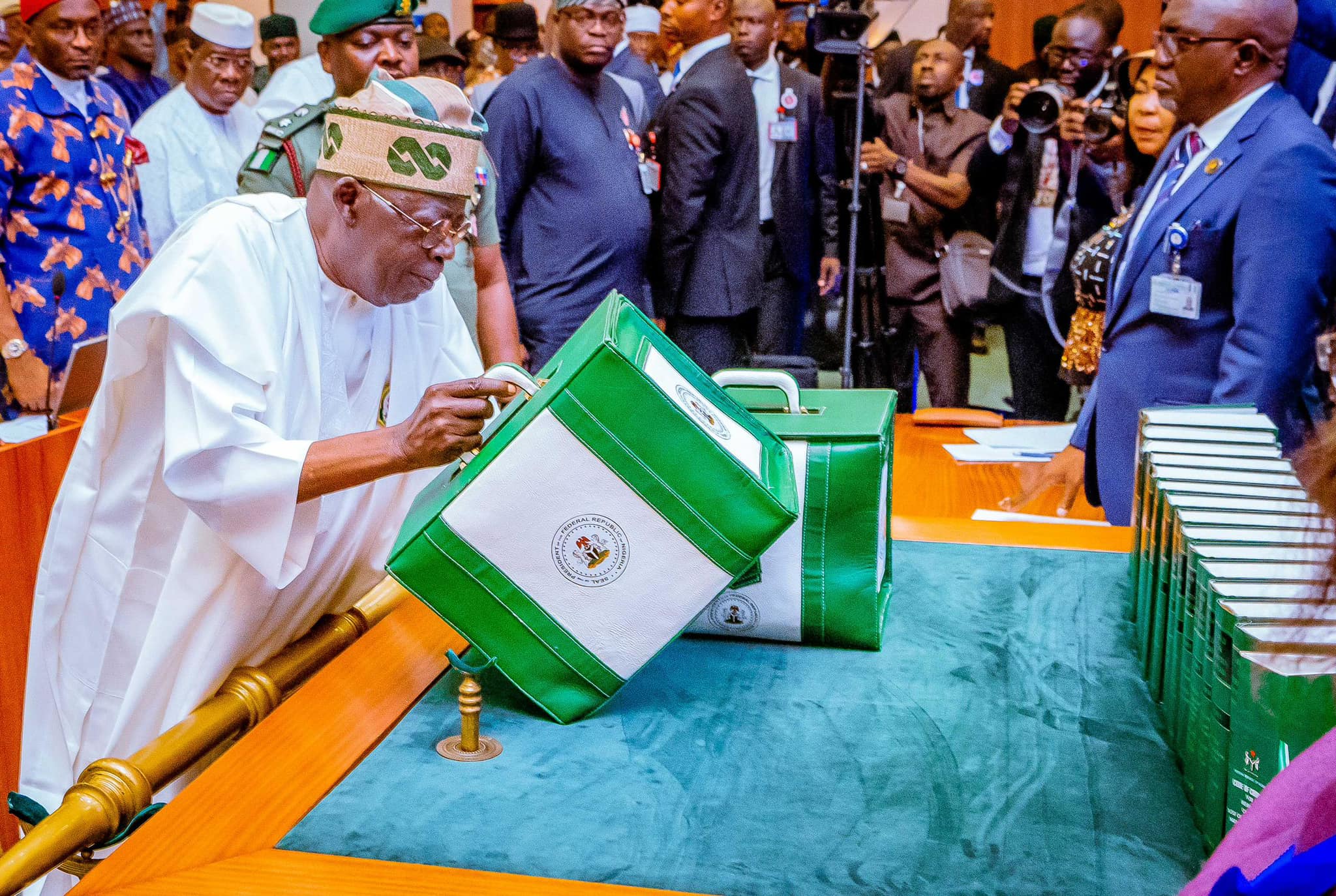
The National Assembly has on Thursday passed the N54.9 trillion budget for the 2025 fiscal year.
The budget indicates increase of N700 billion from the N54.2 billion earlier proposed by president Bola Ahmed Tinubu
The president also had earlier written to the National Assembly, requesting an increase in the initial budget proposal from N49.7 trillion to N54.2 trillion, citing additional revenue generated by key government agencies
The budget breakdown includes: N13.6 trillion for recurrent (non-debt) expenditure, N23.9 trillion for capital expenditure, N3.6 trillion for statutory transfers and N14.3 trillion for debt servicing,
Intelregion reports that, Chairman of the Senate Committee on Appropriations, Senator Olamilekan Adeola (APC, Ogun), and his House counterpart, Abubakar Bichi (APC, Kano), while presenting the budget said: “The House receives the report of the Committee on Appropriations for the Bill of an Act to authorize the issuance of the total sum of N54.9 trillion from the Consolidated Revenue Fund of the Federation.
“This includes N3.6 trillion for statutory transfers, N14.3 trillion for debt service, N13.6 trillion for recurrent (non-debt) expenditure, and N23.9 trillion for the Development Fund for capital expenditure for the year ending December 31, 2025.”
Hon. Abubakar Bichi, Chairman House committee on Appropriation explained that the N700 billion increase in the 2025 budget was due to the withdrawal of U.S. health support and the need to fund critical infrastructure projects across Nigeria.
According him, the president proactively requested an additional $200 million (approximately N300 billion) to support healthcare programs targeting tuberculosis, HIV, malaria, and polio.
He further clarified that an executive proposal outlined an estimate of N340 billion for health and other priority sectors. “When combined, this totals around N640 billion,” he noted.
Additionally, several government agencies, including INEC, NFYU, DSS, and others, submitted requests, further raising the budget increased by N700 billion.
Bichi emphasized that the budget expansion would also help address Nigeria’s capital expenditure deficit, which currently stands at N23 trillion.
The additional funds will support rail projects, road infrastructure, agriculture and education.
Highlighting concerns about funding, Bichi reassured Nigerians that the government had carefully assessed revenue sources before approving the budget increase.
“Before making this decision, we met with the Ministry of Finance, the Nigerian Customs Service, and the Federal Inland Revenue Service (FIRS). They assured us that they could generate enough revenue to support the budget expansion,” he stated.
With this increase, the government aims to strengthen critical sectors, enhance economic growth, and improve public services nationwide.


