


PFSCU Convenes Sudan Savannah States, Charts Path For Sustainable Growth, Stronger Agricultural Value Chains
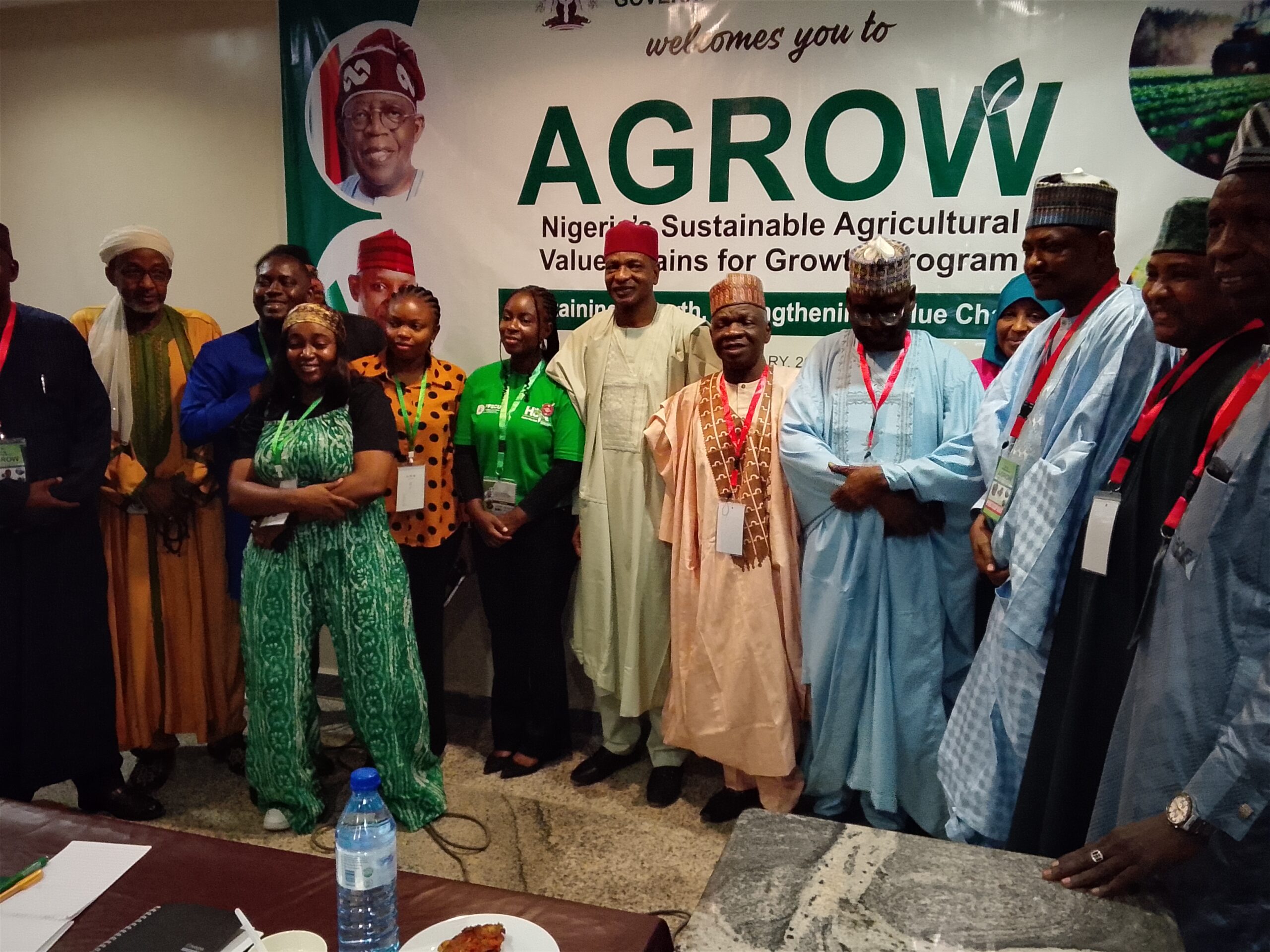
The Presidential Food Systems Coordinating Unit (PFSCU), under Nigeria’s Sustainable Agricultural Value Chains for Growth (AGROW) Programme, has organized a one-day strategic workshop themed: Sustaining Growth and Strengthening Agricultural Value Chains, today in Kano.
PFSCU was established in July 2024 under the Office of the Vice President, Kashim Shettima with the mandate to coordinate and strengthen Nigeria’s national food systems.
The programme is technically supported by the Federal Ministry of Agriculture and Food Security, the Nigeria Governors’ Forum, and funded by the World Bank Group.
As part of its commitment to transforming agriculture and ensuring food security, the World Bank is set to inject $500 million across the participating states, selected from agro-ecological zones to strengthen agricultural value chains and promote sustainable growth. The workshop therefore served as a critical platform to collect reliable, evidence-based data necessary for the effective and impactful implementation of the programme ahead of 2026 wet season.
The workshop brought together key stakeholders from the Sudan Savannah agro-ecological zone, including Honourable Commissioners of Agriculture, Permanent Secretaries, traditional rulers from Kano, Kebbi, Katsina, Sokoto, Gombe, Bauchi, and Zamfara States. The gathering aimed at collectively charting a course toward reducing agricultural risks and strengthening value chains across the region.
Other participants included agricultural cooperatives, farmer groups, policymakers, and relevant stakeholders from the participating states.
Participants were given an open platform to share real-life challenges encountered across the agricultural value chain, ranging from production and marketing to coordination gaps and policy implementation issues within their respective states.
Speaking during the session, the Kebbi State Commissioner for Agriculture and Food Security, Alhaji Shehu Mu’azu, identified conflicting government policies as a major constraint to agricultural development.
Read Also: FG Unveils Youth Roadmap For Agricultural Transformation
“Government policies often conflict and fail to align with implementation strategies. Whenever a new policy is being introduced, the target beneficiaries especially farmers, must be involved and allowed to express their views before implementation,” he said.
He further highlighted the imbalance between production costs and market prices as a pressing concern
“There are two major issues, the cost of food production and the market value of produce, both of which directly affect job creation. Currently, farmers are seriously impacted by low market prices while production costs remain high.
“Our concern is how to strike a balance between the cost of farm inputs and the market value of produce so that farmers can thrive. We are optimistic that this programme will yield workable solutions for the growth and sustainability of local farmers.”
On his part, Mr. Eniola Akindele, Manager, Data and Impact Assessment of the Programme, disclosed that PFSCU plans to organize annual agricultural shows to help map strategies and track the programme’s success.
He explained that upon completion of data collection from all 36 states of the federation, the World Bank would disburse funds to state Ministries of Finance for onward release to the State Project Implementation Units (SPIUs) under the Ministries of Agriculture.
“Once data collection is completed nationwide, the World Bank will disburse the working capital to ensure smooth and effective implementation of the programme,” he assured.
The workshop also featured syndicate group sessions, where participants were grouped by state to identify state-specific challenges and peculiarities, aimed at creating an enabling environment for successful programme implementation at the sub-national level.


