


By Uzair Adam
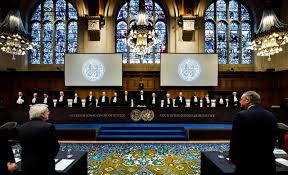
The International Court of Justice (ICJ) is set to open hearings on Monday, marking the largest case in its history.
Wind-Flow reports that the court will examine what nations are legally required to do under international law to combat climate change and the legal consequences for those failing to act.
The case, initiated by island nations like l koanuatu, follows years of advocacy by countries vulnerable to rising sea levels and other climate impacts.
The UN General Assembly had requested the ICJ’s advisory opinion on the obligations of states regarding climate change.
“We want the court to confirm that the conduct that has wrecked the climate is unlawful,” said ïMargaretha Wewerinke-Singh, lead counsel for Vanuatu.
Sea levels have risen globally by an average of 4.3 centimeters in the last decade, with Pacific regions experiencing even higher increases.
The world has also warmed by 1.3 degrees Celsius since pre-industrial times due to fossil fuel emissions.
Ralph Regenvanu, Vanuatu’s climate change envoy, highlighted the existential threat faced by Pacific nations: “We are witnesses to the destruction of our lands, livelihoods, and human rights.”
Although the ICJ’s decision will be non-binding, it could provide a foundation for further legal actions, including domestic lawsuits.
Over the next two weeks, the court will hear from 99 countries and more than a dozen intergovernmental organizations, with support from advocacy groups like Pacific Islands Students Fighting Climate Change and World Youth for Climate Justice.
In recent years, courts around the world have increasingly recognized the need for stronger government action on climate change.
In 2015, a Dutch court ruled that protecting citizens from the effects of climate change is a human right, a decision upheld by the Dutch Supreme Court in 2019.
The hearings come shortly after a UN tribunal on maritime law classified carbon emissions as marine pollution, urging nations to mitigate their impact.
Similarly, Europe’s highest human rights court recently ruled that countries must enhance protections against climate-related harm.
For many small island nations, the ICJ’s ruling represents a critical step towards holding the world’s largest economies accountable for the climate crisis.
Vishal Prasad, from Pacific Islands Students Fighting Climate Change, emphasized the urgency: “For our generation and the Pacific Islands, the climate crisis is a matter of survival.”
The ICJ judges will consider two key questions: What obligations do countries have under international law to protect the environment from human-caused emissions, and what legal consequences should follow when nations fail to fulfill these obligations?
The outcome of the case could set a precedence for future climate litigation and increase pressure on wealthy nations to provide more substantial support to vulnerable countries.


