


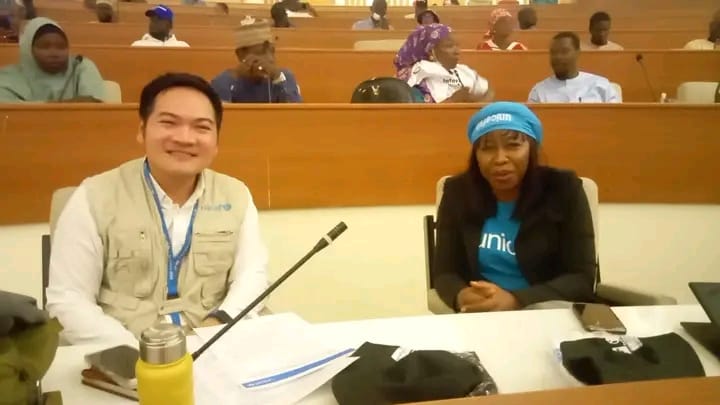
UNICEF Urges Youth-Led Education Reform, Empowers 100,000 Young People In Borno
By Ali Mohammed Zanna, Maiduguri
The United Nations Children’s Fund (UNICEF) has called for stronger youth leadership in shaping education systems, stressing that inclusive and sustainable development can only be achieved when young people actively participate in education planning, innovation and decision-making.
The call was made in Maiduguri during the commemoration of the 2026 International Day of Education, themed “The Power of Youth in Co-creating Education.”
Speaking at the event, Caroline Moi, UNICEF’s Acting Education Manager, said young people must be recognised not just as beneficiaries of education policies but as partners and drivers of change, particularly in conflict-affected states like Borno.
She identified out-of-school children, poverty, insecurity, inadequate infrastructure and unequal access to education for boys and girls as major challenges confronting the education sector in the state. Despite these obstacles, Moi commended the Borno State Government for its commitment and acknowledged UNICEF’s partnership with the government in expanding learning opportunities through formal, non-formal and skills-based education pathways.
Also Read: UNICEF, Borno Health Board Surpass Immunisation Target, Hit 44% Coverage In Maiduguri
“Today gives young people a voice to contribute meaningfully to education,” Moi said.
“We are committed to ensuring that all children, including those in hard-to-reach communities, have access to quality and inclusive education.”
Also speaking, the UNICEF Chief of Maiduguri Field Office, Francis Butichi, disclosed that about 100,000 young people across Borno State were equipped with digital and vocational skills in 2025, as part of efforts to support the transition from learning to earning.
Represented by UNICEF’s Resilience Manager, Atthawoot Sangkharat, Butichi said the beneficiaries included graduates, undergraduates and other youths across the state. He explained that through UNICEF’s partnership with the University of Maiduguri, young people are serving as educators in non-formal learning centres, helping thousands of out-of-school children return to classrooms while gaining practical experience and confidence.
He added that UNICEF, in collaboration with the Borno State Ministry of Education, supported over 4,600 youths with vocational starter packs in Bama, Dikwa, Monguno and Maiduguri, enabling them to establish sustainable livelihoods and support the education of their children and siblings.
Beyond vocational training, Butichi said UNICEF is promoting youth empowerment through digital learning platforms such as the Nigeria Passport Learning Initiative and programmes focused on literacy, numeracy and self-reliance. He noted that youth leadership is also being strengthened through technology-driven spelling bees and mathematics competitions that encourage innovation, teamwork and problem-solving.
According to him, the theme of the 2026 International Day of Education underscores a fundamental truth that education systems function best when young people are actively involved as partners, innovators and leaders, rather than passive learners.
Addressing young participants at the event, Butichi urged them to take responsibility for shaping their future and contributing solutions to education challenges in their communities.
“You are not waiting for change, you are creating it. Your ideas, energy and leadership are essential to building education systems that are inclusive, innovative and sustainable,” he said.
UNICEF reaffirmed its commitment to working with the Federal Government of Nigeria, the Borno State Government, universities, communities and development partners to expand youth-led initiatives, strengthen education delivery, and ensure that no child or young person is left behind.


