


By Uzair Adam
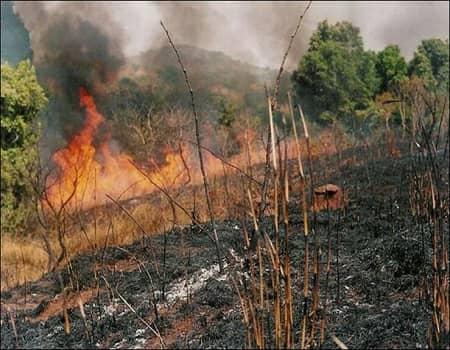
Abdulhameed Fakoya, a Nigerian doctoral student based in the United States, is leading pioneering research on the long-term effects of atmospheric particles from wildfires and bush burning on climate change and agricultural production, with a particular focus on Africa.
Fakoya’s study aims to deepen the understanding of aerosols—tiny atmospheric particles—originating from wildfires and biomass burning. These aerosols, which include soot, absorb solar radiation, reducing the sunlight and heat that reach the Earth’s surface.
This, in turn, disrupts convective processes responsible for cloud formation, altering precipitation cycles, accelerating desertification, and potentially leading to extended droughts.
These changes pose significant threats to agriculture and economies, particularly in regions like Nigeria.
Fakoya, a PhD candidate at the University of Oklahoma and a visiting researcher at the National Center for Atmospheric Research in the U.S., highlights the complex ways in which wildfires affect the climate.
He explains that the absorption of sunlight by these particles causes localized atmospheric warming, leading to cloud evaporation and shifts in rainfall patterns.
The significance of Fakoya’s research lies in its potential to improve climate modeling and enhance the scientific community’s understanding of how aerosols influence climate forcing.
His work sheds light on the dynamic nature of wildfire aerosols, revealing how their properties change over time and during atmospheric transport, thus altering their impact on the climate.
These insights are expected to contribute to better predictions of the climate effects of wildfires and inform policy decisions aimed at protecting the environment.
Fakoya’s passion for impactful science dates back to his undergraduate and master’s studies at the University of Ilorin, where he focused on environmental issues such as heavy metal contamination and severe weather forecasting.
His doctoral research, supported by prestigious institutions like NASA and the U.S. Department of Energy, has earned him recognition and awards at major conferences in his field.
Looking ahead, Fakoya is committed to advancing atmospheric research through interdisciplinary approaches that bridge science and policymaking.
He is also dedicated to addressing environmental challenges in Nigeria and is actively involved in the University Corporation for Atmospheric Research (UCAR) Africa Initiative, which seeks to leverage scientific knowledge to tackle air quality and environmental issues across the African continent.


