

By Abdulkarim Ibrahim
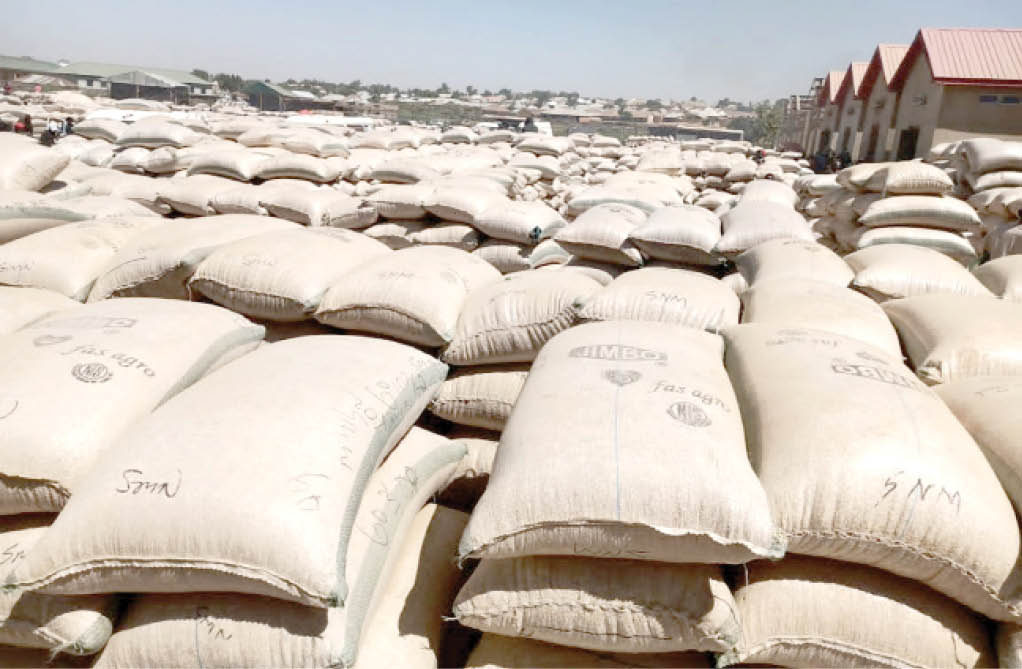
As Nigerians celebrate the recent decline in food prices, grain traders who stockpiled supplies are facing significant losses due to a 40% price drop between December and March 2025.
These traders had anticipated a price surge by February-March, based on previous trends, but instead, they’re now struggling with reduced profits.
Grain traders’ fortunes have taken a hit as prices continue to plummet.
Specifically, a 50kg bag of beans has dropped from N100,000-N140,000 to N75,000-N85,000. Rice prices have also been halved, falling from N114,000 in December to around N52,000.
Other significant price drops include soya beans (N120,000 to N60,000), sorghum (N140,000 to N35,000-N40,000), millet (N70,000 to N40,000), and maize (N120,000 to N45,000).
Even tubers of yam have also been affected, with 120 pieces of yam now selling for N180,000, down from N300,000 last year.
The Guardian reports a trader from Iseyin, Oyo State, Nike Akanni, lamenting her predicament, saying she took a loan of N1.5 million to buy bags of maize in December, hoping that prices would rise by the end of January. However, she is disappointed that the reverse is the case.
She said, “In December 2023, we bought bags of maize for N60,000, and by March, when prices went up, we sold them for around N120,000 and made lots of money. But this year, we were hoping that prices would go up. Now, we have tied our money down because maize is selling for less than what we bought in December.”
Another trader from Katsina, Saleh Abu, also lamented the drop in grain prices, saying, “We don’t understand what is happening. We used all our money to store grain in December, and now we don’t have any money left to buy new stock.”
Adamu Musa from Kano explained that, as of last year, food companies usually came to mop up their grains, but now most of them no longer do so, adding, “Even when some of them come, they want to buy on credit, but we traders cannot sell to them because our money is already tied up in stored grains.”
Abu attributed the drop in food prices to a lack of money in circulation, as many traders have to sell off their grains just to raise cash for other necessities.
On the part of the trader from Iseyin, she said there is a drop in prices because of the opening of land borders, as the Nigeria Customs Service no longer seizes their goods at the border like they used to, except on a few occasions when they want to extract money from them.
As of December 2024, food inflation had risen to 50%, worsening the cost-of-living crisis and leading to a spike in malnutrition.
In response, the federal government announced plans in July 2024 to grant waivers on food importation. Earlier, the government had also reopened land borders to allow food imports from neighboring countries.
While farmers expressed reservations about the policy, arguing that it would negatively impact food security, economists projected that increased food supply would help stabilise prices by reducing the demand-supply gap.
An analyst, Mr. Ismael Mohammed, said that the increase in food supply triggered by imports has led to greater food availability, resulting in falling prices.
”The force of supply has been manipulated through importation, making food more available and leading to a drop in prices,” he said.
However, he noted that this method is not sustainable unless the government continues to import food, which is not beneficial for Nigerian farmers.
”Continued importation is not a good long-term strategy for Nigeria’s agriculture sector.”
It should be noted that food importation has eased the food crisis by increasing availability for consumption and animal feed production.
Nigeria’s food crisis has been worsened by insecurity, preventing many farmers from accessing their lands due to the threat of bandits.
Analysts argue that regardless of the government’s efforts to increase food availability, the most sustainable way to tackle food inflation is by improving security so that farmers can return to their farms.
The Managing Director of Green Sahara Farms, Suleiman Dikwa, has also emphasized the need for the government to address post-harvest losses, which have led to 40% of farmers’ produce going to waste.