

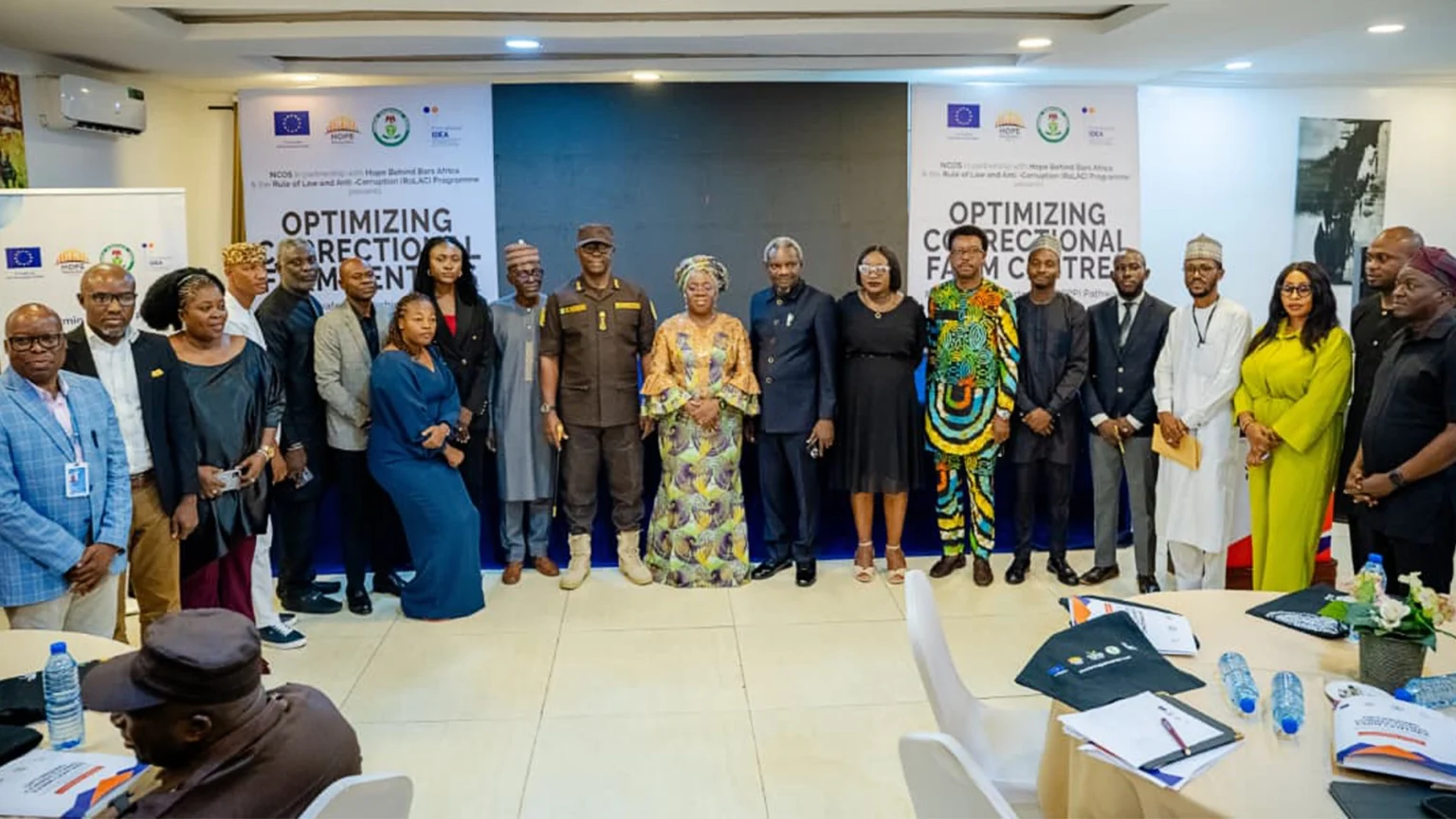
From Cells To Soil: CSO Pushes Farm Revolution In Nigeria’s Prisons
A civil society group, Hope mm Behind Bars Africa, has thrown its weight behind the Federal Government’s correctional reforms, calling for a bold overhaul of farm centres in prisons to turn idle land into engines of rehabilitation and productivity.
The organisation’s Executive Director, Funke Adeoye, praised recent government efforts particularly improved inmate feeding – saying they signal a genuine shift toward reform. But she stressed that real change lies in long-term, self-sustaining solutions.
According to her, correctional farm centres remain largely untapped despite their massive potential to boost food production, equip inmates with practical skills, and ease their reintegration into society.
She linked the push for reform to the Nigerian Correctional Service Act 2019, which mandates rehabilitation, reformation, and reintegration of inmates, alongside partnerships with non-state actors.
“The focus must shift from just feeding inmates to empowering them,” Adeoye said. “We need systems that allow custodial centres to grow their own food, build skills, and prepare inmates for life beyond incarceration.”
To bridge this gap, the group launched its Farming Justice Project – an initiative blending agriculture with rehabilitation. The programme is already active in custodial centres across Abuja, Lagos, and Edo State, including Kuje, Dukpa, Kirikiri Female and Oko facilities.
Inmates involved in the scheme are being trained in behavioural reform, financial literacy, and agriculture – cultivating crops like pepper, okra, watermelon, and maize, alongside fish farming. Some of the produce is already feeding nearby communities, creating a ripple effect beyond prison walls.
Adeoye revealed the initiative has impacted hundreds of inmates and correctional officers, while also sparking micro-enterprises tied to agricultural activities.
“Beyond welfare, this tackles two major national issues – food insecurity and repeat offending,” she noted. “When people gain skills and structure, they are far less likely to return to crime.”
The group is now calling for stronger collaboration between government, private investors, and civil society to scale the initiative nationwide—arguing that, with the right push, prison farms could evolve into powerful hubs for food security, economic inclusion, and safer communities.