

Climate Disaster Forces Millions To Flee As FG Backs Regional Emergency Action Plan
The Federal Government has thrown its weight behind a major regional initiative aimed at tackling the growing wave of climate-induced migration sweeping across West and Central Africa, warning that worsening environmental disasters are already forcing millions of people from their homes.
The commitment was announced on Tuesday during a high-level regional conference organised by the International Organization for Migration (IOM) in Lagos, where policymakers, climate experts, financial institutions and development partners gathered to discuss the future of climate mobility in the region.
Speaking at the conference on behalf of the Minister of Environment, Balarabe Lawal, the ministry’s Director of Climate Change, Iniobong Abiola-Awe, said Nigeria is ready to support efforts that connect climate action with real investment capable of protecting vulnerable communities.
The conference, themed “Migration and Climate Action in West and Central Africa: From Policy Commitment to Climate Mobility Investment,” focused on the growing link between climate disasters and human displacement across Africa.
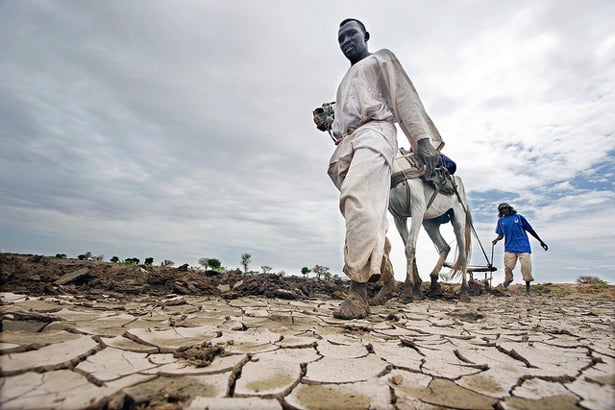
Government officials noted that environmental pressures such as desertification in the Sahel, coastal erosion along the Gulf of Guinea and recurring floods across major river basins are destroying livelihoods, worsening poverty and triggering large-scale migration.
According to the minister, climate change has become a “threat multiplier,” intensifying insecurity and economic hardship in already vulnerable communities. However, he stressed that migration should not only be viewed as a crisis, but also as a survival strategy that can help people adapt when supported with proper policies and investments.
Lawal said Nigeria has already begun integrating migration issues into its climate policies through the National Adaptation Plan, which prioritises climate-smart agriculture, water management, disaster risk reduction, resilient infrastructure and ecosystem protection.
He warned that without stronger financing and regional cooperation, many climate policies could remain mere promises on paper. “Without adequate investment, policy commitments risk remaining aspirational,” he said, while reaffirming Nigeria’s readiness to work with regional governments, development agencies and the private sector.
The urgency of the crisis was further highlighted by Sylvia Ekra, IOM Regional Director for West and Central Africa, who revealed that more than two million people in the region have already been displaced by climate-related disasters. She warned that the figure could rise dramatically, with up to 32 million people potentially forced to move internally by 2050 if decisive climate action is not taken.
Ekra said climate change is already reshaping economies, livelihoods and migration patterns across Africa, adding that the time for slow responses has passed.
Representatives of the European Union also pledged continued support for climate and migration programmes in the region, as stakeholders called for faster action to prevent a humanitarian and economic crisis from spiralling further out of control.