

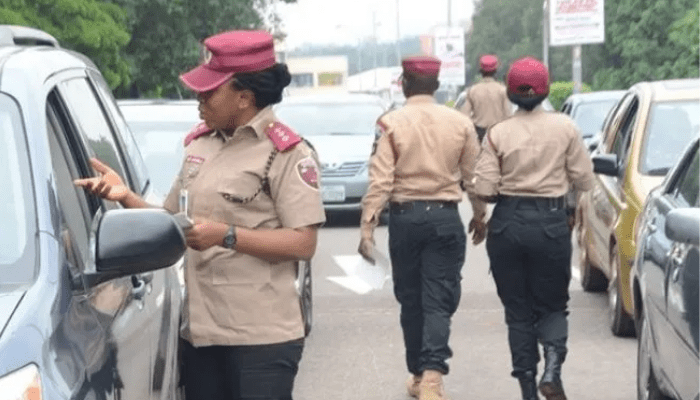
Court Restrains FRSC from Operating On Kano Township Roads, Awards N800,000 Damages To Rights Lawyer
A Federal High Court sitting in Kano has ruled that the Federal Road Safety Commission (FRSC) lacks the legal authority to operate on township roads within Kano State, restraining the agency from enforcing traffic regulations on roads under the jurisdiction of the state and local governments.
In a landmark judgment, Justice M. S. Shuaibu held that the commission acted beyond the powers conferred on it by law when its operatives stopped, questioned and delayed motorists on township roads in Kano in July 2025. The court ruled that such actions amounted to a violation of the constitutional rights to personal liberty and freedom of movement guaranteed under Sections 35 and 41 of the 1999 Constitution.
The suit was filed by Kano-based human rights lawyer, Abba Hikima, who challenged the legality of the commission’s operations after he was stopped and interrogated by FRSC personnel despite allegedly committing no traffic offence.
He maintained that the commission’s statutory mandate is restricted to federal highways and does not extend to roads owned and managed by state or local governments.
In its decision, the court granted all the reliefs sought by the applicant, including a perpetual injunction restraining FRSC officers from stopping, harassing or delaying motorists on Kano township roads without lawful authority. The court further directed the commission to publish a public apology in a national newspaper.
Justice Shuaibu also awarded the applicant N800,000 as general damages and litigation costs for the infringement of his constitutional rights, affirming that public authorities must operate strictly within the limits of powers granted to them by law.
The case arose from incidents in July 2025 when FRSC operatives mounted checkpoints across the Kano metropolis, conducting routine checks on motorists and demanding driver’s licences on township roads. The applicant argued that the commission had exceeded its statutory jurisdiction through the exercise.
The judgment is being viewed as a significant pronouncement on the constitutional limits of federal regulatory agencies and the protection of citizens’ rights.
Legal analysts say the decision may shape future debates on the jurisdiction of federal agencies over state-controlled infrastructure and could serve as a persuasive precedent in similar cases across the country.