

North-East Humanitarian Response: Stakeholders Demand Greater Government Responsibility
By Ali Mohammed Zanna, Maiduguri
Humanitarian organisations and development partners have called for increased government commitment, improved funding and stronger local participation to sustain humanitarian interventions in conflict-affected communities across Nigeria’s North-East.
The stakeholders made the call during a zonal dialogue on Nigeria’s Humanitarian Reset held in Maiduguri, Borno State, where participants examined the future of humanitarian assistance amid changing operational priorities and the gradual reduction of support by some international organisations.
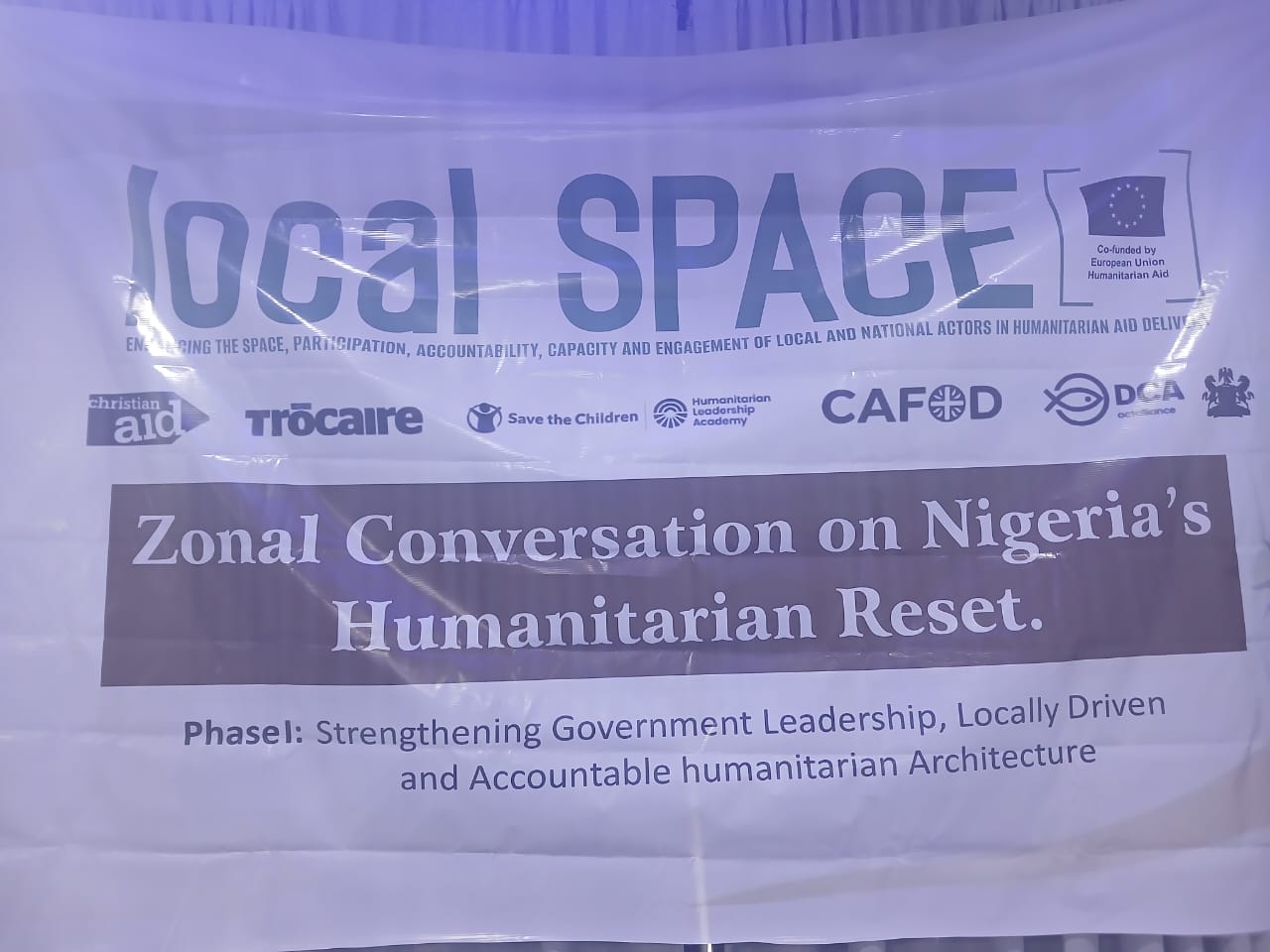
The meeting was organised under Phase I of the Local SPACE initiative, with the theme “Strengthening Government Leadership, Locally Driven and Accountable Humanitarian Architecture.”
The initiative, supported by the European Union Humanitarian Aid, seeks to strengthen the capacity, participation and accountability of local and national organisations involved in humanitarian service delivery.
Organisations participating in the initiative include Christian Aid, Trocaire, Save the Children, Humanitarian Leadership Academy, CAFOD and DanChurchAid, among other partners.
During the discussions, participants expressed concern that the reduction or withdrawal of some humanitarian organisations could create gaps in essential services, particularly for displaced persons and vulnerable households affected by prolonged insecurity.
They emphasised that government must take a more active role in coordinating and financing humanitarian programmes to ensure continuity of assistance, especially in livelihood recovery and basic services.
Hamsatu James said the engagement was designed to assess achievements, identify outstanding challenges and develop strategies for improving cooperation among humanitarian partners.
Dr Mimidoo disclosed that a national-level meeting had earlier taken place in Abuja before the zonal consultation in Maiduguri.
Ambassador Ahmad Shehu also highlighted the importance of sustained collaboration among stakeholders in addressing humanitarian challenges and strengthening interventions across the region.
Participants maintained that transferring greater responsibility to local institutions would require adequate financial resources, stronger institutional capacity and transparent accountability systems.
They also called for improved coordination between government agencies, local and international humanitarian organisations to ensure that communities affected by conflict and displacement continue to receive necessary support.
The stakeholders stressed that a successful humanitarian reset must go beyond reducing dependence on international assistance to building strong local institutions capable of delivering sustainable and accountable humanitarian services.