

By Nura Jibo
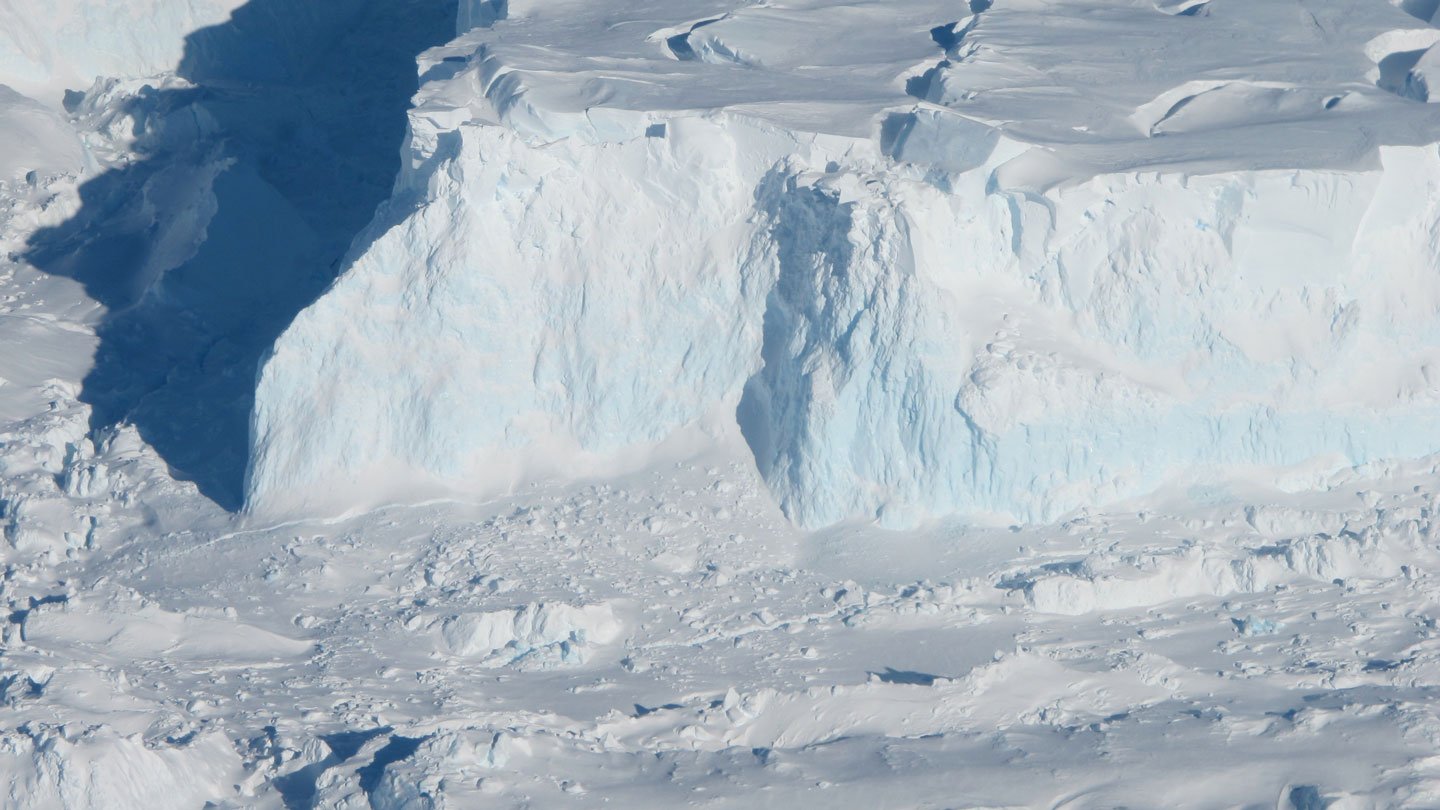
In March 2020, Thwaites – the world’s biggest and riskiest glacier (moving ice) in the Antarctica, that is bigger than the size of Borno, Jigawa, Bauchi, and Gombe combined, broke away due to climate change that warms the water beneath it.
The impact of the meltdown of this moving ice, which had risen the sea level by 0.05% in March 2020, brought a catastrophic flood disaster globally that brutally affected towns and villages such as Magarya, Hadejia, Ringim, Dabi, Auyo, Kafin Hausa, Miga, etc.
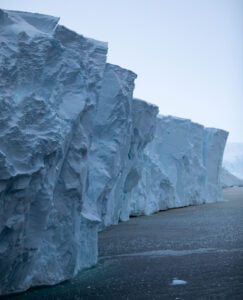
The Thwaites (moving ice) is already on the verge of total collapse because its outflow speed has doubled in the past 30 years. It loses 50 billion tons of its body mass into the oceans and eventually inside the rivers and dams every year (NERC, 2021).
Within the span of 10 years (2009 to 2019), the melting of the Thwaites accelerates by making it change direction at a speed that is greater than 10 kilometers per annum. Its tongue, or rather ice tip, had already lost its integrity via melting which makes it weaker due to the effect of climate change.
In the span of 5-10 years, the rapid melting of the Thwaites would swamp huge areas of troughs and low-lying coastal and drylands around the world, including Borno, Jigawa, Gombe, Yobe, Adamawa, Bauchi, and Benue within a few decades (Jibo et al., 2020; Fred, 2024).
In December 13, 2021, and February 15, 2023, a group of American Geophysical Union and British scientists met at a global conference to discuss this catastrophic climate change disaster in the Antarctica that affected very terribly the world oceans, rivers, and seas. They concluded that the Thwaites would most likely collapse within the next five years. Their reason is this: Currently, this glacier “sheds billions of tons of ice into the ocean, contributing about 4% to the annual sea level rise.”.
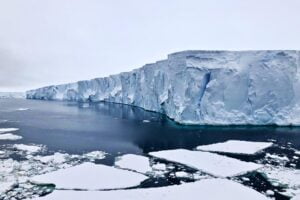
Indeed, the total collapse of the Thwaites in the next five to ten years is a menu for a global, unprecedented disaster that could wipe away several cities, towns, and villages, including the Vanuatu Islands and Pacific and African dryland states such as Borno, Jigawa, Yobe, Bauchi, Gombe, Adamawa, and Benue to mention, but a few.
In the event that the Thwaites collapses and melts completely, it would definitely increase the sea level rise by two feet. And a rise in two feet sea level would wipe away several regions in the world. It would damage several countries around the world.
Certain islands across the globe, such as the Marshall Islands, Kiribati, and the Maldives, would be completely wiped off of the map (Henry, 2023).
Nonetheless, this isn’t the only thing that would happen if Thwaites were to totally collapse. Changes in ice-shelf flooding would increase an unprecedented flow rate of 120 kilometres under water mountains.
As of today, climatologists and meteorologists have envisaged that the melting of this glacier would also likely destabilize the structure of the entire earth crust, not only its surrounding glaciers and ice shelves but also causing the global sea level to rise by an additional ten feet.
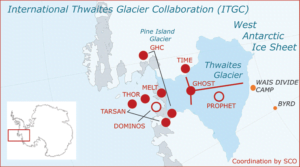
Indeed, scientists at the AGU, Yale School of the Environment, and NERC that are conducting a study on Thwaites said that the glacier “is hanging on by its fingernails” and humanity needs to prepare themselves for the coming years (Henry et al., 2023).
Therefore, as humanity commiserates with the entire people of Maiduguri over the early warning signs of the Thwaites along Nigeria’s drylands, it is very likely that it had already passed a point of no return unless there is drastic intervention. As Fred (2024) asserted elsewhere, “It is too late to prevent its collapse; but others say we could have 200 years. But it certainly could be beyond its tipping point, and we have to be prepared.”
The Thwaites climate change paradox:
It is a scientific fact that a polluted cloud doesn’t rain itself. It tends to grow bigger, and in the end it bounces sunlight out to space. The effects of fossil fuels and very terrible human activities in industries have caused air pollution globally and depleted very badly the ozone layer. This singular man-made negative contribution to the planets has caused mankind a huge mistake in driving home environmental pax Africana and global environmental regeneration (Jibo, 2024).
Indeed, Borno, Jigawa, Yobe, Gombe, Bauchi, Adamawa, and Benue will be struggling to cope with the torrential rainfall runoff that would engulf the entire River Gongola through the river Benue via Opalo and Imburu, passing through Kiri, Mada, and up to Jigawa along the Bare and Sabara tributaries.
A map obtained from Google Earth platform has shown some “promise” over this interesting water body mass run-off.
The other three paradoxical impressions given by the Thwaites are as follows:
1.The shattering of the ice.
2.Ocean melting.
3. Losing grip on seamount.
According to Pettit et al. (2021), there are already signs of fractures propagating along weak zones of the Thwaites. This is aggravated by melting down of the seabed due to warming, and the entire ice could be gone by 2030 or even before that time.
Nura Jibo MRICS has been a United Nations Framework Convention on Climate Change (UNFCCC) Designated Contact Point (UN-DCP) on Climate Change for 14 years.