

By Mohammed Dahiru Lawal (Guest Writer)
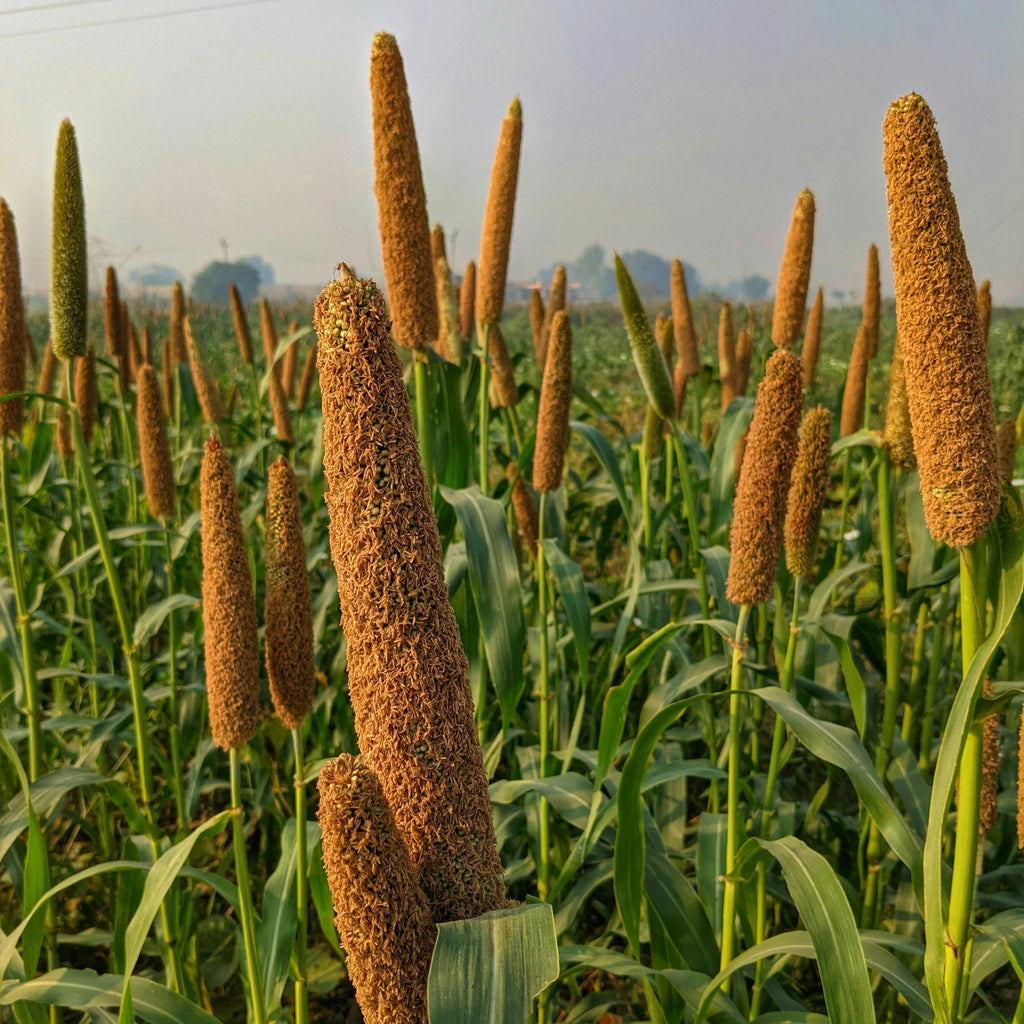
Musa Gambo stood at the edge of his once-barren millet farm, watching rows of green crops sway gently in the dry Kano breeze. For years, his farmland yielded low harvests that could not sustain his family.
“I was losing hope,” Gambo recalled, until his encounter with Bayero University Centre for Dryland Agriculture (CDA)’s Tissue Culture Lab. Gambo’s story mirrors that of numerous farmers who have been rescued from a bleak future by the innovations at Tissue Culture Lab.
Prior to the initiative, Gambo cultivated traditional millet varieties that yielded meagre crops and lacked essential nutrients. His family felt the impact, with his two-year-old son diagnosed with severe malnutrition. “I did not realise that the millet we were growing lacked the nutrients my children needed until the scientists at Bayero University showed me new varieties enriched with Iron and Zinc. Since then, my family has been healthier, and my harvests have tripled.”
Millet, known for its impressive drought resistance and referred to as the “climate-smart crop”, possesses a unique hardiness that allows it to thrive in dryland regions of Sub-Saharan Africa and South Asia, where it has become a dietary mainstay for millions.
However, Bello Rufai, a Climate Researcher, noted that erratic rainfall patterns caused by climate change followed by long periods of drought can hinder the full development of millet crops despite their resistance.
According to Dr. Maimuna Bashir, a Community Medicine and Public Health Resident Doctor at the University of Abuja Teaching Hospital, when farmers struggle to grow food crops like millet, due to climate conditions or other environmental challenges, food security is compromised, leading to malnutrition, especially in vulnerable populations like children, pregnant women, and the elderly.
“Millet is rich in essential nutrients like fiber, proteins, and minerals such as iron, calcium, and magnesium. When millet production declines, communities face food shortages, leading to undernutrition, stunted growth in children, and weakened immune systems, making people more susceptible to diseases,” she explained.
Established in 2012, this World Bank-supported centre is rooted in advanced research and practical solutions. It is focused on empowering local farmers to adapt to the changing environment and boost food security and nutrition.
According to Professor Amina Mustapha, an Agricultural Economist and Deputy Director of Publication and Outreach at the CDA, the Tissue Culture Lab plays a pivotal role in the agricultural transformation taking place in the region. She noted that it is part of a global effort to tackle the challenges of climate change and food security. There are 17 such projects in Nigeria and four others across Africa.
“What we are doing here is providing farmers with access to improved technologies that can withstand climate challenges. We have adopted 22 communities, working closely with farmers to share breakthroughs in crop production,” Professor Amina noted.
“This year, we focused on millet, a crop that is crucial to the region but often suffers due to erratic rainfall. The lab’s work allows us to produce high-yield, drought-resistant varieties, which are now being distributed to farmers across four Local Government Areas [such as] Rimin Gado, Tofa, Dawakin Tofa, and Kabo,” she added.
With the labs’ intervention, Gambo and other farmers were introduced to two improved varieties of millet, “Sosat” and “Super Sosat,” that have a shorter maturation period and produce up to 25% more yield than their traditional counterparts. This heralds a new era of increased productivity and reduced food insecurity for these communities.
Previously, the centre’s projects introduced farmers to improved groundnuts, maize, and rice varieties through programmes like the ‘Taking Maize Agronomy to Scale’ initiative, also known as TAMASA.
“Our goal is to teach farmers to think differently. Climate change is altering the landscape. We can no longer rely on conventional crops that are ill-suited to the new weather patterns. Our research allows us to provide crops that are fortified with nutrients like iron and zinc, improving not just food security but the health of the population as well.’ Professor Amina Mustapha explained.
Under one of their projects, the Harvest Plus project, farmers in Kano, Katsina, and Jigawa are now growing fortified crops like rice, millet, cowpea, and maize. These new varieties are designed to combat malnutrition in a region where traditional crops often lack essential vitamins and minerals.
With 22 hectares of farmland dedicated to research and green cultivation, the CDA is at the forefront of agricultural production all year round.
The lab also specialises in micro-propagation — a cutting-edge technology where small pieces of plant tissue, such as leaves or stems, are grown in a sterile, controlled environment. These tissues are then induced to produce new shoots and roots, which can be transferred to soil.
Micro-propagation allows for the mass production of plants, ensuring they are disease-free and genetically identical. Dr Kabiru Umar, Head of the Tissue Culture Laboratory, explained that “once these shoots have matured, they are transferred to soil where they continue to grow into full-sized plants. This method allows for the rapid production of healthy, disease-free plants that are genetically identical to the original. It’s an incredibly efficient way to reproduce high-quality crops on a large scale, ensuring uniformity and resilience across every plant.”
A potential solution to Nigeria’s malnutrition problem
The benefits of Bayero University’s Tissue Culture Lab go beyond the community. As improved crop yields lead to an increase in food production, ultimately resulting in a reduction of malnutrition and other health problems linked to inadequate diets.
Gambo, the farmer, noted that his family’s health has benefited from the fortified crops. He gestures toward his youngest daughter, Halima, who used to struggle with constant fatigue due to hunger. “She has so much energy now,” he said, attributing it to his family’s consumption of the crops developed at the Tissue Culture Lab.
The fortified grains have also brought Gambo a sense of security. “I’m not just feeding my family; I’m giving them a healthier future,” he explains. He’s even started sharing the benefits with his neighbours, encouraging them to adopt the fortified seeds. “It’s more than just farming now,” he added. “It’s about making sure our community thrives nutritiously.”
While the innovative grains have the potential to revolutionise farming in dryland regions, farmers face significant challenges in adopting these advancements.
According to Professor Amina, farmers are slow to adopt improved practices due to past experiences. She noted that despite millet’s drought resistance, the shifting climate still threatens critical growth stages, leading to reduced yields, which can be discouraging.
Cultural and social factors further complicate the adoption of modern agricultural methods. “Traditional farming practices are deeply rooted in these communities, and many farmers are naturally risk-averse,” Professor Amina said.
Many farmers lack proper training, information, or support to effectively integrate innovations like fortified grains or micro-propagation techniques into their farming systems. “We need to engage farmers directly, listen to their concerns, and build trust,” she added, noting that without this, scepticism and hesitation will remain significant barriers
The cost of micro-propagation equipment presents another obstacle, particularly for small-scale farmers. “While tissue culture allows us to produce high-quality seeds at scale, the equipment and processes are expensive,” Professor Amina noted.
Many farmers cannot afford the initial investment required to benefit from these technologies. “The cost is not just monetary — it’s also about accessibility. If farmers can’t get the seeds or don’t have the knowledge to use them effectively, the technology’s potential is wasted.” She advocates for government subsidies and partnerships to bridge this gap.
Bayero University’s Tissue Culture Lab has impacted the lives of farmers like Gambo, but its influence is only beginning. As more communities across Northern Nigeria adopt micro-propagation techniques, the region stands poised to become a model for sustainable agriculture in the face of climate change.
“The future is brighter now,” Gambo said, standing proudly beside his thriving millet crop. “My children are healthy, my farm is producing more than ever, and I’m no longer afraid of what the next drought will bring.”
From tiny tissues in the lab to big solutions in the fields, Bayero University’s Tissue Culture Lab is growing a greener, healthier, and more prosperous future — one seedling at a time.